What Are We Doing Here?

As I was preparing this sermon, this question came up. What are we doing here?

What are we doing here?

What are we doing here?

What are we doing here?

What are we doing here?

What are we doing here?

I love this question. I love when you can emphasize different words and it changes the intent just a little bit. I hope you heard that as I went through that list. That was intentional. But I also want you to pause and think about that question. We’re going to come back to it at the end so you have some time.

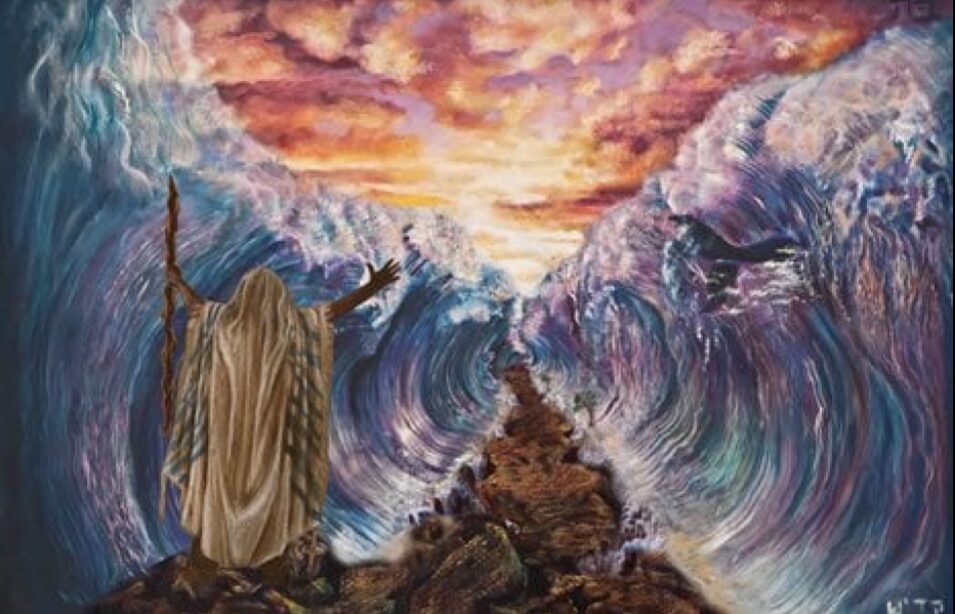
Although this question does not appear in the scriptures, I think it is a question that would have been within the Israelites and Moses in the wilderness who received the Ten Commandments.

The Israelites in the wilderness, they were the same people that were complaining because there was no food and they were complaining because there was no water. Asking, what are we doing here?

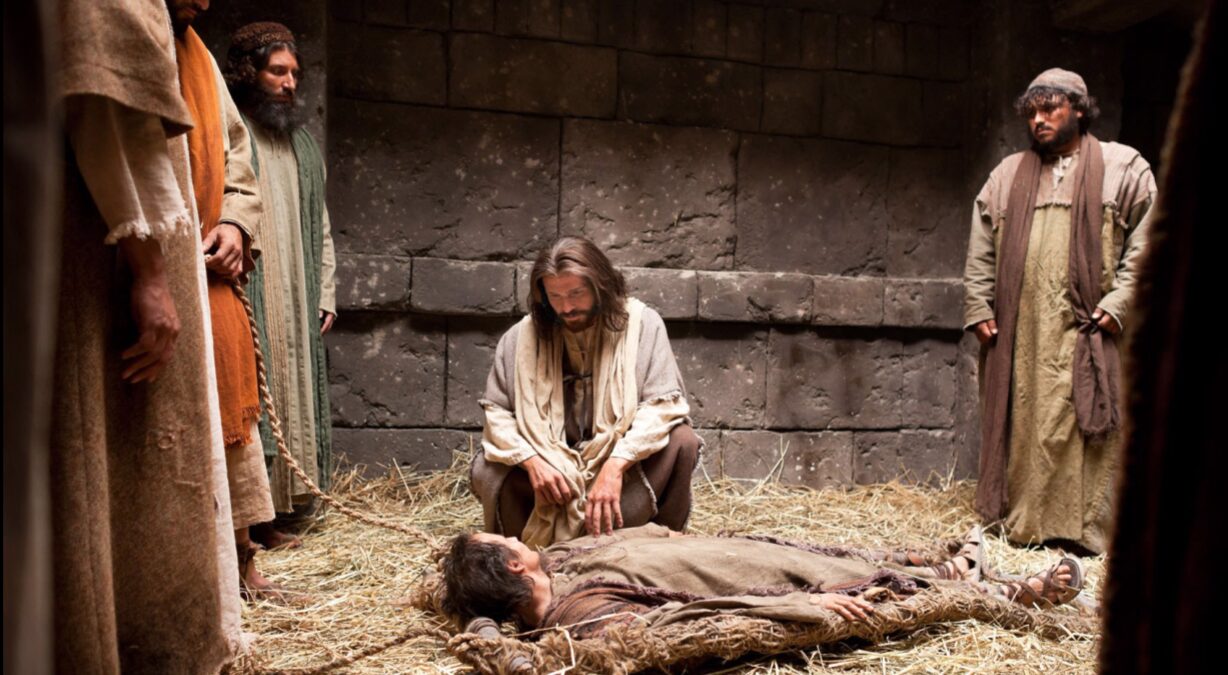
I also think it was a question that could have been on the minds of the disciples when Jesus walks into the temple and creates a scene. What are we doing here? What is going on? This is not the Jesus we’ve just been with everywhere else. So what is different?

I think the answer is in context. Context matters. So I’m going to give you some context for around this.

The way my brain works, I went to Paul’s scripture in 1 Corinthians. “Do you not know that your body is a temple of the Holy Spirit within you?” – 1 Corinthians 6:19. Now you might be wondering, how in the world did she get to Paul? Well, it’s this idea of being a body as a temple that we hear Jesus talk about; and you’re going, yeah, but this is Paul.

Well, there’s two things to remember when you read the Bible. One is that none of this was written down by a journalist making a news story. It was all written later. The second thing is that they’re not put together in chronological order either. They’re not put together to tell a story about God’s interaction with humanity. But they’re not put together in a way that it actually happened.

Paul’s writing of 1 Corinthians is actually older than the Gospels. Paul wrote this in 54 A.D, and the first Gospel written was Mark in about 70 A.D. This is also significant because in 70 A.D, the Roman Empire desecrated or raised the temple of Jerusalem, so that there was no more temple. Which created this issue again for the people. If there is no temple, where is God? Because they had been teaching throughout the whole Bible that God is in the temple. Even with the Israelites that had received the Ten Commandments, God is with the Ark of the Covenant.

The Ark of the Covenant is in the temple. It’s in the holy of Holies. That’s where God is, supposedly.

This idea of our body as a spirit, our body as a temple is playing out in our society right now. Evangelicals hold this up as one of their very important scriptures, that our body is a temple. I learned that when I was an evangelical for a bit during college.

We have something to learn about that. We don’t think about and we don’t talk about how our body is a temple for God. We could. We could get better at that. But they (Evangelicals) believe that and so they want to create laws that control what we do with our bodies. That’s why I stepped over.

So think about that and where we are in today’s society. That’s what’s going on.

Now, back over where Jesus is going to say his body is a temple for God in the scripture.

That’s significant. We need to know about where is God? Jesus’s answer is, he is the temple. He doesn’t come right out and say that. That’s what John’s message is. John’s writing in the 80s and 90s, so he’s writing much later.

Have I totally confused you by now? What I want you to notice is that there’s two things that are different about this version of Jesus cleansing the temple. This version, this story, is in all four Gospels. In the three synoptic Gospels; Matthew, Mark, & Luke. Mark would have been written first. Matthew and Luke used Mark to write their version. Jesus comes in, upsets everything, and says, “Don’t make my father’s house a marketplace. It’s a house of prayer.”

It’s not what he said in John. John changes it in two ways. One way, in John he brings a whip of cords that would be made out of leather. He does not, there’s no mention of that in the others. And he goes on to talk about taking down the temple and raising it in three days.

So in John’s gospel, John is giving us what they call a foreshadowing of what’s going to happen to Jesus. I think the whip is a foreshadowing of the beating that Jesus gets. Although I think it’s very important to remember that when we read John’s version of this, even though it says he made a whip, and took it, it does not talk about him hurting anyone. It says that the animals left, the animals moved, so there was a scare factor, or a fear. But it doesn’t say anything about any animals or humans being hurt. Which is very different from Jesus’ experience later with the Romans. The other piece is this idea of, I’m going to raise the temple in three days. What’s Jesus’ issue with the temple?

I’ve had members of this congregation look at me and say we can’t sell things in the narthex or we are making this house of prayer into a marketplace.

That’s not an accurate reading of this because context matters. They were selling things and it was expected that they would be selling things. Especially because Passover’s coming. A month before Passover to 26 days after Passover, Jews were expected to go to the temple and pay their temple tax. Now, most people carried Roman money, which had on the face of it, Caesar’s head and the inscription, Augustus Caesar, son of God, because that’s who Caesar thought he was,

That would have been creating another god besides the true God. So one had to change their money, and they came from all over so they could have also had other money. But they had to change it for temple currency because the temple only received temple currency which did not have an engraving image on it and no other son of God. There was only one, the one true God.

The money changers were always there during this time of year and there were always animals being sold there. Because, again, the laws were that you needed an animal that was pure. You didn’t want to bring one from home that could have been raised by your pagan neighbor. You went to the temple and you brought your animal for sacrifice and you knew it was already clean. All of this was normal.

What wasn’t normal was the fact that the temple had already been desecrated by Herod.

At this point, Herod had put engraved images on the temple. He had done things to desecrate it.

Jesus’s point is God’s not really in here anyway. The God you’re looking for was with John in the Jordan and is with me. That’s John’s version. Remember John has a very different Christ, too. John has put this at the very beginning of Jesus’ ministry.

Normally, Matthew, Mark and Luke put this, when Jesus enters Jerusalem after the fanfare of the palms and we know where he’s going. He knows he’s headed for a confrontation with the chief priest.

But here in the second chapter, all he’s done was gone through the baptism, the wilderness, and he just changed. The thing he just did was gone to a wedding with his mother. Where his mother convinced him to make water into wine. Putting it all out there. Right up front. Come on, honey. Just, just give him some more wine. Just one little miracle here.

I talk about John’s Jesus as being large and in charge. This is the Jesus that gives us all the I am sayings. Which we don’t see in the other gospels.

This Jesus comes to make a point. His point is, you’re doing it all wrong.

Here in the temple. You’ve missed it. You didn’t understand what John was doing in the desert, and now I’ve come, and I am.

So, what are you doing here? What are we doing here? Why do we come together?

Our house isn’t big enough for everybody. Isn’t that wonderful? Because this is the biggest space we’ve got forever to welcome everybody in. Because we want to have a table that’s big enough for everyone.

I love the fact that we do Intinction or even when we did Pew Communion, because everybody gets served. The table is bigger than this. If we all came up and just stood around this, not everybody would be at the table. Our point is, there’s always room at the table. Because everybody’s invited to the table.

Well, here’s how I saw it going. I wonder if we come, because it’s the crowd in this scripture that asks Jesus for a sign. Now that’s a theme in John’s gospel too, that they keep asking for signs. There are signs throughout John’s gospel of who Jesus is. But the people want a sign. I think we want a sign too.

I think we are looking, we come because we want to sign that this is true. That this Jesus is worthy of our devotion. He’s worthy of following. That he has the answers we seek.

I think we come looking for answers. I think that we want to sign that in the midst of all of our fears, God’s got this. That there is something there. God is working for good in the world, even though when we read the news, it’s not there.

I think we come looking to hear that in spite of our frailties and our failures, we are still loved and forgiven. We need to be reminded of that, because the world does not make us feel loved and forgiven.

We come together to remind each other to remember together and to invite others in because I am here to say…

“We are loved and forgiven.”

Like this Sermon? Click Here for the next Sermon in our Lenten Series

Prefer to Listen to this Sermon? Click Here to Listen to our Being Apostles Podcast


Taking Faith Seriously

Today we have this verse, “If any want to become my followers, let them deny themselves, take up their cross and follow Me.”

We have to sit with, What is the cross that we are called to bear? What does that mean? What does that look like? It does call for sacrifice. That denying of oneself. It does call for us to put the needs of others ahead of our own needs and wants.

It also sounds like it could be asking us to become martyrs. But rather than thinking about martyrs,
or of being a martyr, that’s not to be our goal. So that we would get the glory, of whatever glory there comes with martyrdom.

But it’s meant to be about pointing towards God. This is really important right now, in this time and in place that we live, because there are people who are trying to perceive themselves or saying that they are martyrs. Martyrs are not looking for revenge. Martyrs are people who are seeking righteousness and justice.

We say that we are about justice.

That’s important. That’s a very important distinction today. Because there’s a lot going on in our world. And It’s hard. Taking up our cross means that it’s going to be hard. It’s going to be painful.
And yet, we are called to do that.

We are trying to create God’s kingdom here on earth, which is not like ours. It is not about power, or money, or prestige. It is about love and it is about mercy.

So when we take up our cross, we need to be taking it up or bringing in more love and justice into the world. I struggled with this one mightily, because there’s plenty of people who feed on martyrs, they feed on people who are willing to give up everything that they have to please another person and that is not what this is saying.

The only reason to give up everything is for God.

It is not to please one’s spouse, one’s partner, or one’s friend. It is only to bring more love and light into the world. If what one is doing is not bringing more love and light than it is not of God.

I say that because I do think we have an example of one who bore their cross this week in our news, and that is Alexei Navalny. No he was not killed for his faith. But it is his faith that made him challenge Putin in the way that he did. It was his faith that brought him back to Russia after he had been poisoned and stand trial for allegations of going against the government in 2021. He had a long closing statement in that trial, but what stood out for me the most was that he said, “Blessed are those who hunger and thirst for righteousness, for they will be satisfied.”

He said, he didn’t come back for glory. He didn’t come back for any publicity. He came back because he wanted the people of Russia to be free from Putin’s oppressive forces. It wasn’t about him, it was about something larger. And because of his faith, he was free. His faith made it easy, he said, to make the decision. That’s a powerful faith.

When you can trust that you are in God’s hands. All you are doing is following God.

I find it interesting that they combined Abraham’s story with this text of picking up your cross. This is a picture I took in Turkey, of the landscape and up at the top of the hill, it’s covered with sheep. There’s a whole line of sheep up there. Which is what I was looking for an image of for Abraham. I thought, Abraham in the wilderness, you know, Abraham walking through these, this the area of Mesopotamia and into Palestine and trying to find the place.

In our scripture today, Abram got a new name. He’s now Abraham. The point of Abraham story is that he is called and chosen. Because he listened and answered the call. That is Abraham’s only redeeming value. His only redeeming quality is that he answered the call of God to follow what God wanted. So he picked up his whole family and he took them all and said, Nope, this isn’t where we’re meant to be. God says, I’m to follow God, and I don’t know where we’re going. But we’re going on a trip. Going without a map. The only thing I know is God will tell me when we’re there.

The beauty of Abraham’s story, is that God stays faithful to him. Abram makes terrible decisions. That’s is really the beauty of Abraham, we find out that no matter how bad Abraham behaves, including denying his wife and letting the king have her,
to save his own neck. God doesn’t leave him. God stays with him. So the overall message seems to be follow God, and you will live.

Kind of the same message that Jesus has for us this morning.

In this hard text that we have to read, it’s about following Jesus, so that we live. What Jesus is asking is for is this giving up of oneself for the greater good.

Now there’s an interesting dynamic that we need you to know about from history. During the Roman Empire, there was a phrase “Pax Romana”, meaning the peace of Rome or Rome’s peace. In order to have Rome’s peace, the people were told that they needed to sacrifice. They needed to sacrifice, they needed to pay the exorbitant taxes, they needed to do the forced labor for Rome, and if they needed to die for Rome, then praise be. Let them starve to death or die for Rome.
But that was it, then you died for Rome.

I put these two pictures up, because these are from Turkey, these are from Istanbul when I was there. The one on the left is the last palace of the Ottoman Empire, which is as much of a palace that we have left of any kind of empire. Roman palaces aren’t they’re ruins now. So we don’t have an idea of what they look like. But this was the one built in the mid 19th century, and is still in good shape. That’s on the left.

On the right, is a picture of the houses that the people live in. I can’t I can’t take you back 2000 years, but this is in 2006. I’m sure that the houses on the right, probably have some better building materials than they did mid 19th century, although some of those may have still been there in the mid 19th century too. But it was the people on the left, telling the people that lived in the homes on the right, that they needed to sacrifice for the people on the left.
And I want you to think about that power dynamic.

When the wealthy tell you that you need to sacrifice everything you have so that they live, and you live like the people on the right.

This is where we talk about social justice.

In Jesus’s message, Jesus says “If we will deny ourselves and take up our cross for God”, and here’s the difference, “You will live.”

Jesus promises life, not death. Not death and just being a servant to the wealthy and to the empire. But Jesus promises life
because Jesus will be raised again. And eventually we are also promised that we get to rise with Jesus. That’s end game.

I don’t talk about salvation a lot. I’m not one who preaches that you’ve got to be saved because I believe we all are.
I believe we all are saved already. Not because of anything we have done. But because of the love and the mercy of God. Because like Abraham, we are going to make terrible choices.

But Christ is hoping that sometimes we’ll make the right choice to be the love and the light that the world needs.

It might be as simple as the love or the light that a friend needs to see. When they’re in a dark place. When they’re feeling like everything is going wrong. Maybe that’s what we can do. Maybe that’s the something good we can be up to.

As a congregation. We have named that compassionate justice is important for us. So this week I want you to sit and think about what is it that you are being called to do to bring more justice into the world?

What is Christ tugging at your heart with?

We can’t solve it all. But we can make small progress one step at a time.

There’s lots of issues right now. There’s lots of places where our society is breaking down. We need voices of justice.
That we make sure that all people have access to health care and education and that it works for everybody. That we are creating a world that we want our children to grow up in. That we’re making sure there is going to be a world for our children to grow up into.

So what what is the area that you are being called to? That is your question to sit with. What difference are you being called to make in this world? Who needs your help? Whatever sacrifice you can make, to put more love and justice into the world is what Christ is looking for you to do.

Like this Sermon? Click Here for the next Sermon in our Lenten Series

Prefer to Listen to this Sermon? Click Here to Listen to our Being Apostles Podcast


A New Time

Today starts A New Time.

In the church year, it’s the season of Lent, which the church has often made a time of giving up, encouraging us to, to be less selfish, and to let go of some of the pleasures that we enjoy. We’re doing a slightly different take on that right now. What I want to encourage you to do is to let go of the things that get in the way of you being fully who God created you to be. Let go of the past hurts the regrets you might have, the times when you wish you had done something differently. It’s time to let go of those things and no longer be weighed down by them.

Instead, choose to be about something good. Choose to be about something that draws you closer to God.

Something that draws you closer to others, so that you can share the good news with them. I think we live in a world today, where a lot of us are just overwhelmed saddened by the latest news, maybe even a bit afraid. We’re getting to the point where we miss the beauty. We miss the birds, or since we are in Pennsylvania, we miss the Tundra Swans and the geese. Do we see them? Are we missing all of that? Because we’re focused on all of the things that are going wrong in the world?

We’re becoming afraid and we’re isolating, instead of coming together and creating community. Those of you who are here, and those of you at home that we hope will join us at some point, you’ve chosen community today. How can we help others know that this is a safe space? That this is a place where we hear a different message?

Because that message of deprival and all of that giving up? Yes, it’s true. We are mortal and our mortality is right in front of us but in the wilderness is our lives. We learn lessons of life, and this is a time to look at the lessons and recognize that through it all, God is with us.

We are never alone.

It’s interesting that they put the rainbow with us on this first Sunday of Lent. Because you know the rainbow reminds us that God changes God’s mind. God was so frustrated with humanity is the way the story goes right? That God sent the flood.
But God changed God’s mind as if God’s heart was broken by not having that relationship with humanity. So God said, I’m never gonna do that again. There’s never going to be a time when I don’t love you. There’s never going to be a time when I leave you.

It doesn’t matter what we do. I mean, it does matter. Obviously God wants us to be better people but there’s nothing that we can do that will drive God away from us. God is constantly reaching out to be in relationship with us. Love wins. God’s love is eternal forever. And the Rainbow reminds us.

Mark’s Gospel

Mark’s gospel is very interesting in that you might have had a flashback when I read the beginning of that, because you’re like, that’s the baptism text. We read that back in epiphany, because we did. We read that on January 14th. Because it was the baptism, but for Mark, all of this is the beginning of Jesus’ ministry.

He does all of it in six verses, the whole thing. From baptism, Jesus goes down in the water comes up, here’s you are my beloved. And immediately the Scripture says the Spirit drives him to the desert. He has, for some reason, of which we do not know, he has to have that wilderness experience. But he’s not alone in the desert. He’s not alone there, just as we will not be alone.

Yes, he encounters Satan, he encounters all the temptations of our lives. He encounters wild beasts, and the angels wait on him. God is present with him. Just as God will be present with us through all of our wilderness and, and temptations.
We are not alone. God has chosen to give us a new time, a different thing.

Then, as soon as the 40 days are up, Jesus goes to the to Galilee and declares it is a new time. Repent and hear the good news. That also happens just as John is arrested and taken away. John is no longer saying, Repent. So Jesus comes and follows up with this message of repentance. And we’ve made this message of repentance as confession, looking at ourselves, and recognizing what we have done wrong. That is an important piece of it. And there’s more to it.

We also have to choose to be different.

We have to choose to change because it’s a new time. God in Jesus has come close to us. Because God still wants that relationship. God still wants to walk with us, talk with us, share life with us, teach us, model for us, and encourage us to be our best selves.

Will we be? No. But God loves us anyway. But we can be about this idea of repentance.

This quote by Amy Jo Levine really is catching to me. Because it changes that meaning a little bit that repenting means fixing broken relationships, and doing one’s best to restore community that’s coming out of the Jewish perspective. Right? This is Rosh Hashana for them. This is how do we admit that we’re not who God has called us to be. We can be better. We can work on the relationships, our relationship with God, our relationships with one another, and our relationships with the world, and the community. To everyone that we meet, we can be better at those.

We can build community. That’s what I think we need right now, more than ever.

We are living through a new time. We haven’t come out of the pandemic well. There are some people, and I would even say that I’m in that group, that when we get in a large group, we don’t feel right. I don’t like large gatherings anymore. There’s some who don’t. We stay away from large gatherings because they’re afraid of the the germs that are in those gatherings. The pandemic did that for us really well, showed us that those large gatherings are super spreaders.

But now, we also know that large gatherings are targets for people with guns who aren’t stable. You get a large gathering, even the Super Bowl gathering was an opportunity for a man who needs help and a gun. But they do the damage. So we’re like, “I’m not sure if I want to be in a large gathering.” Then you watch the news. There’s a lot of violence in our world right now. How do we counteract that? We have to remind ourselves, that we don’t do it alone.

God is with us. We come together to remind each other that God is here that God is with us wherever we are.

We can encourage one another. We can hold each other up in the hard times. That’s who we are called to be. We are called to create community. To be this inclusive refuge, to serve compassionately, to care about the environment and how everyone is treated. That’s what we’ve said. That’s what God is calling us to be. So can we be about that? Can we be about looking at how we interact with one another and how we greet those who come into our midst to make sure that all feel welcome to experience Christ with us. That’s our challenge.

Like this Sermon? Click Here for the next Sermon in our Lenten Series

Prefer to Listen to this Sermon? Click Here to Listen to our Being Apostles Podcast