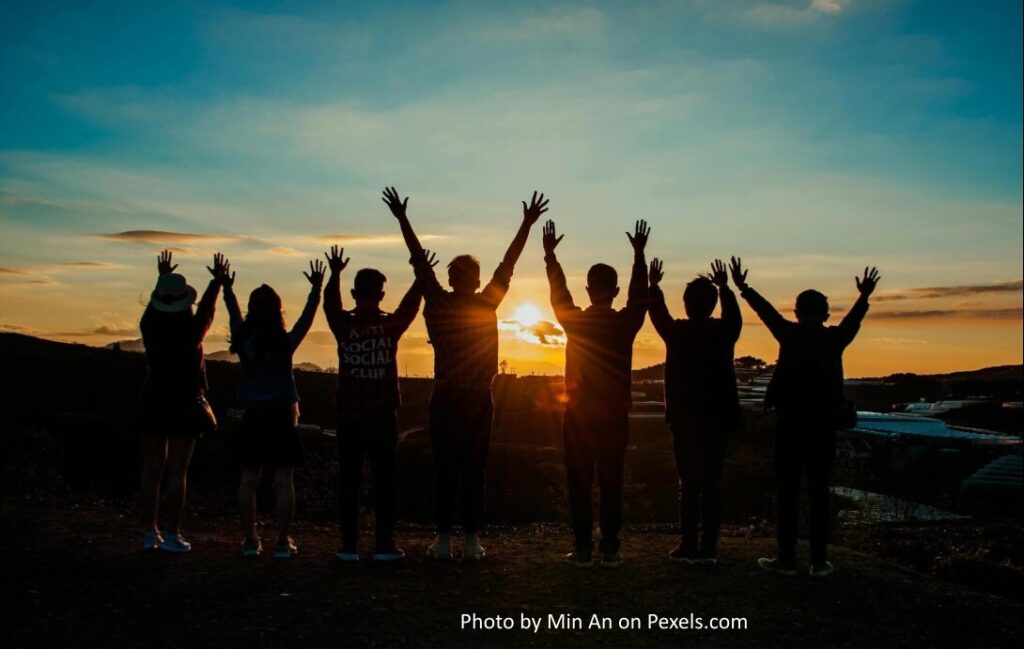
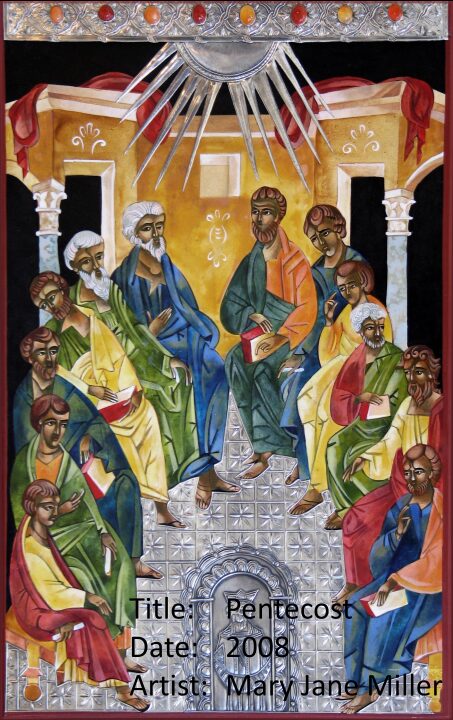
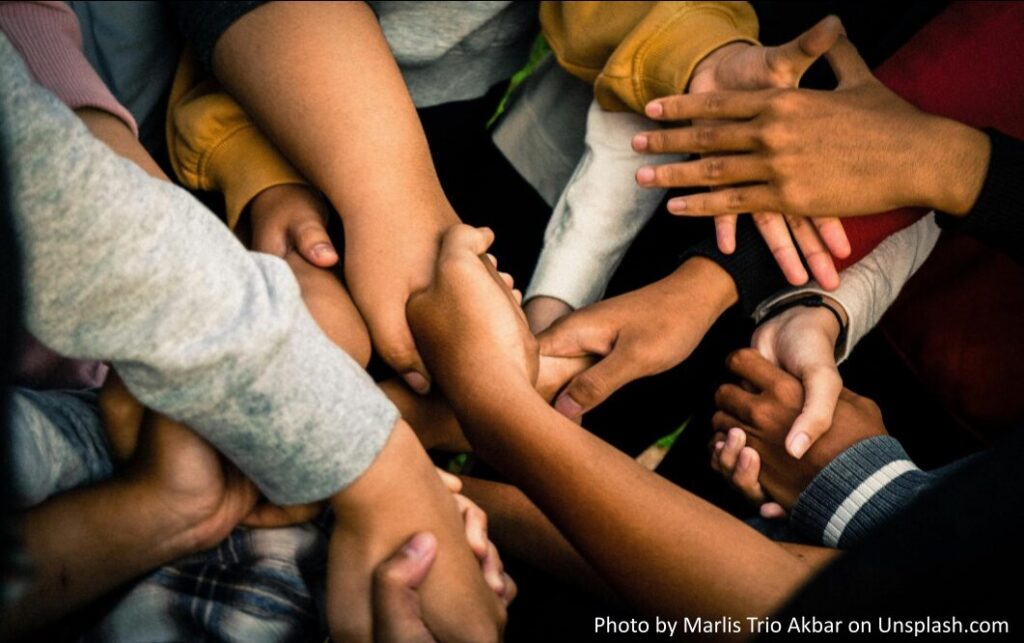
That moment of coming together and welcoming our new members, baptizing, and naming that we are the body of Christ in this building. That’s what connection is about. That is the collective piece that we do individually.
It’s about showing up, being present, and wrapped in empathy.
It’s about coming as our true selves to let our vulnerability show and enabling the power of connection and healing that is fueled by kindness. That’s how we build community and connection. In this world, we need that now more than ever.
In this scripture, Luke mentions that the Pharisees are watching Jesus.
So, Luke turns it on them by watching them and commenting on how they’re acting and what he sees in them. The Jewish culture was a culture of honor and shame, and with this verse, he is telling them that they actually could be shamed for the way they act.
“For all who exalt themselves will be humbled and those who humble themselves will be exalted.” – Luke 14:11. This reminds us that we are to take a posture of hospitality, but also of humility.
Then he challenges Roman imperialism. The Jewish culture has that idea of reciprocity. If we are gonna have a dinner, well, let’s invite those who we love the most. Invite those who we’re gonna have the most fun with, our closest friends, our family, or maybe those people that we’d like to have an invitation to their house so we’ll invite them to ours. But Jesus says that’s not what it’s about. It’s not about scoring points here in this world.
It is about reaching out to those that society is ignoring, that no one else is caring for the poor, the crippled, the blind, the lame. Those are the people we’re supposed to invite for dinner. Those are the people we are supposed to care for because God cares for them. The people that the rest of society is saying no to and pushing out. Those are the people that we as disciples are called to say “Come in. You are welcome. You are invited to our tables and especially to the table of Jesus Christ.”
That’s who we are meant to be. That is our challenge. We come together because it’s hard.
Life is hard right now and we forget. So, we have to come together to be reminded of who we are, of who God is, that we are loved as we are, and that we are to love our neighbor, the stranger, the one who is different from us, as well as our family and friends, and those who do not share our political views. We’re to love them all. And that’s hard right now. That is very hard.
But we come together because, together we remind each other of our purpose and we give permission, encouragement, guidance, and an opportunity to live better. That’s who we are together. The beauty of our connections is this holy moment. There’s this holy moment when each of our souls grieves meets another’s.
Together we are stronger and we support one another.
One of our members reminded me that even though right now I’m doing hard things in my life, I have a 100% success rate of surviving hard things in my life, and so do you. I needed to hear that. I needed to be reminded of that.
Each of our solo voices, when we come together, and this is the secret, we make beautiful harmony. The secret is that not one of our solo voices is gonna save the world, but together we are powerful. We can make a difference and we want to make a difference in this world.
So every Sunday I’ve been doing, I’ve been ending with the words to Stephen Sondheim’s lyrics from Into the Woods, “Children Will Listen”. I know that some of you haven’t been here every Sunday in Lent. Those of you who have been here, I’m hoping that you’re learning this because I want you to hear this in your mind.
“Careful the things you say. Children will listen. Careful the things you do. Children will see. Children may not obey, but children will listen. Children will look to you for which way to turn, to learn, what to be. Careful before you say, listen to me.”
Our theme today is “Cultivating a Life of Curiosity.“
As much as I thought about that, I could not get myself past the show, Ted Lasso on Apple TV. I will play a clip so you have a better idea of what I’m talking about. To set up the clip, Ted was a soccer coach in America who was hired to coach an English football team. In this scene there are two of the main characters, Rupert, who used to own the team, and his ex-wife. Rupert has just acquired significant ownership of the team and he has just announced that his new wife will be joining him and his ex-wife in the owner’s box every game. He bought enough stock in the team that he could set the line up if he wanted to, because he doesn’t like the way Ted’s coaching the team. They ended up making this wager that if Rupert wins, he gets to set the lineup for the rest of the season. But if Ted wins, Rupert doesn’t go near the owner’s box and he lets his ex-wife alone.
Are we curious? Do we ask the questions?
The point that Ted was making is that too quickly we become judgmental just as Rupert was, but unless we ask the questions, we will never truly understand one another. It is far easier to judge, to make snide remarks, and to write people off than it is to get to know them and try to understand them,
That’s not how Jesus lived. Jesus went to people and he asked questions. He asks Zacchaeus, why are you in the tree? He asked the Samaritan woman at the well, why are you at the well at this time of the day? He asked the questions of people because he wanted to get to know those people. He wanted to hear their story because when we hear each other’s stories we understand each other so much more and can have more grace for one another. That’s where our empathy comes from, our compassion.
We have these Proverbs, these wisdom teachings of Jesus in Matthew 7:7-14. Remember I said context matters. This is what Jesus was saying to those who believed in him, who followed him, and for them this was his expectation. They were to do unto others as they would want to be treated. We have to remember that.
Jesus is Jewish, he’s talking to a Jewish audience, and it’s about how they are different from the rest of the community. That’s a huge part of Judaism. What makes them distinct? That may be harder for us to know in this context. If you don’t know a lot of people who are Jewish, we might be able to answer the question of how Amish people make themselves different in our community. That might be an easier question for us to answer because they do the same thing. They have ways about them that make them distinct.
Christ was calling us to be distinct. In our world, we should live differently. We shouldn’t blend with society. Here are some things that we are to do.
Ask, Seek, and Knock. We have to be looking for God, asking for God’s help. But this scripture gets taken advantage of. I think it’s because of the descriptions that he gave because it sounds like we should just ask for material things. I don’t believe that God is some type of ultimate Santa Claus. That if we ask for a beautiful house, somebody’s just gonna call us up and give us a beautiful house. I don’t think it works that way.
This is where people sometimes lose their faith when there’s a diagnosis and they ask for healing, but they don’t get a cure. I wanna say that we don’t know what healing looks like and sometimes maybe being whole is joining eternity. That’s a hard one and I know that.
But I do think if we ask for the gifts of God, think back to our last season with “The Economy of Jesus.” The gifts of God, are love, grace, compassion, empathy, self-control, and patience. Those gifts, if we ask for them, God will help us find them. If we look for a way forward, if we ask God, to help us to figure out where we are to go or what we are to do, the path will become clear to us. It may not be where we wanna go or it may not be what we wanna do because God doesn’t work like that.
I think that leads us down to the narrow gate. So the easy road is the wide gate. Do you remember where it said? it leads to destruction. It’s the narrow gate and the hard road that leads to life. That’s not what we wanna hear. We wanna hear that we can just ask God for a nice, easy life and it will all be roses and sunshine, and everything’s going to work the way we want it to. We’re always gonna be happy and we’re never gonna experience sorrow or pain, but that isn’t it. That’s not the story of Jesus. Jesus was the one who was willing to die on the cross for us because of his love. That is not an easy road.
But in order to do all of this, I think that there is a level of humility that Jesus is also calling us to.
It didn’t say that in the scriptures. It did not say, you must be humble. But, I think that there’s a humility and a vulnerability that is also needed. We don’t like either of those words. Our society says when people are vulnerable, then they’re weak, or they’re losers.
I disagree and I think that Jesus modeled for us letting go, and being vulnerable to meet people where they are. I think that we are called to meet each other, to get to know each other, and to ask questions.
We have to be willing to acknowledge that we don’t know everything. We don’t know everything that we think we know. We have to own that. We don’t know everything and we don’t have everything that we need. Not really. You may have the physical comforts that you need, but if you look within yourself, do you have all of the love, grace, compassion, patience, and peace that you need? My guess is if we’re honest, none of us do.
That’s where we can be more curious. We can be curious within ourselves, what is that within me that drives me to act like that? What is it within me that makes me think that I’m not loved? Maybe that’s an old story you need to reexamine.
Meister Eckhart’s quote invites us to approach life as a child because they haven’t lost their curiosity yet, and we can work on building our curiosity muscle. We can work on being more curious and asking more questions.
That’s actually how we’re going to bring ourselves together because none of us holds the real truth. But the truth is in the midst of our stories. With humility and a sense of curiosity, we can seek to understand and have more empathy.
This past week on Thursday night, we had the Clatterbucks here for Mocktails & Meaning.
The Clatterbucks lost their transgender son to suicide almost a year ago. They named the pain and sorrow that they still carry around. He was surrounded by people who loved and affirmed him for being who he was. But the rhetoric in our county, state, and country was so hard. It told him that he was not welcome. It wanted to erase him, and so he did.
How we treat others matters.
What we are called to do is to love. What are the two commandments? Love God with all of our being and love our neighbor as ourselves. There’s a third because that means you have to love yourself.
The next thing to do in every moment is the most loving. What is the most loving thing I can do in this moment? That’s what God wants us to do. And I told you I was going to end every sermon with these words because I think we need to be thinking about this right now. We need to be thinking about what we are telling the children by our actions and our words. What are we teaching them that they are learning for when they are adults? The wisdom of Stephen Sondheim.
“Careful the things you say, children will listen. Careful the things you do, children will see and learn. Children may not obey, but children will listen. Children will look to you for which way to turn, to learn. Be careful before you say, listen to me, children will listen.”
We needed to begin by defining what we mean by Forgiveness, Mercy and Grace.
We may not all understand these concepts in the same way.
Forgiveness is the act of releasing and dismissing something, such as sins or grudges, it is a choice. Forgiveness is a choice. It’s a choice about letting go of the resentment and the anger so that we know and no longer hold a grudge against someone who has hurt us. That is what I mean when I say forgive or forgiveness.
Mercy and Grace are God’s work and God expects us to also extend those. Mercy is God’s compassionate response to human suffering. It’s a combination of kindness, forgiveness, love, and grace. God’s favor kindness and mercy are freely given to all people regardless of their sins. That is a fundamental concept of Christianity. We extend grace.
This past week I was in a conversation where someone said, “but forgiveness doesn’t hold people accountable.”
I disagree with that. I disagree with that comment. But, there is within our culture a saying that goes, forgive and forget. I think that is bad theology. It’s a harmful saying. That’s like saying God doesn’t give you anything more than you can handle. That’s bad theology.
People say it thinking they’re being kind, and it’s cruel. There’s bad theology that goes with our scripture today too. But, forgiveness means that we can let go of our anger while we still hold people accountable. We still believe in consequences for cruelty and hateful actions.
So what is Jesus trying to say to us today?
Last week we had the passage right before Luke 6:27-28 which introduced the Sermon on the Mount and the Beatitudes, last week was Luke’s version of the Beatitudes. We like Matthew’s better, but it was Luke’s version. We have a few more pieces of that, but we have Luke’s version now.
Let’s look at Matthew and Luke’s version of love your enemies.
“Love your enemies; do good to those who hate you; bless those who curse you; pray for those who mistreat you.” – Luke 6:27-28
“But I say to you: Love your enemies and pray for those who persecute you,” – Matthew 5:44
They pretty much say the same thing. It’s still very clear. We are supposed to love the people who we perceive as enemies. It’s not what we want to hear. What that says to me is that revenge is not part of this equation. We’re not supposed to take revenge on people who hurt us. We are called to love and that’s hard work and the only way I can get there is by extending grace. That’s why I wanted you to know what grace is. Grace is loving people who don’t deserve to be loved.
It is not trying to tell us we need to be doormats. It is not saying that the abuser is correct. It is saying that we love them and we hold them accountable for their actions. Because I believe that God believes in justice too. God always stands up for the poor, the orphan, the widow, the oppressed, and the marginalized. God is not looking for us to take revenge or to be hurtful. Instead, we have to forgive, let go of the anger. But don’t forget that’s where I am. Maybe that’s because of my past, but I believe that God is merciful.
So these verses in Matthew and Luke also line up, but with a little bit of difference.
“Be merciful, just as your Father is merciful” – Luke 6:36
“Be perfect, therefore, as your heavenly Father is perfect” – Matthew 5:48
Where Matthew says we are to be perfect, Luke says Merciful. The actual Greek word for Merciful is oiktirmón, which also means compassionate. Compassion as I look at this is that Luke is encouraging us to remember the goodness of even the person who is being cruel and hateful.
What we say is that we are all created in the image of God. We say every person is a child of God. So then, we’re not going to dehumanize anyone.
No one becomes an object that we can inflict cruelty, pain, or injustice upon. That’s not the way of God. It is about compassion. It is about recognizing our shared humanity.
“Forgive, and you will be forgiven; give, and it will be given to you.” – Luke 6:37-38
“For if you forgive others their trespasses, your heavenly Father will also forgive you” – Matthew 6:14-15
For Matthew, the forgiveness part, he puts that right in the middle of the Lord’s Prayer. Whereas Luke’s Lord’s Prayer comes later. It’s actually in chapter 11, verses 1 to 4. Luke says, forgive and you will be forgiven. This is the reason our version of the Lord’s Prayer is a little different. Matthew uses trespasses in his Lord’s prayer. Luke uses debts in his, and we have simplified that to just say, forgive, so that we forgive.
We will forgive as you have forgiven.
It doesn’t matter if it’s sin or debt, because when we hear debts, we think money. We don’t think sins or cruelties are other things. Where culture is very much about debts being money.
So what does this have to do with the economy of Jesus?
Well, in the economy of Jesus, remember, it’s a gifting economy. It’s not a transactional economy like we have. It’s not the quid pro quo. We don’t give so that we receive. We give because we are called to give. God wants us to give because God has given to us.
We have all this love, compassion, mercy, and grace that we can then share and we are called to share it. Now I say that if you think back at what I had just said a few minutes ago, that doesn’t mean that we allow injustice to continue.
Think of Martin Luther when he hung the 95 Theses on the door. It was a non-violent action. He held up to the Catholic Church the things they were doing wrong. Non-violent, direct action that says the truth, speaks truth to power. I think about Rosa Parks, whose non-violent direct action was sitting down on the bus. Not in the seat she was supposed to sit, but in the open seat. She spoke truth to power. In 1965, John Lewis and 600 other people walked across the Edmund Pettus Bridge as a non-violent action to speak the truth. The rest of the country saw the racism when they were attacked and they realized why we needed the Civil Rights Act.
This picture is from yesterday, where some of us gathered on Penn Square to tell Lloyd Schmucker that we are not happy with his actions. When people are doing things that are cruel and hateful, we have the responsibility to stand up and tell them so.
This season, I’ve been telling you to be the light. We need to be the light in the world.
I hear a lot of people talk about the darkness that they feel like we are in. But God calls us to be the light. By being loving, forgiving, merciful, and full of grace by extending that grace.
This week I read a piece by a colleague, Cameron Trimble. I wanted to share it with you. Because I think it’s profound. She wrote, that we are all called to be mystics and prophets. The mystic in us is the lover who says yes to life, goodness, and what is sacred. The prophet is the guardian, the one who says no, no to what threatens love and justice. A life of faith requires both prophet and mystic. Without love, our resistance turns brittle. Without resistance, our love becomes shallow.
The world will always make courage costly. It will reward silence and punish truth telling. It will tempt us with the false security of compliance. But Thomas Aquinas reminds us that some things are worth the risk. Justice, the common good, and the secret.
So how will we be light in this world? Will we be mystics? Will we be prophets? Will we be both?
In the last months, but particularly the last several weeks, I’ve heard a real sense of overwhelming.
Things are changing and we don’t like change to begin with. It is an inevitable, change. The one constant of life. But they’re changing at a pace that just feels exhausting right now. I want to name that because that ties into our story. I think that helps us relate to Peter in this story.
I also want to say that I think that things are happening to us that are meant to confuse us and overwhelm us so that we will submit and go along with what’s happening. That’s a tactic that has been used in the past and will probably be used more in the future. I ran across this excerpt from a fictional novel, “Autumn” by author Ali Smith, that I almost felt was meant for us.
“All across the country, people felt it was the wrong thing. All across the country, people felt it was the right thing. All across the country, people felt they’d really lost. All across the country, people felt they’d really won. All across the country, people felt they’d done the right thing and other people had done the wrong thing. All across the country, people looked up Google: what is EU? All across the country, people looked up Google: move to Scotland. All across the country, people looked up Google: Irish Passport Applications.”
Autumn was published four weeks after the Brexit vote. Brits are still thinking, was that a good idea? Change. We don’t like it, but it is.
I’m going to change the way Luke 5:1-11 is preached. Yes, one more change for you.
But I’m doing this because I think It opens possibilities. Normally this scripture is preached by saying, look how persuasive Jesus was in getting Peter, James, and John to leave everything they knew. Their family, their vocation, their livelihood, all of their security and follow him to the unknown. And I’ve preached that. How powerful would his message have had to be for you to give up everything you know and follow him?
But instead of that, as I was reading and researching for this sermon. I found out a lot about first-century fishing and that’s what I want to talk to you about because I think it changes the story. Remember, context matters. What I found out is that first-century fishing was really hard.
First of all, if you go to the shore, you might see the boats with the drag nets. I lived in South Carolina, shrimp boats do that, but we catch all kinds of other things that way too. Then, you press a button and it reels it in, well they didn’t have any of that. Those big nets were thrown by people and pulled in by people. They didn’t have that kind of mechanics. Fishermen didn’t work for corporations with guaranteed income, benefits, or retirement. Benefits and retirement were not a first-century thing. We need those wake-up calls sometimes. We need to remind ourselves of what life was like.
If the Roman Empire had not been involved, fishing was probably a half-decent way to make a living. You had a way to provide food for your family and had a commodity that you could trade for what you didn’t have. But the empire was involved, and that made all the difference. You see, the Roman Empire imposed what it called licenses or leases. I think, for us, license might be a better word. In order to fish, you had to pay for a license. Then, when you caught, they taxed you on every fish you caught. They taxed you on transporting the fish, they taxed you on whatever byproducts could come from the fish, think fish sauce or fish oil, and once all of that was taken, you got what was left. It’s not nearly as exciting.
Jesus met Peter, James, and John after they had been out all night fishing and caught nothing.
Overwhelmed, frustrated, exhausted. Those are the men that Jesus met. To them he says, “but just go out again.” You can imagine Peter thinking, Is this guy nuts or what? Does he not see that we are tired? We just want to go home to see if we can find something to eat. Maybe get warm.
But, they’re willing and Jesus says go out in the deeper water and pull a catch. They pull in this great catch. It’s Peter’s dream catch. More fish than he can handle in his boat. They’ve got to bring all the boats to get all the fish back to shore.
Then, Jesus says, “Leave the fish and follow me.” At that moment, I think Jesus offered them a different possibility to see the abundance that exists, but for all of those fish they’re not going to pay tax on them. They’re going to leave them right there at the edge. They’re going to walk away. Let Rome figure out how they’re going to make money on those fish. Let Rome figure out how they’re going to move those fish. I think this was an act of liberation. It was saying, you don’t have to work in this way, what Jesus says is, “I will help you fish for people.”
I think that there’s something there for us about how do we go to that deeper water?
For us to go to the deeper water, we need to know our stories, so that we can tell our stories. That’s how we fish for people, by telling our stories. In a few minutes, you’re going to hear the story about our Saturday Morning Breakfast Ministry and how that feeds people, probably in more ways than just their stomachs.
But we need to think about the abundance that we have together. We need to look into our hearts. I think that’s where our deep water is. Think about the abundance that we have, no matter what. This morning, the kids showed us about an abundance of love. There’s no tax on that. There’s no tax on care. Nobody else can affect our level of compassion and empathy.
I do think that we need to work on how we are a community together, how we support one another, and the difference we can make together. That’s our challenge. Each one of us has the ability to make a difference.
How will we be light to the world by using our voices?
And I don’t mean your car or your spouse. You had a lot of other choices this morning and maybe going out for breakfast sounded better. But you came here instead. I want you to think about why you came. Why did you make this choice? I’m asking you because that’s where I get into a bit of it in the scripture.
This scripture, Luke 4:21-30, is the rest of the story from last week. If you were here last week, you know Jesus has come back to his hometown of Nazareth, he’s gone into the temple, and they handed him a scroll.
He read from Isaiah. He essentially announced his ministry is going to be about bringing good news to the poor, release to the captives, recovery of sight to the blind, and freedom for the oppressed. This has been fulfilled in your hearing. Last week I argued that that’s what they were supposed to be doing anyway.
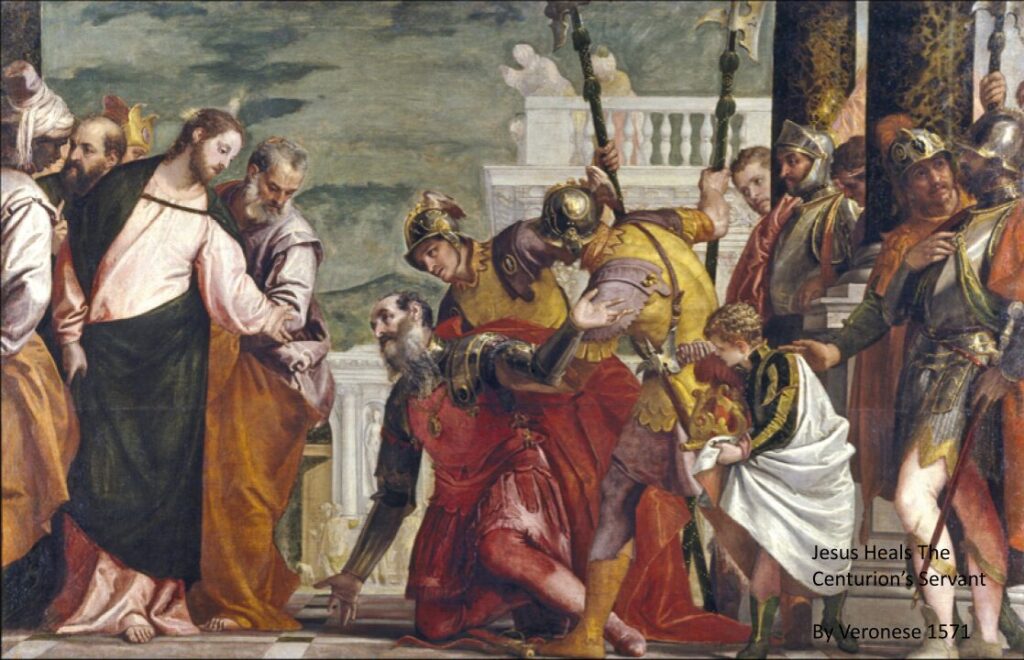
Not everybody in that picture is happy. Jesus is the one reading the scrolls, but the other people are not necessarily happy about what he’s saying. But they are amazed that he had the gall, that might be the church’s word for it, to say that he’s going to fulfill all of this.
But he didn’t stop there. They’re excited and they know this guy, Jesus grew up here. This is Joseph’s son. So, they have some expectations of him that play into this. But then what happens is he tells them this story.
He gives them an example of two healings that took place. The widow of Zarephath and Naaman. Now, for those of you who don’t recognize those stories, let me give you the backstory.
The Widow of Zarephath was someone that Elijah came across, she and her son were starving, there had been no water, they were at the last of their oil and flour, and she was about to make the last loaf of bread so they could eat. When Elijah shows up and says, Make that big enough so I can have some. And he says, don’t worry about the rest. She does it. She trusts. And indeed, they never run out of food until it rains again.
Naaman is a Syrian commander who had conquered Israel as part of the spoil, he took an Israeli girl as a prisoner to work in his house. He had sores on his body and she says, if you go and talk to the Jewish prophet, he will tell you how to get rid of that. He listens to the girl and he does what the prophet tells him.
So it sounds like two good stories, right? Here’s where I sat with my wonderment and I invite you into my wonderment. Why did they go from, “wow, this guy’s something”, to the rage where they wanted to drive him off the cliff? After he tells those stories, they drive him out to the cliff. Just think about that. I sat with that question. I thought, well, he had to of pushed their buttons. So, what buttons did he push?
I think we can tell in what he said, he talked about healing to others, to people who weren’t part of the Jewish faith. That’s part of it, but I don’t know that that would put them into a rage. He had to have said something that hurt them personally, and you can get a mob to rage easier than an individual because they get that mob energy. But where I landed on this is wondering if he didn’t.
The way they understood what he said if it didn’t tell them the healing they were seeking, the reason they showed up at the synagogue. He didn’t come for them. He came to take care of others. This is where my mama bear could get mad enough to drive someone off a cliff. If I was there seeking healing for my daughter and you told me that my daughter doesn’t count, that would drive me. Then I will find rage.
That’s why I called this sermon “Not What We Want to Hear”, because we think we’re doing it right.
We think we’re doing all this stuff the way we’re supposed to, and I have empathy for those who were in the synagogue. I mean, there were certainly some Jewish leaders there or religious leaders there, but there were also probably others who were coming and looking for something from God of which it could have been healing. I’m going to come with my wounds, my baggage, my hurts, and my cares. I want God to do something with my stuff. But, Jesus just said, my stuff isn’t it. He’s going to take care of other people. Wow.
Can you feel that? I don’t say that because I think Jesus doesn’t care about us. Because I think Jesus does. I think God cares about all of that. I think Jesus was trying to get their attention because they were only focused on their needs and what they wanted.
Jesus is saying, you need to look around. You need to see the hurt and the pain in other people.
Right now, the price of eggs is in the news. I went to Stouffer’s and I don’t usually buy my eggs at Stouffer’s, but I checked the price of eggs.
Well, that made my jaw drop. Then, I went to buy them at the central market. I saved money by going to the market. Because Levi looked at me and said, “I don’t care what the market does. The price of grain didn’t go up. The price of chickens didn’t go up. My price of eggs doesn’t go up.”
How many people do we recognize or see among us who are trying to decide if they’re going to pay their rent or get their medication? How many people at the grocery store do we see who are not even going to the egg aisle? They’re buying mac and cheese because you can live on that. Been there, done that. You can live on cans of beans. It’s not the most nutritious diet, but you can afford it if you don’t have much to spend.
How do we see those people? Do we acknowledge those people? Because there’s something that I’ve learned in ministry. It’s that when we stop worrying about ourselves and start thinking about how we’re doing things for others, we can be healed in the process. Our stuff gets healed. We find healing that we may not even know we need in the process of caring for others.
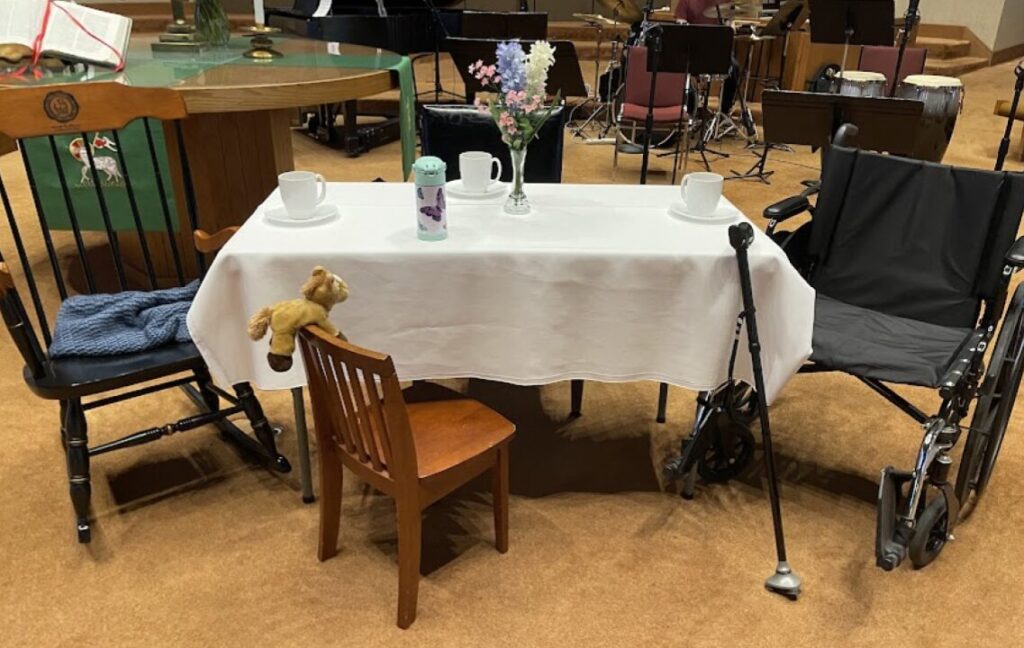
This is a communion picture. It’s about that invitation to say, I see your pain and there are choices. There are options. There’s hope. There’s hope in our faith. There’s hope because every person that comes to this table gets a piece of bread and a cup of juice. You don’t have to pay. We don’t have indulgences anymore. We got rid of them. You don’t have to prove your worthiness to come forward. You just come forward and you will receive the bread and the cup that we believe brings about forgiveness and wholeness and a personal relationship with Jesus Christ.
That’s what we can offer and we can choose to be people who listen to each other.
Sometimes that makes a world of difference. If someone just gets heard, if we are willing to listen to somebody else’s pain, that’s the point of the Compassion Team, they’re there to listen to our pain, anything you want to share, anything that you need to talk to somebody else about, they’re there to listen.
Hopefully, we can ask some good questions because I’ve also learned that it’s not about telling people how to get better. We all have to find the answers within us. So it’s about asking good questions. We can do that. We can be people of empathy and compassion for others. We can be people who want to make a difference in the environment. We can be people who want to make a difference with people who feel victimized right now, LGBTQ+, people of color, and immigrants. We can be a source of safety, and of peace. Of maybe even love and acceptance that they haven’t found anywhere else.
So the question is, who will we be?
How will we respond to Jesus’ call to say, it’s not about our healing, it’s about the healing of others? We’ll receive healing in the process. I do believe that. But it’s not about doing it for us. It’s about doing it because other people need us. Other people need to know the love and compassion we have found, the forgiveness we have found, and the grace. It is about mercy.
So, is that who we’re willing to be? Are we willing to reach out to our siblings and undo the knots of fear? Are we willing to liberate the vulnerable from the prisons of poverty? Are we willing to offer comfort to those who are fearful? Are we willing to step out of the box that we have created as Church of the Apostles because that’s the way we’ve always done it? Are we willing to let those sides down and explore other ways of being?
That’s your decision. That’s for you to seek in your heart.
On April 16th of 1963, the Reverend Dr. Martin Luther King Jr. was in jail in Birmingham, and he wrote a letter to his fellow clergy colleagues, which became famous, in it he wrote that there were words said to him that what he was doing was unwise and untimely. Dr. King argued in his letter that nonviolent direction and direct action were necessary to confront unjust laws and injustice. He also expressed his disappointment with his white friends who seem to be complicit. While others around them, particularly in the black community, were being hurt. He argued that the fight for justice is a moral responsibility.
Now, why am I talking about Dr. King?
Well, I want to argue that this moment that King had with his fellow clergymen was the same kind of moment that Jesus had in the synagogue with those Synagogue leaders.
Let’s set the scene a little bit. Our scripture today, Luke 4:14-21, begins by telling us that Jesus goes back to Nazareth, his hometown, where he’s known. He’s done the wedding at Cana where he changed the six stone jars of water into wine and he’s been teaching at other synagogues in the Galilean region. And now he’s come to Nazareth.
I don’t know what you remember about Nazareth. I’ve talked about it being like the hill country or “out in the sticks”. One of the pieces that came out in my research for this sermon was that Nazareth actually sits on a hill, and it looks out on a plain, and in that plain was the town of Sephoras.
The significance of that is that when Herod the Great was the Roman emperor, that was Herod’s capital city. When Herod died, there was a Jewish revolt and they burned and looted this city, trying to take it into ruins, essentially. With Herod’s death, Herod’s son Antipas came into power and he rounded up all the Jewish people and enslaved them in retribution for what they had done. He then went on to rebuild the city and called it Autocratoris, meaning belonging to the emperor.
These people in Nazareth watched all of this happening. Jesus and his carpenter father, Joseph, may have even been involved in rebuilding the city. But it was very much clear that that was the empire, and that they could see the empire. We have to remember that what the empire did was to look for every means it could to get money from the people.
First of all, I mean that they could live lavishly, but it’s more than that. One of the ways empires do control people is by taking money from them, and by keeping the people poor, they have less ability to rise up against the empire.
With that as a backdrop, today’s scripture, Jesus walks into the synagoguein Nazareth.
He is handed a scroll. I think that’s interesting. He doesn’t ask which scroll he doesn’t ask for Isaiah, but they hand him Isaiah. What he reads is Isaiah 61. What he reads is the first verse and the beginning of the second verse, which is not a lot. So people would have asked, “Why did he stop there? Why didn’t he read the rest of it?”
“The spirit of the Lord is upon me because he has anointed me to bring good news to the poor. He has sent me to proclaim release to the captives. Remember what I told you about the history and recovery of sight to the blind to set free those who are oppressed.” – Isaiah 61
For those of you who were following what did you notice? He added something that’s not in Isaiah. Sight. Recovery of sight to the blind is not in Isaiah. So, then that means we need to ask the question, why did Jesus add that?
It appears that it is a foreshadowing of what’s going to happen and that people are going to see the difference Jesus makes in the town of Nazareth and in other towns. They’re going to see how Jesus has been anointed because Jesus is going to do more than turn water into wine. It’s gonna be a lot more happening.
By what he says, he is also calling out the synagogue leaders. This is where I’m putting it with King’s letter.
He’s calling out the synagogue leaders who were not caring for the poor, who were not working for the release of the imprisoned. Who were not trying to help the oppressed, but who had taken on the Roman system and learned ways to also profit from the people’s thinking of Jesus.
He overturned the tables and the money changers because they were charging an interest. They were taking extra money, their extra cut, just like the tax collectors and all the other ways that Rome could get money out of people. The synagogue had learned it too and Jesus was challenging them. Yes, Jesus was proclaiming what his ministry would be about. But, he’s also saying you need to wake up and pay attention here because stuff’s happening.
Jesus is also going to be talking about the gifts that we can give. There might be a cost, but not a price tag. It’s things that you can’t buy, no matter how much money you have.
These were just some that came to my mind. Amazon might try its best to have everything possible for us to buy with a click. But they don’t sell wisdom or compassion. Energy drinks or energy pills, but not the energy to do good. They don’t sell hope. It can’t be bought in a store. It’s something that comes from within.
As I was thinking about that, I thought about the gifts of the spirit from Galatians. Right after Galatians lines out all the gifts of the spirit, which include patience, kindness, and humility, it says there is no law against such things. There’s no law against them, and there’s no price tag on them.
How might we be about sharing those things? In a couple more weeks, we will be asking you to look in your houses for those things you don’t need anymore, the clothing you don’t wear anymore, and things that you might be willing to let go of for our Annual Garage Sale. That doesn’t cost you money. It might cost you a memory. It might cost you a feeling, but it will not cost you cash to donate it to the yard sale.
In what ways can we be about helping other people and who are those people in our communities now that need help?
I’m not going to answer that question because I want you to sit with that. Who are the people who need help?
Our country’s changing. Our community’s changing. What I asked you on epiphany was about how you will be the light. How will you be a light in the world? How will you be a voice of love, hope, peace, and joy in this world? Because that’s who Jesus is calling us to be.
Jesus told the leaders in the synagogue that’s who he was going to be. He was going to be about making a difference in the lives of people who are hurting. That’s the call on us. The question is, will we have eyes to see? Will we have ears to hear?
You might wonder what the Economy of Jesus is and I’m gonna get into that.
This series we’re gonna look at will take us through February. I want to begin by telling you the story of someone I will name John. That’s not their real name, but to protect his identity, I won’t give you his real name. But there was, in my life, a teenager named John who was very good friends with my son. John had more than his share of struggles in his life. So, John spent a good bit of time with our family. Until they graduated high school and my son went off to school and John just went away. I hadn’t heard anything about John until one day when my son was home from school, John showed up.
He showed up in a van that was not in wonderful shape, but it provided him with transportation and a place to sleep. If you’ve never heard the expression, you can live in a car, but you can’t drive a house. You’ll know what I mean. We found out that John had been living on the streets and what John had shared with us enlightened us because I had no idea. I’ve never lived on the streets. I didn’t know what that was like. I didn’t know how one managed or survived in that type of environment. But, he shared a lot of that with us.
As he went to leave, the van wouldn’t start. It needed a new battery. As it happened we had an extra car. He had an old van. We had an extra car that we weren’t using. It needed some work too, but what it did have was a brand new battery. So, my husband took the battery out, put it in John’s van and it worked. We wanted to gift John the battery, but he said “no, I need to trade you for it.”
So, he brought out his resources and we ended up trading a Target gift card for a battery because then he could feel good about himself too. That was part of what he learned in the community where he lived, was how to share resources. And how when we live out of a gift or trade economy, then everybody has something.
So, I am not an economist. Let’s just put that out there right now. But, I thought, before I start talking about the economy of Jesus, we need to talk about what is an economy.
https://www.youtube.com/watch?v=_5pQJzVTbu0
What came to my mind first was that progressive commercial, where the kid gives up and says, “I’ll just go look it up.”
So I Googled, “what is an economy?” In its most basic terms, it is the way a group of people chooses to create, share, and consume goods and services. That is the most basic definition of an economy. When I try to look up types of economies only command, market, and mix came up.
But, one site gave me traditional. They didn’t want to define traditional very well. But I thought, that’s where I’m putting gift and trade. Because if we think of the indigenous people, our indigenous ancestors, that’s how it all started, right? We started with traders. If you grew corn and they grew beans, you would trade. They are equalizing economies so that the point is that everyone has what they need.
Command is more like communism where the government is going to control everything. The government is going to set all the prices and they’re going to decide what things are. Market is what we say we have in America, which is privately owned, and is driven by supply and demand. Or maybe we have a mixed economy. But, I’m not going to get into all that.
The command, the market, and the mixed economies are created out of a sense of scarcity. This is more important than we think. It comes from this mindset that if you need something, I’m going to lose for you to have what you need. This is where the mentality of hoarding comes in because we think we might need it.
In the history of civilization, there have been really hard times. We know that this kind of stuff lives in our DNA. Sometimes I look at my pantry and I go, why in the world do I have this much food in my pantry?
I’m Irish. So, my great-grandmother left during the potato famine. There’s this piece of me, this strain in me that says, “But there might not be food tomorrow. So you better have enough, not just for today.”
But that’s not Jesus’s economy. We’ll start with a great story about gifting. Jesus didn’t trade in this story. Jesus gifted.
When we talk about the wedding of Cana, we can talk about it in in several different ways. We can talk about it being the first sign. Which it is, it’s the first sign that Jesus was divine. Nobody else ever turned six stone jars of water into wine.
We can talk about that or we can talk about the fact that this is a story about a Jewish man who went to a wedding with his mother and he listens to his mama. He’s a good son. When Mama says you need to do this, he’s gonna do it. Even though he’s the son of God. He can do what he wishes.
As one who has had three weddings for my children, if someone was going to gift me, let’s say six 25 gallons of wine. I’d thank them so much, but could you have told me that a week ago because I would have saved on an open bar. We would just have your wine. Right?
I wanted to do this series because it’s helping us to think about the fact that we all have resources that we don’t even think about that we can use to help others. Jesus’ resource was water and his gifts as the son of God. So once again, we end up with a story where Jesus takes the ordinary, one of the most basic elements of creation, water, and creates something extraordinary.
I want us to think about that. What are the gifts that we have in abundance?
This photo was taken by Steve Daniels on Christmas Eve. There was a huge amount of candlelight created on Christmas Eve. In this space, when the lights were all off, just sharing the light that didn’t cost us. Look what we did when we came together, because none of us may feel like we have an abundance of resources, but when we pool our resources, when we come together and work together with our resources, I think we would find that we have an amazing amount of time, energy, wisdom, knowledge and money that can be used to help others.
We can gift money. That’s what we do with the Apostles Assistance Fund. You all put into that fund and when people come to us in their hard times with paying rent, bills, etc. We help and we gift them money. That’s what donating is, it’s gifting.
You gift this community with your offerings. It’s something that you do because you trust that we are not just using it for our pleasure, but to do the work of God in this community and this world. That’s how we come together.
I want you to think about your abundance rather than your scarcity, regardless of where you are.
Even if you can’t leave home you can listen to another person. That is a gift that is so needed. In our world right now, so many people feel alone and they just need someone to give them attention. That’s also driving some of the poor behavior that we see in our communities.
I’m going to give you another opportunity, something to think about. Next Sunday, join me in Fellowship Hall where we’re bringing together as many people as we can within our county to start dreaming about systems that can help protect people who are marginalized or feel afraid. That’s part of our mission, to be a safe space for those who feel powerless or afraid.
There are those among Power Interfaith, who believe that we are going to have times and there will be people in our community who are going to need safety. We’re either going to need to house them or we’re going to need to move them to a safe space. This may be shocking to you, but we are actually thinking about recreating an underground railroad. It’s that level. Some people feel threatened right now. If that’s something that you would want to be part of, then I invite you to come to the conversation. There’s no obligation right now. We are just in planning.
I pray that we will never have to use any of it. But rather than wait till something happens and try to react to an event, we’re going to prepare for it and pray we don’t need it. If that makes sense.
It’s called love through resistance. So I pray that you will consider in your life, what are your gifts or what do you have in abundance?
I talked to one of our members who can’t get out as much, and they said to me, well, I can’t really do much for the church. I said, you can do so much because you like to talk on the phone and there are people who are lonely. If you would call them, it would make an immense difference. Just a phone call for those of you that live in retirement communities, saying “hello” or “how are you” may be the thing that somebody needs.
We live in a great and wonderful world where resources are abundant, even in January. I invite you to start thinking about the abundance that you have and what you can share with others.
Technically tomorrow is Epiphany. It is always on January 6th. It is the 12th day of Christmas. If you know the song, 12 days of Christmas, tomorrow is the 12th day. In the Eastern Christian church, tomorrow is Christmas.
When my seminary class did our cross-cultural to Turkey we got there on January 2nd. On January 6th, when we went to church, we watched their Christmas pageant with their children, because they were celebrating Christmas day.
Not so much in the U.S. But we like to still lift it up. Sometimes it is a Sunday where we talk about the Magi because the Magi did not get there at the same time that the shepherds were there. Things just didn’t work out quite that way. We just like to put it together in a neatly packaged story.
But, today I chose this reading from Luke because we are in the Gospel of Luke for our lectionary this year.
I love this reading about Simeon and Anna. I think it’s a lovely story. So, that’s the one that I thought I wanted to bring up today. And as I was doing my readings recently, a story came up for me about the Maasai people.
The Maasai people are nomadic people who live in southern Kenya and northern Tanzania. They are herders, and they have cattle, sheep, and goats, and they move based on feeding their livestock. Because they move around, they meet each other at different times. Other people that are part of their tribe. The greeting that they always do when they meet another person, another messiah is, “How are the children?”
I just want you to sit on that question for a minute. The answer that they’re hoping for is the children are well because the Messiah people understand that the children are the most vulnerable in their society and if the children are being cared for, then everyone is being cared for.
The Maasai tribe understands that even if you don’t have a child, the well-being of the children is your responsibility. Everyone takes responsibility for the well-being of the children.
I just wonder if that’s not something we should think about. As a congregation for 2025, I’m suggesting that we become the beloved community that would be concerned about the well-being of the children.
Think about our community. Think about our country. Could we answer that the children are well?
We don’t know why Simeon and Anna came up to this child when Mary and Joseph brought Jesus into the temple for his dedication. It was part of the law that the firstborn son was to be dedicated to God, to the Lord. So, they did this.
One of the first early ones is in the Bible, and there’s a good bit made about it was when Hannah dedicated Samuel. Hannah also was one who had prayed for a child, and then a child was given to her, and she dedicated Samuel to God. But here, Joseph and Mary come to the temple, they’re following the law.
Luke is reminding us that yes, they are Jewish. They are Jewish and in good order, right? They know the law. They are following the custom, the tradition. They’re bringing this child to be dedicated. It’s also for Mary’s purification. That’s part of it, too, so that she will be considered clean again.
But Simeon and Anna come up to this child and then Simeon sees something in this child. There is something different about this child that we know as Jesus. In their language, it would have been Yeshua, which means the Lord saves. His name means the Lord saves.
And then we have this part, “Now let your servants go in peace for my eyes have seen the salvation” – Luke 2:29.
It’s called the song of Simeon and I read it every at every funeral. It’s the commendation prayer. That’s the song of Simeon. The note de Midas is the Latin for it, meaning it is the dismissing. You are now dismissing that as Simeon’s. Call of liberation, his song of liberation. He no longer feels that he is under Roman at the Roman empire. His soul is at peace because he has met the Lord, the Lord’s salvation. He is just a member of the Lord or a slave to the Lord, not to the Roman empire any longer, and his soul can depart in peace.
It’s quite powerful. I hope the next time you attend a funeral here, which I hope is not anytime soon, you listen for that. Because I almost always do it. I don’t know how many other people do that prayer at funerals, but it’s a beautiful prayer about how God is making the world right. Even if that means that we have lost someone, we are at peace. It’s acknowledging that we are at peace as Simeon was at peace. Now that he has met this baby.
Anna agrees. Anna just supports what Simeon has said. Usually in Luke, he tends to favor the women. Luke tends to give women voices. And in this one, Simeon gets the voice. Simeon gets to say everything and Anna just goes along with it and supports it. But it’s a lovely story.
So, if we have been redeemed, if our salvation has come, if the light of the world has come, and now it is our job to carry that light into the world, what does that look like?
How do we carry the light into the world? Well, that’s where I thought Colossians 3:12-17 tied nicely to this. I boiled it down to just a few items.
So being the light of the world means clothing ourselves in compassion, kindness, humility, meekness, and patience. What if those were our top virtues? What if that is what we valued? Compassion, kindness, humility, meekness, and patience. That to me is being the light of the world.
It’s not easy, and we always fail. Sometimes we’re better than others. But we have the ability to remind ourselves that we also get forgiven. Because God does not expect perfection. God expects that we will try. That we will do it to the best of our ability.
So we are called to be the light. Remember, the light is what all of creation needs. If the sun went away the rest of us would wither. Everything needs light to grow and to be healthy. However, if we have too much light, we’re blinded, right? Too much light is blinding. We can’t see anything. So we have to be enough light without being overpowering.
But the light that we are to be is to be a light that attracts others to shine.
We want them to say, “I want to know what they know. I want to live like that. I want that peace. I want that love. I want to be that compassionate and kind. That patient.” I know that’s one of my challenges. I could always be more patient with myself and others.
So how will you be the light of the world in your place? We can’t affect the whole world, but you can affect the people around you.
How will you be the light of the world in 2025? And how are the children? Are they well?
When I think about Humility, this verse always comes to my mind, “To act justly, love mercy and to walk humbly with your God.”– Micah 6:8
They’re the words of the prophet Micah. When I was thinking about the story of Christmas, I thought, where was humility involved? I decided to start talking about Charles Dicken’s character, Ebenezer Scrooge. Because I think Ebenezer needed to learn a bit about humility. He was one who thought that the be all for him was his money. He put all his faith in his ability to live the way he wanted to live, albeit tightly so that he had more money. Money was going to be his salvation. Think about that.
I think there are some other people who look at money as their salvation. Certainly it helps, but money does not save us. And that was the lesson he learned, that although he could control many things, he could not control in life.
Actually, I think being humble is one of those pieces of our faith journey that is very difficult for us.
Because if we’re honest we’re a bit like Ebenezer and we want to do our own lives. We love being independent. We don’t want to have to rely on anyone. We want to do it our way. We have our own agendas, time frames, and lists to be checked. It’s Christmas and I found myself obsessing about the food needing to be made and the gifts needing to be wrapped. It’s part of the season and our culture certainly encourages that feeling, but none of that is about God.
God is asking for a very different reaction from us. I often use the 23rd Psalm in funerals to remind us that our God is the one who wants to run our lives. Who will take us to those gentle streams and those, those fields, but will also sit us down at a table with our enemies. It was not meant to be an easy life, but God is looking for our attention.
As I was thinking about this, I thought about the second and third steps of the 12-step program of AA (Alcoholics Anonymous), which, Bill Wilson and Dr. Bob Smith, created not as a religious organization, but they recognize that part of what we have to do is know that we are not the be all and end all that we think we are. It is not all about us, and there is a higher power to whom we answer. We call that Jesus Christ, God, or the Holy Spirit. Other people might just say the divine, the creator, but there’s someone who is organizing the world and trying to influence the world. It is more than any of us. We have to look at that in our lives and we have to make the decision.
It’s a choice every day. Every moment of every day to stop focusing on ourselves and turn our attention to what God would want for us, what Christ wants for our lives.
What is Christ calling us to do? The wording I’ve been using is, what’s the next most loving thing to do? Because I think that’s what Jesus calls us to. What is the loving decision, the loving choice in each of the moments?
Today we are looking at the character of Joseph.
Our scripture today is Matthew 1:18-25 and it’s Matthew’s version of the Christmas story. Remember, Matthew had a very definite goal. Matthew wants to make sure that we know that Jesus is Jewish and is in the line of David.
When you start Matthew 1, the first 17 verses is all of his genealogy, which goes all the way back to Genesis, but connects Jesus to David. Interestingly, through Joseph, but connects the dots for us and then gives us this image of this earthly father. Stepfather is the language we would use today, who will come into Jesus’s life and guide him in a loving way.
It wasn’t the decision he had to make. Divorce was an option. We think of divorce as after people are married and that may not be a good translation either because they weren’t married. She was promised to him. There was a contract. Because that’s how marriage worked at that time. So, he could have said this pregnancy makes it null and void and that would be our language of a contract, right? The contract’s null and void. I don’t need to marry her, I can break this contract and walk away. I don’t need to be part of this.
But had he done that, he would have left Mary in a very desperate position, because at that time you needed to have a male to have any kind of power or money. She would have been destitute and very likely she could have been stoned because they would have thought that she had an affair with a married man, so it could have cost her her life.
But that wasn’t the decision he made. He made the decision for love. He chose life instead of death. And that’s at the heart of this story. I think that God wants us to choose love and to choose life.
Unfortunately, I have to name that this feels very political right now. So, I also need to say that as I affirm choosing love and choosing life, that is not necessarily at someone else’s expense.
The abortion conversation has become politicized and it’s a health decision and they are all individual cases. We don’t know what is going on in the lives of people, but we can still advocate for love and for life. I think we can hold both of those pieces because advocating for life means you advocate for the entire life of the child. Not just it’s birth.
So as we approach the end of the year, I want you to consider what challenges you met this year with God’s strength. How did God help you get through this year?
Where did God help you adapt, pivot, or show resilience as you may have met some struggle in your life? What small or big milestone can you honor without ranking or judging? Where did you act with love? Where did you show humility, instead of insisting that it be your way?
Those are big questions for us to sit with. So, I hope that between now and the end of the year, you take some time to consider that. It really does come down to that old Deuteronomy, where Moses looks at the people and he says, “life is laid out before you choose life or choose death.”
The decision is yours. We can’t avoid death. But we can avoid some of the heartache, struggle and the pain. Because we cause a lot of our own issues. We can avoid that by choosing love, choosing humility, and choosing life.
On this second Sunday of Advent, we’re talking about waiting. I’m wondering, how well do you wait?
Think of the places and times you’ve had to wait. How good are you at that? At waiting in long lines? Waiting for news about a test? Waiting for something to happen? I know there’s quite a few young people among us who are waiting for a special day this month.
We all wait differently, but I think our ability to wait has a lot to do with how much patience we have. When I was thinking about patience, I realized that patience is directly correlated with peace. It’s very difficult to find peace if one is not patient. They go together.
One of the paradoxes of Christianity is that we believe Christ has been born and is the Messiah, and yet we don’t fully realize what that means.
Because we haven’t as a world found peace. We’re in this in between space. This paradox is actually the tension between Christianity and Judaism, because we say the Messiah has come. They say, if the Messiah had come, there would not be injustice anymore. There would not be hatred. There would be peace on earth. We have this tension there. What does this peace on earth look like? How do we make that come about?
One of the scriptures that is used this Sunday is about John and the Baptist. One of the pieces that he talks about with the messiah coming is that is that “Every valley shall be lifted up and every mountain and hill made low; the uneven ground shall become level and the rough places a plane” – Isaiah 40:4.
It’s this evening out that is supposed to happen with the messianic age. We don’t have that yet. We’re still on our way towards that.
While we are in this time of waiting, let’s talk about Zachariah a little bit. I think Zachariah and Elizabeth can be a model for us on how it is to wait.
When I think about Zachariah and Elizabeth, for me, it brings up Abraham and Sarah, an older couple who thought that they were beyond childbearing, who suddenly are going to bear a child, because of what God is doing. God is in the midst of this. And he can’t even talk about it. He has to wait in silence, so to speak.
He is able to write, because I wondered about that. I thought, well, can’t he just write this all down? It appears that he doesn’t write anything down until John is born. He writes down his name will be John and then his speech is returned.
But can you imagine having that kind of wonderful news? Maybe a little scary too, right? Could be a little fear in there. Some of us in here are beyond childbearing years. How about if somebody told you you were going to have a child? I enjoy having that grandson that I love to death and then I give him back to his mother.
That’s where they were. They were in this expectancy. Imagine it. This almost but not yet. The paradox.
Then we have Romans 12:18-27. ‘Let love be genuine; hate what is evil; hold fast to what is good; 10 love one another with mutual affection; outdo one another in showing honor. 11 Do not lag in zeal; be ardent in spirit; serve the Lord. 12 Rejoice in hope; be patient in affliction; persevere in prayer. 13 Contribute to the needs of the saints; pursue hospitality to strangers. 14 Bless those who persecute you; bless and do not curse them. 15 Rejoice with those who rejoice; weep with those who weep. 16 Live in harmony with one another; do not be arrogant, but associate with the lowly; do not claim to be wiser than you are. 17 Do not repay anyone evil for evil, but take thought for what is noble in the sight of all. 18 If it is possible, so far as it depends on you, live peaceably with all.”
It’s so important that I would challenge you to read it every single day this week. Just keep reading it every day because it is the heart of Christianity. It’s about focusing on love and how can we love others in a better way.
How do we do that? It starts with let love be genuine. It’s not about putting on a mask and being kind. It’s about really being kind, wanting to do that from your heart and reminding yourself each day, what that’s about.
The part we didn’t read the next verse, Romans 12:19, goes into “vengeance is mine, I will repay, says the Lord.” God will take care of all the other stuff. Our role is to love others, to not get caught up in our stuff, so that we can see the needs of others.
The words we used in raising our children were helpful, thoughtful, and kind. That was their goal. Every day you needed to be helpful, thoughtful, and kind. If we just took that to heart, we would be closer. But I want to encourage you to sit with that.
I know that right now life is difficult. There’s a lot of us that are grieving for many different reasons that life just feels overwhelming. So, I want to share with you this meditation practice. It’s called RAIN.
RAIN is an acronym and it was created by Tara Brock. These are the four steps.
Recognize: What’s going on? Recognize the situation and how you are reacting to it. Recognize, look at your feelings. When something happens, notice your body. Are you clenching up? Do you feel all jittery? What’s happening? Just notice it because in noticing it, it gives you some space to then allow it.
Allow: This is the let it be and let God by allowing it, noticing it and allowing it. We give room for the spirit and the spirit has space and time to work with us. There’s another phrase that says, what we resist persists. So don’t resist it.
Investigate: Be curious, go for it. That will take you from a place of maybe anger or frustration. Be curious, go into that wonder. What’s this about? Why am I feeling like this? What’s going on here?
Nurture: Be kind to yourself too. Give yourself grace. Forgive yourself. Allow God to speak to your heart. Listen to your heart. Because that divine, I often talk about the little bit of the divine that is in each of us. We can learn to hear it. When we practice listening to it. Let’s practice that. Let’s work on those muscles.
When I was preparing last week’s sermon, there was a lot about the muscle of hope. Well, I think there’s a muscle here too, because we only experience peace when we practice peace. We will only find it elsewhere when we have it first within us. If we go looking for peace outside of us. We’re not going to find it.
It has to start here.
So I encourage you to think about that this week. Pay attention to how you’re feeling in the different situations. Allow God and the spirit within you to take care of you so that you can be there for others.