God of Abundance

Like this Sermon? Click Here to View More

Prefer to Listen to this Sermon? Click Here to Listen to our Being Apostles Podcast


Untied or United

Like this Sermon? Click Here to View More

Prefer to Listen to this Sermon? Click Here to Listen to our Being Apostles Podcast


Take Notice

Life Without Vision, Courage, and Depth is simply a bland experience.

Like this Sermon? Click Here to View More

Prefer to Listen to this Sermon? Click Here to Listen to our Being Apostles Podcast


Yours, Mine, & Ours

Like this Sermon? Click Here to View More

Prefer to Listen to this Sermon? Click Here to Listen to our Being Apostles Podcast


Blessed to Be a Blessing

Testimony is a word that we don’t use a lot.

Like this Sermon? Click Here to View More

Prefer to Listen to this Sermon? Click Here to Listen to our Being Apostles Podcast


Love is Love: Free Showing of “The Grove”


Always Room

I want to go back to that first scripture (1 John 4:7-13) about love because a lot of times when we talk about love, I think we’re a little confused about what kind of love are we talking about?

What is the most loving thing I can do?

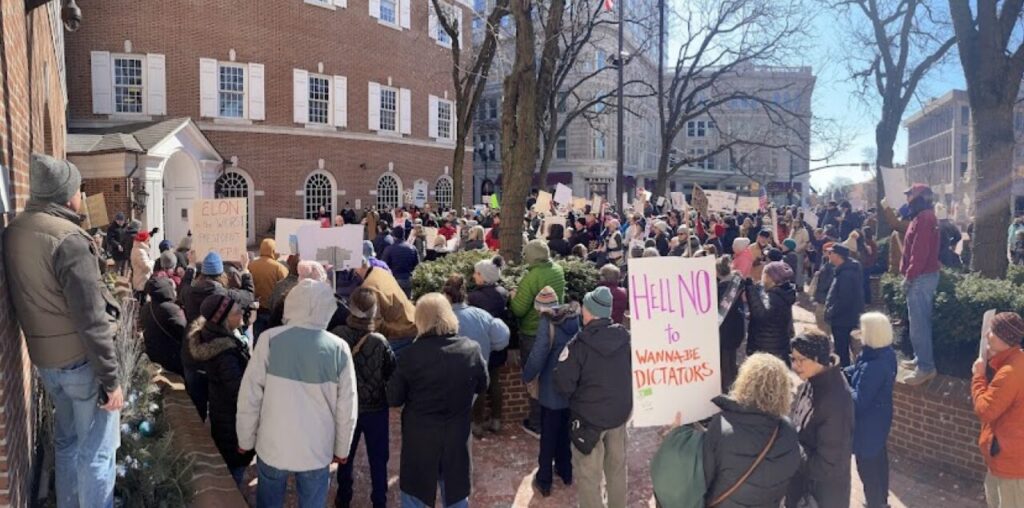
On Thursday, April 18th, the most loving thing I could do was go to this rally called Justice for Education at J. P. McCaskey.

Like this Sermon? Click Here to View More

Prefer to Listen to this Sermon? Click Here to Listen to our Being Apostles Podcast


Shepherding Our Lives

This image of Jesus as the good Shepherd is one that I think we really love.

Like this Sermon? Click Here to View More

Prefer to Listen to this Sermon? Click Here to Listen to our Being Apostles Podcast


Sit Up & Take Notice

This is one of those days that I think everybody really likes. It’s Palm Sunday.

This is the celebration. This is a high point of the church year. Jesus is coming in. He is in charge of this scene. He tells them exactly what to do. He’s not the large and in charge Jesus that we hear in John’s gospel, but he still is orchestrating the events.

He knows, tells them exactly what to do. It appears from the scholar’s point of view, looking back at this, that he’s completing the prophesy from Zechariah 9:9-10.

Jesus is coming in riding a donkey from the east side of Jerusalem from Bethany and Bethesh. At the same time, Pilate and a whole. legion of Roman soldiers are coming into Jerusalem from the west. Because they also know it’s Passover. And there is a history that during Passover there have been riots. So Pilate is bringing extra soldiers in to keep the Roman peace. They don’t want any trouble. They don’t want any uprisings.

So here, you’ve got this humble man coming from the east and you’ve got Pilate and the war horses coming from the west.

If you’ve read Zechariah 9, you’ll understand how that is all part of that scripture. We are called to sit up and take notice. We are called to pay attention to what’s happening in this scene.

Look at the difference, and notice it. Look at where the love and the compassion is.

So, Jesus comes in during the day, and at night, he goes back to Bethany. He goes back to the house of Simon the leper. This story of his anointing, Takes place in all four Gospels. It is worth noting when they happen and how they happen. And who. Because, in some situations it becomes a character. The woman is named as Mary. Most times the woman is not named.

So what I find interesting when I have a passage like this that occurs in four different gospels, number one, sit up and take notice. It must be an important story or it wouldn’t be in all four gospels.

Then I look at what’s different about Mark. What’s different in this story? Matthew and Mark’s versions are the closest. Now, remember, and I actually put them in that order, because Luke’s is so different, and even John’s is different. But Mark’s would have come first. Mark’s gospel was written first. Matthew definitely used Mark when he was writing his gospel. So those are the closest.

Both of those accounts, the woman, it’s an unnamed woman, and she anoints his head. Now, you have to stop and think about what does that mean? What does it mean to be anointed on the head? Well, anointing is an ancient Jewish practice. It was done to the kings. This is also important. It was done to David and to Solomon. They were anointed as the kings of Israel.

So, it’s meant to make us think, is Jesus a king?

It is also done when something is marked for holy purpose or that the holy is there. Think about Jacob anointing a pillar of stones because he encountered God.

So, there’s something holy and divine about Jesus. This is recognizing that also. She breaks open this jar, Mark is the only one in which she breaks the jar.

It is Nard, and Mark has Jesus tell us it’s because she’s anointing me for burial, which also is foreshadowing that he knows he’s going to die, according to Mark. He knows he’s going to die, and I even think you could go as far as to say she’s anointing him because she knows they’re not going to be able to anoint his body after his death.

But I kept sitting with this, but why did she break the bottle?

It only happens in Mark. I went looking for other scholars to say something about that, and I didn’t find them. Not that they’re not out there, but I didn’t find them. So I had to sit with it myself. Why was it important?

Because that’s the thing about Mark. Mark uses the least number of words he has to. It’s the shortest gospel. Things are explained briefly. So for him to use that word, and it’s the same word that they use in the story about the Gerasean, sometimes they call him the demoniac in different versions. The crazy man who’s out and he breaks his chains. There is this breaking. It’s definitely breaking. She specifically breaks the bottle.

But what I came up with were two things. If you break the bottle, that means you’re using all of it. You’re going to use the whole bottle at once. Which means Jesus is going to be overwhelmed by that oil and that smell. Both for himself, he’s going to smell that for the next few days. Because remember, they didn’t take showers every day like we do. So that smell is going to be with him, reminding him, reminding others as they encounter him. I think it is also part of this foreshadowing that not only was the bottle broken, but he will be broken. His body and his heart will be broken by the events of this week.

We need to sit up and take notice. We need to notice this.

We need to notice where we are in the story. We know this isn’t the end of the story, that we’re coming back next week for an ending that we could not see at this point. But this is the point in the service where we shift from palm to passion. I do hope that some of you come on Thursday and come on Friday to experience the rest of the story before we get to Easter. That I’m giving you a little bit of this passion because we do need to sit up and take notice.

In that scripture, the one that I read, Mark lines out three groups of people. The first group identified are the scribes and the Pharisees who want to get rid of Jesus and Judas Iscariot joins them. There’s the group of people that includes the woman with the ointment who loved Jesus and whose love is extravagant. Right? This was a very expensive ointment. This is an extravagant love of someone. Then there’s a third group that just doesn’t understand. Which is probably where the rest of the disciples are. That’s a running theme in Mark’s gospel. That the disciples don’t get it. And maybe that’s where we are too.

But without saying it, Mark is asking us to think about which group are we in? Do we want to get rid of Jesus too? Will we be the ones part of the crowd yelling for Barabbas on Friday night? Are we part of the group that loves Jesus enough that we will be able to stand and watch and allow our hearts to be broken? Or are we just part of the group that doesn’t understand?

Now, I’m going to say it’s time folks to sit up and take notice what is happening in our community.

This has been a hard week and there are other churches that are celebrating that God’s will was done yesterday. But this week was not about love and was not about compassion. I heard more hate, violent speech, and threats this week than I have in a very long time.

We are called to be about love. I have to find within myself a way to be merciful, because we are to be about compassion, not violence.

Sit up and take notice.

Like this Sermon? Click Here for the next Sermon in our Lenten Series

Prefer to Listen to this Sermon? Click Here to Listen to our Being Apostles Podcast


Saved By Love

If you came today for a feel good sermon, you picked the wrong day.

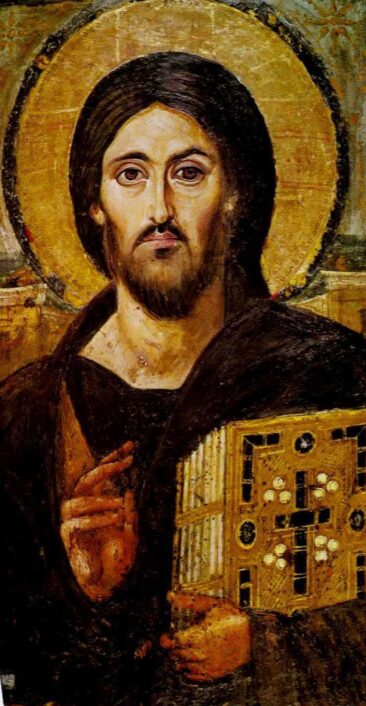
If you came hoping that there would be a lot of images, because I usually use a lot of images, there’s only one. This is a very different sermon. It almost looks like it’s very black and white. Because there’s a lot of words, white words on black backgrounds. I don’t mean it to be quite that black and white, because I believe in a lot of grey in this world.

I want to start by defining some terms.

One of the things that we need to know is definitions on what is sin or trespasses.

In the Ephesians text, the word trespasses is used. So sin and trespasses are essentially the same thing, both of which are in opposition to God’s benevolent purposes for the world.

It’s something that opposes God. Not trespasses as in our contemporary, meaning you stepped on my property and I didn’t want you to. Trespasses as in something that is going in against what God wants, or in opposition to God, or even away from God.

Salvation, or being saved, means being reconciled with God again.

That’s the whole journey of the Bible, is that we started with God, somehow we broke off from God, we stopped following God, we tend to follow with our free will, we tend to go our own ways, and we forget about God, and we need to be reconciled with God. That is being saved or that is what salvation is.

Grace is God’s favor that is given to us.

Mercy is also used and mercy means compassion or the word also can mean pity. So God can have compassion on us or grant us favor when we don’t deserve it.

We’ve done nothing to deserve it. Those are important points that you just need to remember when you look at these scriptures.

I’m going to focus on John 3:16-17. Then, a couple verses out of the Ephesians text.

This is probably, at least by John 3:16, the most recognized scripture of all. I don’t know that everybody knows what it says, but we paint it on our barns and we make signs and take them to ball games.

John 3:16. “For God so loved the world that He gave His only Son, that whoever believes in Him should not perish, but have eternal life.”

But there’s a piece of that that I think we forget or we gloss over. That is that word “Whoever” or the old language was “Whosoever”. Some of the more contemporary ones use everyone, but that everyone believes in him.

I lift that because that’s not what we’ve practiced. That’s what it says, but then we said, “You don’t look like us, you don’t talk like us and you don’t act like us. So, sorry, that doesn’t apply to you.” How dare we? Who do we think we are?

That’s not me saying that to just you. That is the church, Big C. We’ve been doing this for years. Saying who’s in and who’s out. Who’s really saved and who’s not. Because they don’t follow or believe the way we do or think the way we do or look like us.

Whoever believes in him means we don’t get to choose.

I found a beautiful quote by Mary McLeod Bethune. She was a black woman who grew up in the Jim Crow South. She has been described by Alan Dwight Callahan as an educator, activist, and presidential advisor. She was born in 1875 and died in 1955. Here’s her whole quote:

“….Did you hear that word, ‘whosoever’? That whosoever means you. Not just white people. Not just rich people. You! This is where your human dignity comes from- from God, our creator and savior.” – Mary McLeod Bethune

There are no qualifications. Whosoever. That means inclusiveness that we have been talking about. That everyone is invited in. Everyone is invited to the table. Everyone.

Now, I want to look at John 3:17 because I think we often forget this one too. We stop at 3:16 and we forget to read the rest of it. “God did not send the Son into the world to condemn the world, but in order that the world might be saved through him.”

It’s not about judgment and condemnation.

In fact, we are the ones who by our choices create consequences. God’s not condemning us. We’ve lived with that for a long time.

The church, Big C. has made a lot of money, gained a lot of power and influence over making people feel guilty, feel ashamed, and by scaring them. That’s not what John 3:17 says. What this says is that God loves us first and foremost, and that because of God’s love, we’re not condemned, but saved.

But that didn’t suit us. So we’ve manipulated this. That’s where we’ve been wrong.

Christ is our experience of God. Emmanuel, God with us.

We have had an experience of God in Jesus Christ, and we have been reconciled. That’s the story of the cross.

Our sinfulness, it exists, but it does not define who we are. We are broken and whole at the same time. We hold that. We do not understand it. That is the mystery. We don’t know how we can be broken and whole at the same time. But those are the words. That’s what’s there.

We are created not to be perfect, but to be whole and to have an abundant life. Created to be saved, to be reconciled, in spite of ourselves.

That’s where the Ephesians text comes in.

“But God who is rich in mercy…” Let’s say rich in compassion “…he loved us, that even when we were dead through our trespasses, sins, and transgressions, he made us alive together with Christ. By grace you have been saved.” – Ephesians 2:4-6

I want you to read this and I want you to think about it. When we read these passages, what do we learn? Did you catch anything that was the same out of both John 3:16-17 and Ephesians 2:4-6?

Here are some of the things that I saw. I see that both of those passages lead with God’s love. God’s love is where it starts and ends. That’s the most important thing. We are saved by love. The love that we have, that we did nothing to earn, except that we are God’s creatures. We are part of God’s creation. And we are loved just as we are. We don’t have to prove our worthiness. We all fall short, but God loves us anyway. It’s not about having to be worthy. We are good just as we are, with our brokenness, with our frailties, our sins, our trespasses. We are loved.

Everyone is loved, regardless. Christ came to help us understand that we’ve had this reconciliation.

That was Christ’s message. If you look at the stories over and over, Jesus goes out and meets people where they are, and reminds them that they are loved and forgiven. Their faith is what drives it. Their sins are forgiven. “Your faith has made you well.” – Luke 18:42

Someone asked me, after a sermon the other week, if I believe that everybody’s saved. And I do. Because of these verses. It’s right there. I do believe that everyone’s saved, except that we still have a choice from the very beginning. We have a choice to say, “No thanks, God. I’m doing it on my own.”

Right now the church is frustrated and struggling because so many people are out on their own or asking God, “Where were you? I needed you. You told me I was out. You told me you didn’t have love for me. You’ve already lied to me once, I don’t know if I can trust you again. Even if the world’s falling apart.”

That’s where we are today. That the world is falling apart.

People are looking for where they can find answers. Where are they loved and safe? And the question is, is that us?

Our vision and mission says yes! Our vision and mission that we discerned says that God expects us to love everyone, to welcome everyone, and to help everyone know that they are okay.

That doesn’t mean that everything works out beautifully.

For those who say, “No thanks, don’t need you, God”, there are consequences when we do that. Just as I think that there’s consequences when we look at, look at God and say “You told us that we’re supposed to love everybody, but we’re not.”

When we choose to do that, I think there are consequences.

We have had three people who identified as trans commit suicide in the last three to six months. I think some of that was in the fall of 2023, so I don’t think it was just in 2024. We just had another suicide, Ash Clatterbuck.

In my work in the community, I’ve had several people talk to me about it. Different people in different places that just brought up the subject. What are we doing? Who are we as a community?

Ash was loved and supported fully by their family, was loved and supported fully by the church, and yet they couldn’t handle the pressure of the community.

What does that say about us as a community? That’s bigger, right? That’s Lancaster. Lancaster City and County. What does that say about who we are?

We need to look at who we are, because it matters. It matters a lot.

Like this Sermon? Click Here for the next Sermon in our Lenten Series

Prefer to Listen to this Sermon? Click Here to Listen to our Being Apostles Podcast