I have been reminding us of the importance of reading the text rather than thinking we know what it says.
Today’s scripture is one of those that we can easily confuse with the sending of the 12 disciples, which occurs in all three synoptic gospels. Luke sends the 12 disciples out in chapter 9 with very similar instructions to those found in today’s reading.
This led me to do a bit more research about the similarities and differences in the two stories. The similarities which can lead us to confuse the two include:
Take “no baggage” only what they are wearing
Find a home who will receive them and stay there
If they are not received in a town, “shake the dust off” their feet as a sign of coming judgment against them
Announce “the kingdom of God has come near”
However, the differences are also worth noting:
Luke 9 uses just the 12 disciples which is symbolic of the 12 tribes of Israel. Matthew even names that they are to go to “the lost sheep of Israel.” Whereas, Luke 10 sends 72 which correlates with the Genesis 10 account of the descendants of Noah which populate the earth. Therefore, this message is for everyone rather than only Israel.
Luke 10 has a sense of urgency and danger. So, they are to “greet no one on the road” as that would have taken up important time and they are “as lambs among wolves” which leads into the judgments against some of the towns in the next verses.
And when the 12 returned, Jesus took them off by themselves to rest. Whereas when the 72 return, Jesus proclaims “I saw Satan fall like lightning from heaven” as the forces of evil were impeded.
Another piece of both of these stories, is the importance of collaboration, which is the piece that I want to focus on.
Jesus’ directions to go out in pairs meant they were to work together, as this work is not meant to be done individually. Then his direction was not to take along any extra provisions, which meant they had to depend on the hospitality of those they met, and deeper connections would be made. The power of their testimonies and healings would be greater. All of which was proven true.
This points towards the truth of our interdependence; however, we prefer to think of ourselves as independent. We want to serve others – to give out of our abundance. It makes us feel good about ourselves. But Jesus challenges this thinking and calls for us to be vulnerable and connect through our needs so that those we serve can also serve us. This levels the power dynamic and puts us “on equal footing” with those we are helping.
Stop and think for a moment about when you were helping someone else.
Did you think you needed as much help as they did? I know I haven’t. This also helped me to think about the truth that we cannot be healers unless we ourselves are healing. Carl Jung’s theory of the “wounded healer” suggests that our wounds give us a unique perspective to relate to another who is wounded. In helping another find healing, healing comes for us too – not a healing of removing the wound but making meaning in the woundedness and finding peace.
Our wounds give us common ground for healing. If we deny that we need healing, we cannot heal. This is at the root of our toxic individuality, which is hurting us and causing more division.
Think of those you know who think they have no faults, no need to confess, no need for forgiveness. They are difficult to be around. When we demand that things be the way we want them, that we only sing the songs we like, then we leave no room for the diversity which is in every aspect of God’s creation.
It is like the African proverb: “If you want to go fast, do it alone.If you want to go far, do it together.”
And today on this World Communion Sunday, it seems very fitting that all around the world we are remembering Jesus and the meal he shared with the disciples.
A meal that he has invited us all to share equally. All are welcome. All are fed. We share the bread of life and the cup of forgiveness, knowing that we are all in need of healing and that Christ meets us here, offering meaning and peace to all. Thanks be to God!
I was recently talking with my sister-in-law in Georgia about her search for a new church.
She likes the high church liturgy, but she wants a church where she could do one or two things to help the ministries without feeling overwhelmed. So she went looking for a church where most of the membership was involved in some type of ministry, rather than a few people running almost everything.
Are you surprised to learn that it took her a long time to find one? And the one she found is making a real difference in their community. It is amazing to learn what a small church can do when everyone participates in just one ministry, but it takes creativity to find the right blend.
As Fredrick Buechner said, “The place God calls you to is the place where your deep gladness and the world’s deep hunger meet.”
Our scripture for today is from Luke’s gospel which has been called the “Gospel of the Poor” and “The Gospel of Women” for his concern about the marginalized and oppressed.
Although there are more women in Luke’s gospel than in the other gospels, they are still the minority and their role is one of nurture rather than leadership or authority. In this gospel, the poor are called blessed and Jesus specifically helps disabled beggars and the hungry.
Luke is also known for comparing male & female characters. In today’s story the unnamed woman is compared to Simon the Pharisee – Who is the faithful one? All four gospels have a story of a woman anointing Jesus’ feet. In the other three, the anointing took place during Holy Week as foreshadowing his death and burial. However, Luke has moved it into his time of ministry, and may have been creating the case for Jesus as “a friend of tax collectors and sinners” (7:35), in contrast to the Pharisees who rejected “God’s purposes” (7:30).
It also appears purposeful that Luke put this story of the “sinner” who is forgiven right before naming the women who accompanied Jesus in his travels. Western Christianity put these stories together and equated Mary Magdalene with the sinner, even though it says she was the one healed of seven demons. There is no reason for the claim that Mary Magdalene was the “sinner” or a “prostitute.” And in this story, the unnamed woman is the one praised for her faith, and Simon the Pharisee is the one whose errors are named.
In this scripture, both the woman and Jesus show creativity. For the woman, she uses what she has to have an encounter with Jesus, and we aren’t told that she was looking for anything more. There is no mention of her coming seeking healing or forgiveness. The only motive she exhibits is pure love.
And Jesus’ creativity helps us to learn that creativity is about seeing things differently, seeing a situation differently so we can figure out solutions, seeing people differently so we can be in right relationship with them, seeing ourselves differently so we can change our own inner judgments about others and ourselves.
This prayer encourages us to acknowledge our own powerlessness: “the serenity to accept the things I cannot change.” A skill most often undervalued in our society! Then, an encouragement for creativity in what we have agency over: “the courage to change the things I can,” which is only ourselves! And asking God for the wisdom we need to be continue the journey: “and the wisdom to know the difference.”
Because we are NOT alone – unless we choose to be! It seems that we are created with a hole within us that can only be filled by compassionately caring for others. And as the Bible tells us that we are created in the image of God, we can deduce that God also has the need to be compassionately caring for humanity.
What if we could use our own creativity to see the church differently? What purposes have we missed in our community because we assume that “church programs” look like “the way we’ve always done them”? Can we sit with out-of-the-box ideas long enough to see the value and possibility or how they might develop into viable ideas for transformation? This is the work of changemakers.
I brought up the idea of renovating our sanctuary a few times over the years, but people said it wasn’t possible. Even when we launched it, people said we wouldn’t raise the funds, but we did. At the Board meeting this past week, the question was asked, “What could we do within the community with our endowment funds if we didn’t need them to prop up our regular budget?” That is an opening for creativity. This is the kind of creativity that changemakers use.
Cole, a high school student, is working on the housing shortage in his community.
Cole can’t build affordable housing, but he’s working on a network that will pair older adults who have extra rooms in their homes with young people—college students—who can’t afford their own apartments. Along the way, those relationships might also be an answer to loneliness, which is another big problem.
Another high schooler, Moorea, is addressing young people’s addiction to technology. She’s not trying to convince them to put their phones down; she’s helping them find an easier way into face-to-face, personal interactions.
If we put our creative minds to work, how might we affect our community with compassionate justice?
Today as we begin, I want to invite you to use your imaginations.
Close your eyes and imagine yourself walking along Marietta Ave. If that does not seem possible in your physical condition, imagine your body without issues or pain. Just walking along the road – enjoying the scenery – the sky is bright blue with only a few soft, wispy clouds. There are no cars on the road, so you are free to look at the trees as they reach towards the sky and hold their leaves toward the sun. The only thing you hear are a few birds singing and a soft breeze blowing. Notice how your body feels in this moment. Are you relaxed? Are you content? Are you at peace?
And then you see something on the side of the road ahead of you. As you begin to look more closely, you realize it is a young child who has fallen and is hurt. But there are no other adults in sight. Notice how your body feels in this moment. Is there some anxiety? Is any part of you tightening? Do you want to help the child?
Now imagine the person is an African American man. Notice your body. Did the feeling in your body change?
Now imagine the person as an older woman. Notice how your body feels. What are you feeling now?
I was inviting you to a contemporary scene for our scripture today. In the scenario I created, you were in the role of the priest, Levite, or Samaritan. When you hear this scripture, where do you see yourself? Generally speaking, many of us want to be the Samaritan that helps, because we want to be “the Good One.” whoMost of us want to be the hero of our own stories!
But what if we are the one who crosses the road and passes by? Or what if we are the one who is injured and our perceived “enemy” stops to help us? Do we accept the help? Or are we really the lawyer, hedging our bets, to find a way around being compassionate to all? If we looked honestly at your life, who would you be?
I read a commentary on this scripture that named the traveler as Jewish, but that is not in the text.
By telling us he was traveling alone on the road from Jerusalem to Jericho, it is saying that he was in a dangerous area – physically and maybe spiritually. So the early listeners would not have been surprised that he was beaten and robbed.
The story tells us that the priest and the Levite “saw” the injured person, and both crossed to the other side of the road. Many have speculated about why they crossed, but we don’t know. We don’t know if they felt they didn’t have time, as there were other more important matters to attend to. Or they didn’t want to become “unclean” by any blood present, although the story doesn’t speak of blood. Or they didn’t want to get caught up dealing with a dead body.
But the surprise in the parable is that a Samaritan stopped and helped. The perceived “enemy” is the “Good One.” This is a good time to remember that this is Luke’s gospel And he also had Jesus tell us in 6:27 “Love your enemies; do good to those who hate you;”
In our contemporary time, can you imagine an Israeli being helped by a Palestinian? What if a person with MAGA hat was helped by an LGBTQ person? Or the other way around in either of these scenarios?
This is the last thing the lawyer wanted to hear! The lawyer came to Jesus to test him and yet the lawyer is the one who is really tested, as are we. Who would we help? Who would we want to pass by?
This week, I started listening to the new podcast “The Permanent Questions with David Brooks” which is asking some of the big questions of life.
This first episode asked “What is the Good Life?” with Notre Dame philosophy professor Meghan Sullivan. In the episode, they spoke of Iris Murdoch, who realized one day that she had free will and the ability to change her mind about someone who really annoyed her. And they talked about French mystic Simone Weil (Vay) who believed that giving one’s full attention to another is the highest form of prayer and love.
And I think today’s scripture also answers this question. If we are looking for the “Good Life” or the “Virtuous Life” then the answer is quite simple, “Love the Lord your God with all of your being and your neighbor as yourself.” Be the one who shows mercy – Be the one who acts with compassion.
Not the one who follows the religious tradition to the “t.” Not the one who just wants to tell others how they should live, but “get your hands dirty” by being present to those around you. Notice the times others are hurt – physically, verbally, or emotionally. Notice the things people say that are hurtful or cruel and tell them you hear it that way, not it a snotty, loud, or demeaning way. But speak from your heart and give them the benefit of the doubt that they didn’t mean it to come off the way it did.
But don’t be complicit and ignore it or we are no different than the Levite and the priest leaving the problem for someone else.
Remember… Christ’s call on us is to be about “Compassionate Justice,” Which is exactly what the Samaritan did. “Go and do likewise!”
The Parable of the Sower is one of my favorite parables.
In fact, I asked it to be used for my grandfather’s funeral as he had grown up on a farm and always kept a large garden himself. If you garden, it is easy to understand that the character of the soil makes a difference and that there are many uncontrollable variables that affect the harvest. Too much rain – too little rain; other creatures – birds, bunnies, groundhogs, or deer; plants that limit sunlight to others or take away too much of the water. And yet, with some effort, the seeds can find just the right space and create an abundant harvest.
In this scripture, we also have the benefit of hearing Jesus explain this parable to the disciples, which is not usually the case. In studying parables, I have learned that they invite us to engage with them and study to understand them. They are designed to encourage us to look at the parts of ourselves we would rather ignore – places where we act like those who are wrong. They can take us out of our comfort zone, and we may choose a narrower interpretation to prevent their “sting.”
Parables are intended to remind, provoke, and disturb us, and they usually contain a “surprise” element for their 1st century readers. So looking at the original context and language is invaluable.
Let’s begin by looking at some other things we know about today’s scripture.
First, this is one of those rare scriptures that appears in all three of the Synoptic Gospels: Matthew 13:1-23; Mark 4:1-20; and Luke 8:4-15. This tells us it was an important story for the early church. Oftentimes, the lectionary skips Jesus’ answer to why he uses parables, but there is a challenge in these words.
In verse 12, Jesus implies that he shares to “nudge people along” the path of understanding – as he is doing with the disciples. Although in our simplistic, capitalistic minds, we hear that those who have will receive more and those with little will have what they have taken away. This is a great justification for increasing the wealth of the rich and depriving the poor of what they need. But this is NOT an economic statement but one about wisdom. Those who are wise and understand will be given more “insider information,” while those who don’t will not receive it.
In Matthew, this scripture comes between the Pharisees conspiring to destroy him (12:14) and the people of his hometown rejecting him (13:54–58). This may sound a bit harsh but it could be part of what is meant to be surprising.
God won’t spend extra time on those who aren’t trying.
How engaged with our faith might we be with God? In the other scriptures this summer, we considered what they told us about God. So, what do you think?
It doesn’t tell us God’s role in this, but the church has taught that God is the sower. How do you envision the Sower? I would say this is an extravagant farmer who sows with reckless abandon. God does not seem to care whether the seed falls on the path, in the rocky ground, among the thorns, or on good soil. God just sows – leaving the harvest up to chance! Is that how you understand God?
There is beauty in that God is willing to give everyone a chance! All are worthy! All are welcome!
This is what we say with our “inclusive refuge.” And what does it say about us? We are reminded to see and listen. It appears that is the way to become “good soil,” although that is not specifically named. The traditional interpretation of this parable is that we are to consider what type of soil we are.
In the Come Sunday, I invited us to wonder about what if we are the seeds that God sends to the many different places.
I know, Jesus’ explanation says that the seeds are “the word of the Kingdom.” However, I have also heard it said that we are the only “word” or “Bible” some people will ever read. So…how well do we represent “the word” of God in Jesus?
Said another way – How well do we live Jesus’ teachings?
And to push us a bit further, what if we are to become sower patterned after the one in the parable? Are we willing to be that generous with the gifts we have? Are we sharing the “the word” in all the places we can?
If we go back to verse 11, Jesus said this is about the secrets of the kingdom of heaven. What does this parable say about the kingdom? That some will know it and others will not? Or is it that some accept the invitation and thrive but others will not?
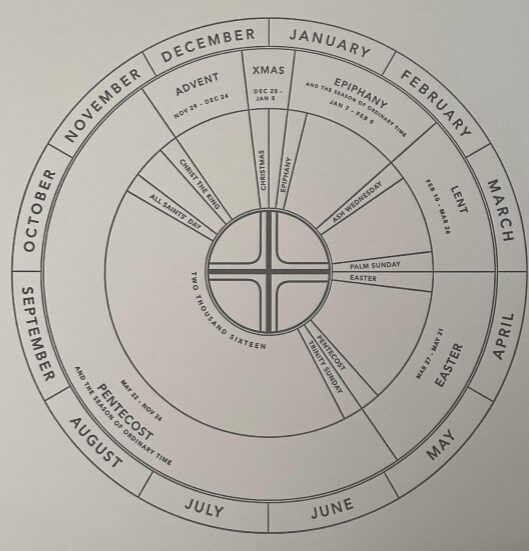
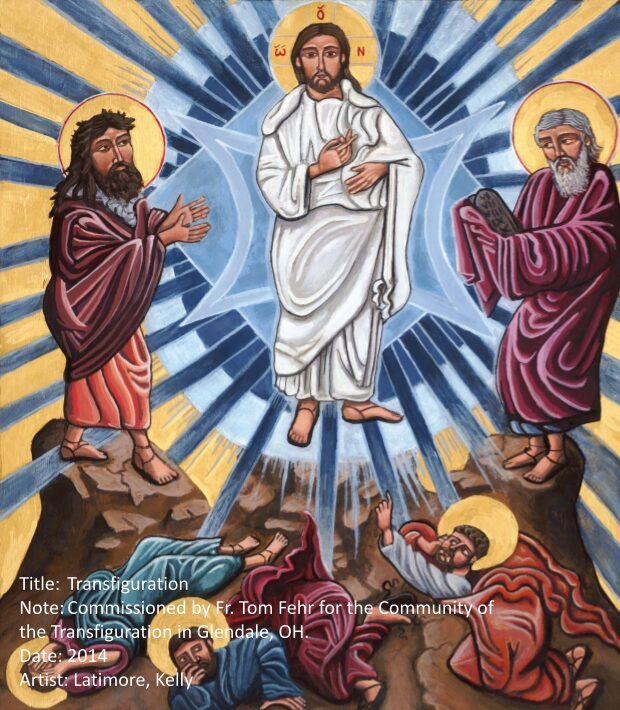
With it being Transfiguration Sunday, I wanted to give you sort of an overview of where we are and where we’re headed.
The liturgical calendar is really a beautiful piece, and I love this graphic of it because it makes it a circle, which is what our calendar really is. Every February 14th comes around, and it’s always Valentine’s Day. Christmas comes around, and it’s always December 25th. Other holidays do move, but we don’t think of time as circular. We make a timeline. We don’t make time a circle or spiral.
Between the end of November and December, Advent begins. Starting with the first Sunday in Advent, we begin looking for the light. There’s this promise that the light is coming, that hope is coming, and so we start looking for the light.
On Christmas Eve, the light arrives and we share it. That’s why we have a candlelight service on Christmas Eve, that’s where that comes from. That beautiful ritual that we have every Christmas Eve that we love so much, it comes out of this idea of the light having now arrived in the world, and so we share it, and this light continues to grow.
At Epiphany, outsiders, the Magi, show up and attest to the light and bring gifts. In Luke’s gospel, it says the child grew and became strong, filled with wisdom, and the favor of God was upon him. Next is his baptism. Jesus hears us often, we make it out as if everybody, as if the crowds hear it, but the crowds don’t react. I just read a thing about how it really says that it spoke to him, that Jesus hears “this is my beloved, my son in whom I am well pleased“– Matthew 3:17. Jesus hears that he has his own affirmation and begins his ministry, and through it, he is inviting people to the light. Last week, Jesus said, “You are the light of the world” – Matthew 5:14.
Until this point, this is the biggest light point, and it’s not a coincidence. That the light arrives as our seasonal calendar has its darkest night. That’s not a coincidence. Now that there is more light in our season, the light begins to expose our shadows & our darkness, and this next season that we begin on Wednesday, Lent, is when we start to see the darkness in the people in scripture, but we also are invited to see the darkness and our ability for evil.
That brings us to the end of the Easter season, it’s almost June, and we’re almost going into our longest day. It’s all lined out, and today is about having a bigger vision. That’s what Jesus was giving the disciples, and I wanted you to have a bigger vision of how the liturgical calendar is lined out.
Here we are, Peter, James, and John go up to the mountain. They have this moment. They wanna build shelters.
The Festival of Sukkot is a Jewish festival where they build. Jesus says It’s not about that. That’s not what we’re doing here, but they hear this time, God speaks to them and not just Jesus, and says, “This is my Son, whom I have chosen; listen to him” – Luke 9:35. That’s the piece that is specifically for us, listen to him.
If we haven’t gotten it by this time, when we see him gleaming, we have a cloud, and we have a voice and everything, if we haven’t figured out that this is somebody special, not only are we supposed to recognize that he is the son of God, but we are to listen to him, And what is Jesus’ command to the disciples? “But Jesus came and touched them. “Get up,” he said. “Don’t be afraid” – Matthew 17:7. That’s the commandment, to get up. Jesus says to the disciples, get up, we have work to do. We aren’t staying here on the mountain. It’s not about staying in that mountain moment, but we have to come down from the mountain because there’s work to do. Do not be afraid. It might be scary, but it’ll be okay. Do not be afraid because God’s in this. God’s got this. Do not be afraid. Trust God. Over and over again, we get reminded to trust in God.
This February, we are also looking at African American history I’m trying to pull out specific people who live out Jesus’ commandment.
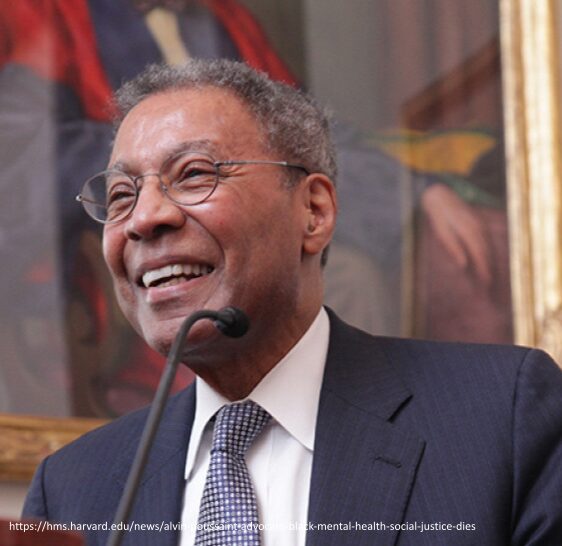
I wonder if Dr. Alvin Poissant, in his work, had to remind himself many times to get up and do not be afraid. Dr. Alvin Poissant was born in East Harlem as the seventh of eight children. As a child, he had rheumatic fever that put him in the hospital for a long time. When he was in high school, his mother died of cervical cancer.
He had the advantage of going to a primarily white high school, and from there, he was able to get into Brown. He had a bachelor’s degree from Brown. He went to Cornell Medical College and got his MD in 1960, when he was the only black student in his class. Then he went to UCLA, where he did a residency in psychiatry and got a master’s degree in psychopharmacology.
Then he went to Jackson, Mississippi, and there he helped to provide medical care for civil rights workers and helped desegregate hospitals and healthcare facilities. In ’67, he moved to Boston and was directing a psychiatry program in a low-income housing development for Tufts University Medical School.
Eventually he was recruited by Harvard Medical College, and he started as an associate dean of a student affairs and he became a professor of Psych. Psych psychiatry. If I get the all the right syllables, I’ll do it right. In his time at Harvard, he sponsored, which, which was, he was a prof.
He was at Harvard Medical School for 50 years, and he was the voice of diversity. His voice and his work were about improving the public understanding of black children and families, mental health and suicide, school violence, and substance abuse. He wrote and spoke about the importance of nonviolent parenting and advocated for positive imagery of minorities in the media. He also worked to increase diversity in medicine and reduce health disparities by bringing more members of underserved populations into the medical field.
Unfortunately, Dr. Poissant died last February, but I pulled this information from the Harvard Medical School website. Has a huge write-up on his life and work. He was certainly revered and loved. I found this quote by Shirley Chisholm, and I think it fits what he did.
“You don’t make progress by standing on the sidelines, whimpering and complaining. You make progress by implementing ideas”
Unfortunately, we are living in a time when Dr. Poissant’s life’s work is being erased. I mean, he represented diversity, equity, and inclusion. That’s what he worked for within the medical field and specifically at Harvard. We’re living in a time where all of the ways that we understand who we are as a country are called into question, and we have to decide who we are. The future that we want to leave for the children and our grandchildren. Like Peter, James, and John, we are invited into the vision of what could be and permitted to be active in accomplishing God’s vision of justice.
Like the disciples, we are being asked to have the courage, not to be afraid in the face of intimidation, cruelty, and hatred. Like them, we are being asked to be willing to follow, get up, and not be afraid.
We are the children of light. That doesn’t mean that we’re always good. We have the same amount of potential to be good as to be evil. It is within us all. We have to be focused on being good, we have to be focused on doing the loving thing, on loving our God, loving our neighbor, whomever they may be, and loving ourselves as we are, as the people God created us to be. With all of our gifts, foibles, goodness, and weaknesses. We’ve got all those things,
We have to figure out how we can use our voices now to stand for love. What we cannot be is silent. We will not be silent because that means being complicit. If we don’t challenge voices that are hurting others, they think we agree. We can’t let them think that because they want to control us, too.
We cannot be silent when they want to send ICE agents to our voting places this November. We cannot be silent about it. That is intimidation, and it is illegal, and we need to say that loud and clear. We have to say it is not okay to disappear people. We won’t have that. That’s not the way our country operates. You don’t get grabbed off the street and sent to a camp. I heard them called concentration camps because the definition of a concentration camp is a place where there is a concentration of people being held before they’re sent somewhere else. We have them in this country. We’ve done it before. It wasn’t right before, and it’s not right now.
We cannot be silent about the need for checks and balances within our government. They don’t get to choose what’s moral. That’s our job. Jesus tells us what is right. What does the Lord require of you to act justly, love mercy, and walk humbly with our God? That is moral.
So get up and do not be afraid. Let us stand for love.
Last year I had wrote and preached from the Gospel of Luke on the Baptism of Christ.
Luckily, Luke & Matthew are not too different from each other. I am going to read the passage from Luke, though, just because it provides a slightly different context. This is from Luke 3:15-17 & 3:21-22.
“As the people were filled with expectation and all were questioning in their hearts concerning John, whether he might be the Messiah, John answered all of them by saying, I baptize you with water, but one who is more powerful than I is coming. I am not worthy to untie the strap of his sandals. He will baptize you in the Holy Spirit and fire…Now, when all the people were baptized and Jesus had also been baptized and was praying, the heaven was opened and the Holy Spirit descended on him in bodily form like a dove and a voice came from heaven. You are my son, the beloved, with whom I am well pleased.”
Last year, when I studied this passage from Luke, I was in a slightly different place on my journey at that point, and I was feeling very skeptical of the scripture. One of my professors suggested to me that I, instead of looking at passages of the Bible for the things that I didn’t agree with, or the things that frustrated me to look for the things that did make sense, and dig into those. Rather than being distracted by what I didn’t believe, I could find the things that I did believe.
I came upon something really interesting in the commentary that I was reading. In discussing Jesus’ baptism, the commentator observed that Jesus approaches his baptism with humility, and one can imagine with faith and trust. He comes to the place where John is preaching a message of repentance and forgiveness of sins, of turning back to the selfless ways of caring for the weak and the marginalized. In response, Jesus submits himself to the cleansing ritual. Jesus’ thoughts and motivations in offering himself for baptism remain a mystery to us for now, but we have his example to follow. Those observations struck a chord, and I found myself stuck on this question.
Why was Jesus baptized? Why did he have to be baptized?
If he was perfect, there wouldn’t have been a reason for him to be baptized. Perhaps he wasn’t perfect in the way that we’ve always been taught. I know that’s maybe an unpopular opinion, but stick with me. Maybe Jesus made mistakes. Maybe he did things he shouldn’t have done. I think that leaving his parents to stay in the synagogue might have been an example of this. But because he’s Jesus, we brush it under the rug and say that he was supposed to be there because he was God and not a normal 12-year-old sneaking off and disobeying his parents, because obviously, the son of God is never late.
Another thing, do we really think that all that time he spent as a carpenter, Jesus never smashed his thumb and let out an expletive? I’ve only been whittling for like a month, and I have done it at least 10 times. The Bible says that he had siblings. Are we supposed to imagine that he never got upset with him, that he never got into a fist fight over who got to sit up front on the camel?
I am probably gonna ruffle a couple of feathers here. To be honest, my own were a bit ruffled when I was going through this, but what if Jesus was just like us? I mean, it does say that he put on flesh so that he could sympathize with us, but how could he sympathize if he was perfect and never sinned?
I am not sure if this will resonate with you or not, but for me, for a long time, if I screwed up, that was the end of the world.
I was terrible, and no one could possibly love me. Then, because I thought that they would be disappointed and not love me, I resented them and would go unintentionally doing the things that I knew they would not approve of to further separate myself from them. Many of us learn these patterns of behavior at a young age, and they are reinforced over and over again by our families of origin, school teachers, and the churches that we grew up in. For me, the pattern began young and before I was conscious of it, I had developed some nasty habits and coping mechanisms that had become quite addictive by the time I reached adulthood.
By the time I realized I had problems, the cycle seemed impossible to break. No amount of trying or praying or repenting and swearing I would never do it again seemed to work. I can relate to those people lining the banks of the Jordan waiting to be baptized by this charismatic, borderline crazy, religious figure named John. I’ve been in that line thinking that if this guy touched me, I’d be free of all of my habits and hang-ups. Maybe if I were baptized at this church and I was fully immersed as opposed to being sprinkled, it would finally actually wash off all the dirt, and when it didn’t work, and I walked away feeling more broken than before, believing God must really be done with me this time, and there was nothing I could do about it. I’d go right back to whatever the destructive habit was at the time.
What was it that made Jesus go down to the river that day?
Was it Holy Spirit intuition? Like the day at the synagogue? Was it on his checklist from God that day? What if it was a deep nagging, the thing that he kept returning to, the feeling of failure, of disappointment to his parents, earthly and heavenly. What if that day, he knew something had to change, so he strapped on his sandals, trekked down to the river to see his cousin, just to get his mom to stop nagging him.
But with secret hope in his heart, he waited in line just like everybody else. He didn’t push to the front or demand special treatment. At least that’s what the account in Luke tells us. In fact, it says that Jesus was last. It said when everyone was baptized and Jesus was baptized,
I wonder if he thought about leaving. Maybe he got out of line and headed toward home only to feel that pull. Turn back around and get in line at the end. Maybe he hoped that some of the crowd would go away so that he could get a few moments alone with his cousin.
I once went to a healing and deliverance service to see what all the hype was about this particular so-called prophet. There were hundreds of people there. I waited in line forever. People were being slain in the spirit, speaking in tongues, breaking their canes, stomping on glasses. I thought, this must be my day. This guy has gotta be the real deal. I stood in line, I looked around, and I saw this woman whom I knew. We had gone to several such services together in the past, but had lost touch when I did what I always did, and she chastised me for wasting God’s time. She had said that it was useless for me to keep getting in prayer lines and taking time away from other people who really needed prayer, that my problem was that I didn’t want to be free because if I did, all I had to do was walk in it, whatever that meant. Seeing her was it for me. I was out. I didn’t need that type of negativity.
I wonder if there was anybody that day in the crowd with Jesus whose opinions really got his goat. Or maybe he was afraid that John, who seemed to know things about Jesus that others didn’t, would turn him away. In the story of Matthew, John says, You are the one who should be baptizing me. But Jesus was like, Nope, it’s gotta be the other way around. He was pretty adamant. Which further reinforces my wondering about why. It could have been because he knew that it was to be a sign or a fulfillment of ancient prophecy, or perhaps because he needed to be baptized. Maybe he had things he needed to turn from so that he could turn towards other things.
One thing I noted is that Jesus was praying after he was baptized. Did he not get what he was expecting when John baptized him?
I can imagine him exclaiming, directing his frustration toward God. I’m wet, I’m cold, and there’s seaweed in my epic hair, but I feel the same. I’m supposed to be your son, but I just feel like some guy, and I can’t stop. Are you even up there? Are you even listening? Continuing from the gospel account, it says, “And as he was praying, heaven was openedand the Holy Spirit descended on him in bodily form like a dove. And a voice came from heaven: “You are my Son, whom I love; with you I am well pleased.”
Well, gee, that was worth the weight and some seaweed. I don’t know about you, but those are words that I have wanted to hear my entire life. The desire for those words has caused me to go to crazy lengths and to put myself in some less-than-desirable situations. To hear that I am loved, chosen, the pride of someone’s life, I wanted to hear that from my parents. As long as I can remember, those words should be a given from our parents at least. No child should have to wonder about the love of their mother or father, but many of us do. It is no wonder then that many of us struggle to believe in the unconditional love of God.
I wonder if this was part of Jesus’ struggle. At least in the Luke telling of the story. There’s no fanfare from the crowd after this heavenly announcement. There’s no article in the Jordan Times “Dove descends and names Jesus the carpenter as God’s son.” In fact, it could be the case that nobody other than Jesus even knew that this happened.
What if Jesus were or is just like us? What if he wondered about the nature of God’s love for him? What if he wondered if he’d missed the mark or been replaced by some other kid, a few villages away, who really never did fight with his siblings? What if he came to the river that day needing an epiphany?
To hear the voice of a parent speaking the words, You are my son. You are the one I want. You are special. You are loved. You make me proud. Now, that would be worth any price. Waiting all day in the hot sun with a bunch of sweaty sinners. Any amount of seaweed, fish swimming around my ankles, and slimy river sand and stones between my toes.
At the beginning of the next chapter of Luke, it says that immediately, Jesus, full of the Holy Spirit and probably some newly found confidence in his identity, left the Jordan and was led by the Spirit into the wild.
We know how the story goes. The devil comes and tests Jesus, and he gets all the answers right. How do you think he could do that? Here’s what I think. When you hear God, or even someone whom you respect and whose love you desire, when you hear them claim you as their own, when they show you how much you are loved. When you know, then you know that no matter what, their love for you could never & would never change. You can do anything. You can give up whatever’s holding you back. You can face any challenge. You can look the devil in the eye and say, I don’t need what you’ve got.
Even if you mess up and pick some questionable friends or call a lady a dog or flip over some tables out of righteous anger, you can still know that they love you, and you can know that God will work it all out.
The other thing that I think is that once you hear that voice, you are free to live into who God has called you to be, who God calls all of us to be in the community. There was this thought that had never occurred to me. Jesus comes to this place where John is preaching a message of repentance and forgiveness of sins, of turning back to the selfless ways of caring for the weak and the marginalized. It’s not just about what we turn from, but also what we turn to. The selfless, caring for the weak and the marginalized. He turned from whatever he needed to leave behind so that he could turn toward what God had for him.
I think that’s how it is for us too. It doesn’t end with accepting Jesus and being baptized. We’re called to more.
Where are you this morning? Do you need an epiphany? Do you need to be baptized? Are you waiting in line for the prophet to heal you?
I believe that God is saying to everyone, Here you are, my child. You are chosen. You are special. I am proud of you. Just think on that for a minute. Let it soak in, let it wash over you, like the water of the Jordan River and don’t mind the seaweed or the thing that just brushed your ankles.
The heavenly parent loves you. The heavenly parent looks at you and smiles. You make God happy. Maybe this week is a good time for you to spend some time in the unconditional love of God and get to know how freedom feels.
Or maybe you’ve already had that experience. Maybe you’re living in the freedom of knowing what it is to be loved, but still, something is missing. What’s next? You may wonder. Maybe it’s time to take another turn. A turn toward the work that God calls us toward. The work of justice and building community. Maybe for you, this week is about seeking opportunities to join God in the work of restoring shalom to this war-torn earth that we live on.
Either way, it’s good news. And I think we could all use a little bit of that these days.
I want to begin by celebrating our choice last week.
Last week, you had three large decisions, two of which were significant, and those were on the inclusive church covenant and on the sanctuary remodel project. You overwhelmingly chose to live, and that, my friends, is good news. You said that this “keeping the status quo” is not enough, that it matters that we welcome people. That it matters, even if we don’t understand. We can still love others. We can accept them as they are. We can listen to the things that they need and make accommodations, because they matter.
That is not a message shared in all churches. For a lot of people, their faith is literally the difference between whether they live another day or not. I can’t say that that is how my faith works. I’ve always had faith. I was raised in faith, and so I’m not sure that I’m at that point, but my faith is important to me, and I recognize that some feel like God is not for them. I guess that’s the point. I was always told that God loved me. There was never a time when I was told God didn’t love me, and that makes a big difference in who we are.
The Ephesians text for today, Ephesians 1:11-23, is about this love that God has for us.
The writer is taking this love that we call the blessing of the Jews. You know, the Jews had been the chosen ones, that’s said throughout the older Hebrew testament, in Jesus. This was opened up to those who were not Jewish, and that means us. We didn’t have to become Jewish and follow all the Jewish laws to become Christian. That in Christ we are.
In Roman law, “adopted” meant that you were entitled to everything. The same as one who is physically born, a family heir. An adopted person has all of the privileges and obligations of the family of origin, and so we are given the blessing to be called children of God. That is who we are. We get to claim that, and I hope you can feel that in your bodies. Because that’s an important message. It’s important to know that you belong.
That’s a part of belonging. Again, it’s a part of the love that is available to all without exception. Our problem is that for time and eternity humanity has tried to put restrictions on that and say everybody but these people or everybody but these people, we’ve always tried to make an other that for whom that does not apply.
That’s not the way God looks at it, I don’t think. Not that I know exactly what God thinks, but God and Jesus were very much about sharing God’s love with all people, and many of the religious authorities thought they were not part of or were outside of God’s love. Whether they had a physical ailment or a deformity or some kind of challenge, the religious authorities in Jesus’ day said, “not you. You are not welcome.” And Jesus said, “Yes, yes, you are.”
The good news about this is that we didn’t earn it. We don’t deserve this adoption, and we didn’t earn it. There’s nothing that would make us good enough to earn this. It is a gift freely given because of who God is, not because of who we are. The good news is that we will mess up, but that doesn’t mean that we are then outside of the family of God. God keeps us in that family no matter what, and maybe our greatest sin of all is that we think that who we are and what we have is because of us rather than God. We forget, or we lack gratitude. We forget to be grateful. We forget to come back to God as the source of all that is and will be.
We get into our minds that, “but look what all we have. Look what we’ve done.” No, it’s not about what we’ve done. It’s about what God is doing through us. Just to clarify, I just said about the fact that we chose life. I think we chose life because God was moving in your hearts to choose life. I don’t think it’s that all of a sudden we had this great, well, maybe it is because we had a great epiphany, but that epiphany was put there by God. Our responsibility, our choice is to then become our best selves because of God’s love, and this being part of God’s family, so that we can work to be grateful, generous, and kind to everyone.
The reality is that these woes in Luke 6:25-35 come to us all. None of us will escape life without some type of heartache or suffering.
This verse gives you the blessings first. But when I read it, I started with the woes. You’re probably thinking that was a really odd place to start, you’re right. It was a choice I made, but I made it because I think the “love our enemies” sounds different when we start with the woes.
The other thing I learned as I sat with this scripture is that it matters how we perceive God. How do we see God? Do we see God as this loving, encouraging, and comforting presence? Or do we see Him as the God of wrath?
After David and I were married if I would stub my toe or hurt myself somehow, because I am a little clumsy, I would be like, I’m sorry, God, I don’t know what I did, but I’m sorry. I felt like God was getting me for stepping out of line. The hellfire and damnation God that was just waiting for me to step out of line and zap me. That’s the God I grew up with, and I’ve been working really hard for a long time to let go of that God, and I’ve done pretty well on some fronts. But when I read that woes text, I wanna read it with the hellfire and damnation voice.
But why does that matter? I think two truths come into play in this. Hurting people hurt others, and tone matters. I think David told me that all the time we’ve been married, tone matters, and it changes the scripture, doesn’t it? It’s very different if it’s God coming at you or if it is God saying with empathy and compassion, you might be full now, but you will be hungry. Life might be going well now, but there is pain in life. People die, our hearts break, and we have to be prepared for that. That’s very different.
I say all of that because it’s Thanksgiving week, and I don’t know what kind of Thanksgiving gatherings you might be going to, but you might be going to a gathering where there’s someone who’s hard to love.
I hear about how with everything that’s happening in our country, there are a lot of families that are divided and are struggling to sit together at a table. I want you to focus on this scripture, so even if a person that you’re gonna be with this week has a very different position from you, one that even is the opposite or worst case scenario, threatens who you are, then you have some choices of how to love that person. If we can be with that person, then let’s love them. By listening to them, let’s love them by asking, and by being curious and compassionate. Trying to understand what the fear is that they have, because that’s what drives that kind of behavior. Where is their fear?
If you can, do not argue, but if you can say something, make a heartfelt statement about what you see in the world, in our country, and in our community, just name it. “What I see is this … and it breaks my heart.” That kind of statement lands differently. It’s one of the reasons I’ve backed off from some of the groups that I’m in because there is anger and militaristic opposition, and I don’t think that’s it.
I think we are called to be different. I think that’s why the church grew from the beginning, because the disciples and the new Faithful Acts they lived differently. They lived in ways that they could love each other, and those with whom they disagreed, they could love when it made no sense to love; that’s a high calling. That’s not easy. I know that.
I certainly couldn’t have loved, still don’t, but I’m at peace with the person who was the oppressor and abuser in my life. I’ve made peace with them, but they’re dead, so I’m safe. I understand that that’s also part of this. This is not asking for any kind of submission to any abuse; some people make that argument, and I do not believe that. I do not believe that God or Jesus would call us into that. It is about the non-violent non-retaliatory methods and approach, like that which Bayard Rustin did with the Civil Rights movement.
I didn’t even know about Bayard Ruston until Declan introduced me. Everything was going against Bayard. He was African American and he was gay, so even the civil rights movement didn’t know what to do with him, which is why there’s not much written about him. It’s harder to find him among those who are the people we lift up.
As we move into Thanksgiving, I hope that you can look at your life and be grateful.
Make a list of the things for which you are grateful. Share them. Share that at your dinner tables. Help people get in that mindset of gratitude, realizing that it’s not us who accomplished it.
The leading causes of life really boil down to hope, gratitude, belonging, and choice. Those things are not always accessible or reasonable for people who are suffering from poverty, sorrow, hunger, or marginalization, but we are called to help them find that. We are called to help them see how they can have hope because of Jesus. That’s who we are called to be.
My Thanksgiving wish for you is that you can fully embody love and that you can perceive others through love or see them through the lens of love as Jesus sees them.
As I was thinking about these scriptures, Isaiah 41:8-14 & Luke 19:1-10, and thinking about where we are. We have our annual meeting next week, and we have some big decisions to make.
I was struck by this idea of risk and the question of What are we willing to risk? We are living through what I have heard most of this year, called unprecedented times. That seems to be a buzzword this year. Unprecedented. They certainly are challenging, and they can even be scary. When we get scared, we have this tendency to circle the wagons and look inward and only focus on our own needs rather than seeing the needs of others.
I think there’s a really strong temptation right now to do that, but we’re also living through a time where we need, more than any other time, to stand for something. Because if we don’t stand for anything, it’s that quote I’ve repeated the past two weeks, “not speaking is to speak.” If you don’t stand for anything, then you literally stand for nothing.
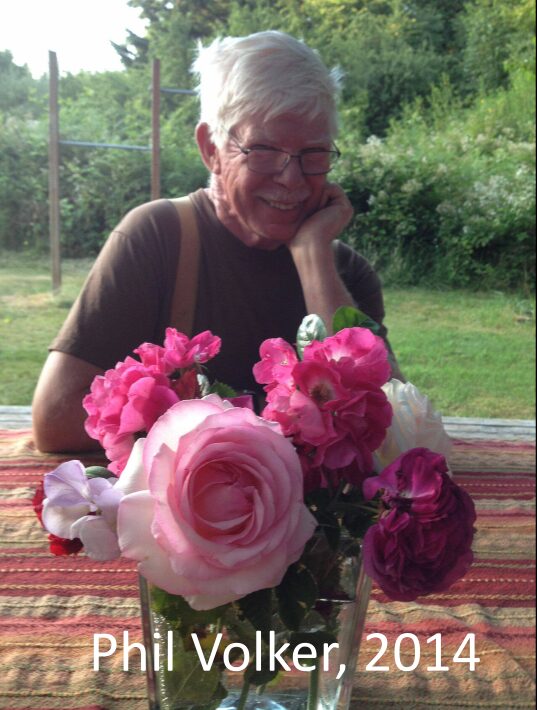
Surely we do have good news. I want to tell you about this man, Phil Volcker. He took his property and created a trail on which he walked 909 laps, which equaled the 500 miles of the El Camino de Santiago. Now, you might be wondering why in the world would he do that? Why not just go walk the El Camino?
Phil had colon cancer, which meant he needed to be near his doctors, and he wasn’t willing to just take the treatments and sit and wait it out. He wanted to be active. He wanted to find hope. So, he walked his trail, he walked his Camino in his own way, and he invited others to walk with him. One of the things that people do when they walk the El Camino is that they keep a journal and they write down each day what happened, what they saw, and who they encountered.
Phil journaled about every lap he took around his property, and he invited people to walk with him. In the process of that. He opened himself up to God ’cause he was not a person of faith. But in the process of the walking, which is what often happens to people on the El Camino, through the process of the walking, the showing up and being present to nature and to others, he found God. God touched his heart, moved him, and gave him hope,
He survived. In fact, he hated the phrase fighting or battling cancer. He said he was dancing with cancer. I’m not sure how many of us who would be in that position could say that. But to have that confidence that he would not be alone.
Our first scripture, Isaiah 41:8-14, is considered to be Second Isaiah.
The first 40 chapters are all about everything that Israel’s done wrong. Now this, and I don’t remember where it changes, but this set of chapters was written later to the Jewish people in exile.
This was written after the Babylonians had come in, they had destroyed Jerusalem, and they had taken the Jews away. They’ve taken them off to Babylon. They feel distant. They feel like they’ve lost their God because they thought God was in the temple in Jerusalem. Now, they don’t have God, they don’t have their land. They don’t have their community. They don’t have anything. Yet to those people who thought they had nothing, God sent a prophet. We don’t think this is actually the same person, which is why it’s called Second Isaiah, but it was a person who wrote under Isaiah’s name to bring comfort.
In this scripture, it says, “Do Not Fear” twice. Even though everything looks like it’s going hell in a hand basket, right? That’s our phrase. We think everything’s falling apart, and we don’t know what’s gonna happen, and we’re scared. God comes and says. Do not fear. Do not be afraid. That is the most repeated phrase in the Bible, whether it’s fear not, or do not fear, or do not be afraid.
God wants us to have that hope. It’s not about an easy life. It’s the hope that Phil had while dealing with colon cancer. It’s the hope that we can have as people of faith.
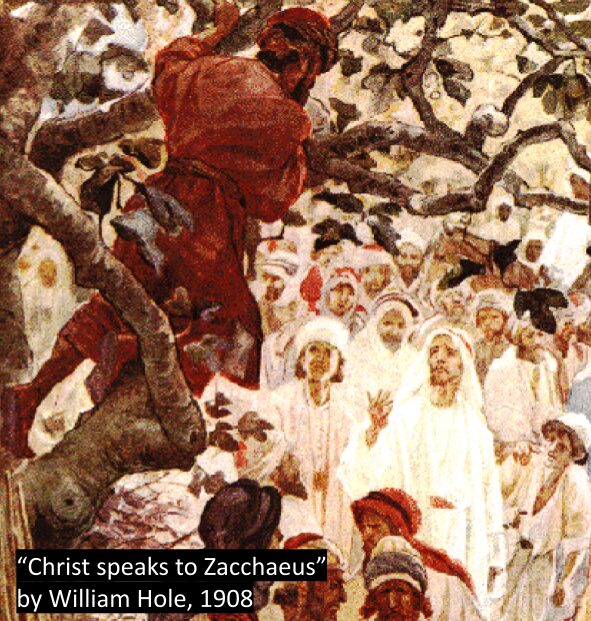
I think it’s a hope that Zacchaeus had. Zacchaeus is an interesting character. We know some things about Zacchaeus. Luke 9:1-10 tells us he was the chief tax collector. That is significant. We know that he was small in stature, so seeing Jesus in the midst of a crowd was problematic for him. He goes up into the tree. But I wanna suggest this isn’t in the text, but I think that there was within Zacchaeus a longing, or maybe there was this sense that he wasn’t living the way he was supposed to live.
I was walking with some friends the other day, and one said, “You know, it’s like there’s this line that we have inside of us that tells us whether we are living with integrity or not. Are we willing to cross that line? And at what point, at what point do we lose our integrity?” I wonder if Zacchaeus was wondering about that.
The fact that he was a tax collector at that time puts him in that category for the Pharisees of tax collectors and sinners. People who are doing everything wrong. The people you do not wanna associate with are tax collectors and sinners. We don’t talk to them. They were ostracized. Nobody wanted to be around them. As a tax collector, Rome told each tax collector how much they wanted from each district. But the tax collector was free to add their percentage on top. Think pyramid scheme, the top tax collector could add his percentage to all of the tax collectors below him. So he was making some money, but there must have been something within him that was unsettled or discontent. Or else he wouldn’t have been curious about who this Jesus is who brings hope, who helps people know that there is such a thing as forgiveness.
So, he came and saw, and Jesus saw him. And just like Jesus reaches out to all of the other people who’ve been pushed aside and told that they are sinners and unwelcome, Jesus goes to him and says, I’m coming to your house. We’re gonna have dinner, because, as the Pharisees often blamed Jesus for, he ate with sinners and tax collectors. That’s who he was. Because he believed in the community. He didn’t believe in shutting people out. He believed in bringing people together, in helping them, healing them, and giving them hope again. He believed in sharing the good news that they don’t need to be afraid because God is with them. The words from Isaiah, “For I am your God; I strengthen you and I help you.”
Zacchaeus has a major transformation. Luke 19:8, “Zacchaeus stood there and said to the Lord, “Look, half of my possessions, Lord, I will give to the poor, and if I have defrauded anyone of anything, I will pay back four times as much.” That was the thing about tax collectors, they were known for the percentage they wanted for defrauding people. He was willing to pay back the people because he realized it’s not about him, it’s about the needs of others.
How often do we forget to look out for the needs of others?
We’re scared, and so we turn inward. Because we have to protect ourselves, whereas what Jesus calls us to be is looking out for those who need us to say, “You belong, you are loved, and God is with you too.”
Friday was the National Prayer Breakfast, and they met at Shady Maple, and they talked about how blessed they are, and filled their bellies. It’s all you can eat. But instead, I chose to go to St. John’s, where POWER Interfaith had a simple prayer service where we prayed for the earth and for everyone to have what they needed, that no one would go hungry, that no one would feel left out, and that all would know that they are within the love and forgiveness or mercy of God.
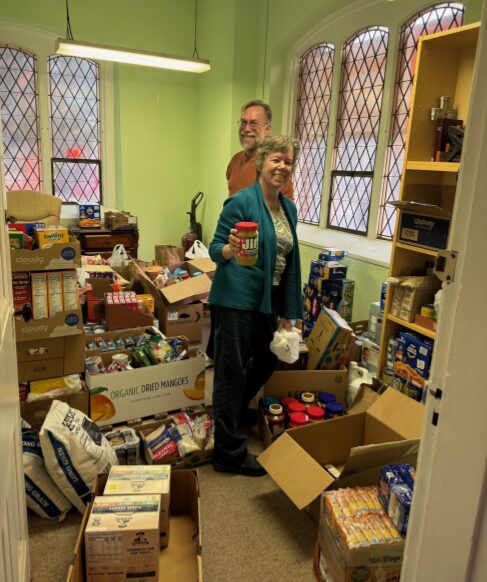
We collected food for 12 hours. It was from 7 AM to 7 PM, and during that time, during my shift, I had two people who showed up with food. This is a picture of all the food that was brought in. Three families came looking for food because they said we don’t have anything, and they all left with a bag of groceries.
At St. John’s, even though their food bank is only open two days a week, if someone comes, they believe in giving everyone food. Which was always our rule, too. If you came when we had our food bank here, you got food. Now we send our food donations to Landisville at the Hempfield Community Food Bank.
Five people handed me cash, and I had $45 in an hour of standing at the corner of Chestnut Mulberry. Some of you brought in food this past week, so we took three bins and a box of food. I parked in the parking lot and said, “Can I get some help? I have bins of food.” Four people showed up, unloaded my bins of food, and gave me my bins back.
That’s what it means to say it’s not just about me. That’s about choosing life. It’s about choosing life in every moment of every day. We have that choice. Do we wanna shut down and isolate? Or do we wanna be part of growing the community, of helping others know about the love and presence of Jesus? Can we bring the light of Christ, which is within each of us, to others so that we can bring light to their darkness? Can we bring light and love everywhere we go?
As we consider how much we live into our vision and mission that God gave to us, I want you to consider for yourselves why you came today.
What brought you here, and the little sarcastic voice in my head says “My car.” But, I mean, why did you come today? Did you come looking for healing, hoping to have a need fulfilled, or did you not have anything better to do? No other better option, so I’ll just go to church. Or is it just what you do on Sundays? I think of my grandfather, I love my grandfather, and I do think he had a good faith, but for my grandfather, Sunday was the day he wound the clock, read the paper, and went to church, and then to lunch. That was Sunday. That’s what you did on Sundays.
So if it’s Sunday, this is what you’re doing, whether you want to or not, but what brought you here? Did you come to receive? Did you come to give or some of both?
Our desire within ourselves to take care of our needs is very strong. It is much easier to only see what we need than to see or think of the needs of others. Did it cross your mind that there may be someone else here who needs you today? Because when given the option of following our best angels or not, we usually don’t. So those questions that I asked, I really want you to think about. I think they’re important questions. We have to get at our own values, and what really drives us.
These scriptures were written as correctives to change our attitudes and our actions. Our gospel reading, Luke 16:19-31, is one of the parables of Jesus.
Jesus wasn’t talking about a specific man as the rich man, and there wasn’t a Lazarus, even though Lazarus is a name that comes up at other times in the Bible, but because it’s a parable, we know that it’s mysterious. It is meant to challenge us to really think about why we do what we do and what we do? Where are our priorities?
I chose this artwork when I was looking for artwork because it came out of a Dickens novel to me, and I want you to read the conversation there. The person on the left would be Lazarus, and the person on the right, who’s being served, is the rich man. So Lazarus in the picture says, “Remember, my Lord Duke, I have a powerful claim upon your charity. My poor family is now reduced to abject want, through your apathy starvation stares us in the face.” And the rich man’s reply, “Starvation, who the devil’s he?”
Do you feel as if starvation were a person? We are living in a period of time where billionaires and millionaires are making decisions that affect the rest of us. They are manipulating the world in ways that benefit them, and they really don’t see our needs. I’m gonna go as far as, I don’t think they care about our needs. I think they care about their needs and what they want.
They have no need to reopen a government. Their pantries are full, their resources are great. What are we crying about? Starvation? Who the devil is he? While there are those among us and around us, our military, our teachers, our educational system, all the people in our educational system, all the people in our social networks, our care networks, are beginning to wonder how they’re gonna continue to feed their families. How are they going to continue to keep shelter, whether they’re gonna be cold this winter because they can’t afford the heat? And for those of us who are not affected, because I’m assuming there are some of us here who are not being affected by this yet. We need to think about what we can do.
I got an email from a preschool parent asking about the food pantries because they want to do something. They want to make sure they’re not having a food shortage, but they wanna make sure that there’s food there for others.
Do we notice the Lazarus on our streets? What’s striking to me in this parable is that the rich man is not condemned in this. Actually, in our other scripture, 1 Timothy 6:13-19, it says, “If you are rich, then be rich in good works, generous, ready to share.” That’s all that’s being asked in this scripture. The man has; there’s no condemnation for the fact that he has the food that he needs. The issue is that he’s not generous or willing to share, and even more than that, in the course of that parable, he still expects to be served. Send Lazarus down here to take care of me because I need to be served.
That’s the attitude we need to be wary of when we think that we are the privileged ones and others should serve us. That’s where we get in trouble. How often do we expect others to serve us as people being manipulated, like pawns on a chessboard?
Behind this scripture is the golden rule. How you treat others is how you will be treated.
We don’t know how that’s gonna play out, but there’s a lot of wisdom in it. The rest of the world calls that karma. I’ve said to my daughter as she’s dealing with her daughter, who doesn’t want to listen to her. I smile and say “Karma. Huh?” Gotta love it, because things come around right.
So it reminds us that it matters how we treat others. There’s a reality that we don’t want to share with others because we’re afraid that if we share with others, we might not have enough. Or we might, God forbid, be dependent on someone else as opposed to recognizing that this was set up as us being interdependent. We are. That is the point that we rely on each other as opposed to thinking we can take hold of those bootstraps and take care of ourselves.
So what are we doing? What are we doing here together? Our vision from God says that we are to be inclusive, generous advocates for social justice, and care of the environment.
A safe space for those who feel afraid or powerless. We are called to create beloved community. I believe that so much.
We are called to be a community that cares for each other and looks at those around us and meets the needs of those around us. Even as I was talking with the kids, if that means maybe given space to somebody when they need it, but also just sitting with someone who’s lonely. Reaching out and knowing, letting them know that someone cares because there may be people even right here this morning who came because they didn’t want to be alone this morning. It’s a time in the week when they can be with others.
Let’s celebrate that and be with them, be with each other. But I think that there’s more than that. It’s not just about being in here. I think we need to be advocating for people. We need to be speaking out against the systems that are trying to bring people down.
I invite you to look at your resources. What are the resources that you have? Do you have time? Is that a resource you have? Is skill a resource you have? Do you have an ability you can share with others? Do you have finances? Can you make a financial gift that will benefit others? We each have different gifts, but we need to look and take stock of our assets and resources and use them. Do the good work, spend the time with someone who needs the attention, give the funds so that they may be shared.
I challenge you to really look at this week and how you are helping to build the beloved community. Individually, we can each do a little bit, but together we can really make a difference.
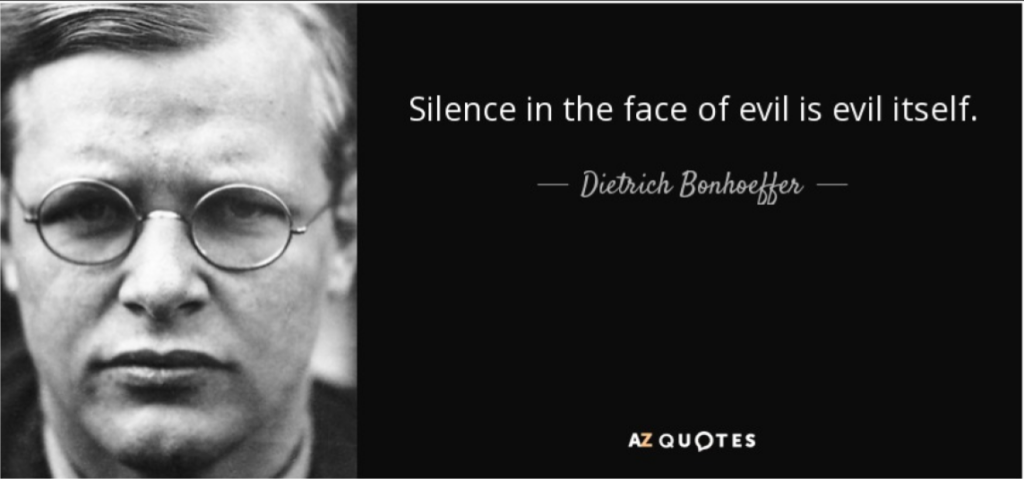
This is one of the thoughts that I’m gonna read from Dietrich Bonhoeffer, “The ultimate test of a moral society, the kind of world it leaves for its children.” I’m always gonna bring us back to the kids, because we need to be thinking about the kids.
“Silence in the face of evil is evil itself.” If we’re silent, we’re complicit. We’re going along with it. Not to speak, is to speak. I’ll say that again. Slowly not to speak is to speak. Not to act is an action.
May we recognize what we can do and share and be generous.
Yesterday morning, our Compassion Team met so that we could talk about how we could be more helpful to you as a congregation.
We realize that one of the hurdles for you is in trusting us with your stories. Confidentiality is something that this group takes seriously. You may look at these people and think, ‘these people talk to people.” Yes, we do talk to people, but we do not share your story with people. Your story is only for you to share. And yes, I’m saying that, but I know that that’s how the group feels also, and we do have some other ideas that we are praying about that may be helpful to you.
I think that another piece of this is that we as people do not like to allow our needs to be known. We have prided ourselves on being self-dependent, self-reliant, and figuring out things for ourselves. I don’t need any help, but the reality of life is that it is too hard. Things happen that make us realize that we need one another to comfort each other and to hold us accountable to being the people that God has created us to be. That’s the beauty of the community.
That’s where the Compassion team can be a help to you. To both comfort and to hold you accountable. If that’s what you need and if that’s what you want, because we are to forgive.
We talk about forgiveness a lot. That was in today’s scripture, Colossians 3:12-17, but we are not so good at it.
Even though we talk about it, we talk a good game, but we’ve got a lot to practice. As a survivor of abuse, forgiving is not about removing any type of accountability. That is not what forgiving is. Forgiving is letting go of the anger and the hurt, which, as long as we hold that, that person continues to control us. But when we can let go of that, then we are truly free. That’s where we find peace.
That scripture lesson from Paul today reminds us of the important things in life: compassion, kindness, humility, meekness, and patience. It almost reads like the spiritual gifts that align with Galatians. These are the traits of a Christian. This is who we are to be.
And that phrase “bear with one another” – Colossians 3:13, that means when we don’t agree, we don’t attack each other. We continue to stay in the conversation. We bear with one another, and if one has a complaint against another. We forgive. This is what it means to choose life rather than death.
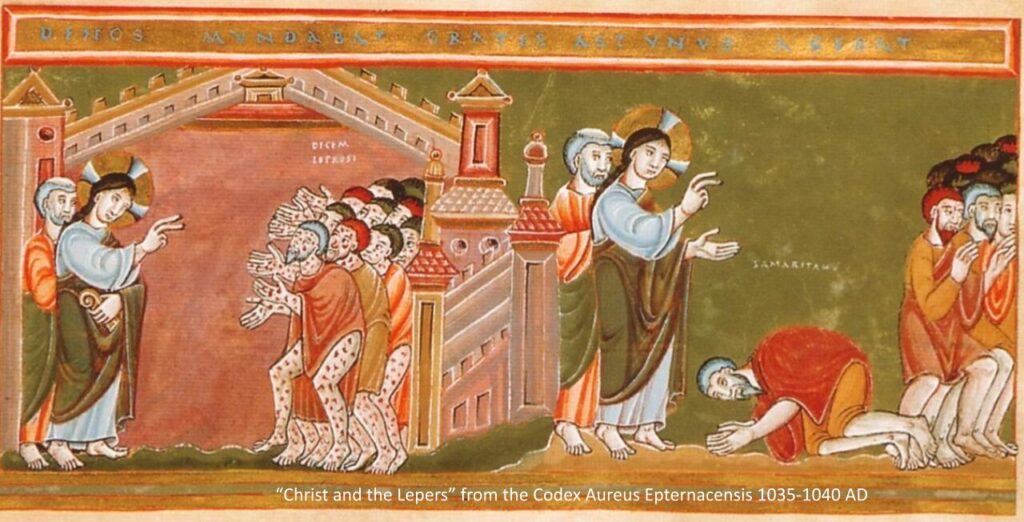
In our other scripture today, Luke 17:11-19, we read of the 10 lepers.
I know I have heard many sermons on and I have preached many sermons on this, and this time I was surprised. I love it when I get surprised in reading a scripture because I had missed something that I saw this time, and that is that the one who came back.
The first side of this piece of art is them calling to Jesus. The second side is after he has sent them to the priest. You see, most of them are walking away, but one comes back and is on the ground kneeling in front of Jesus, and above it it says Samaritan. And I’ve overlooked that detail in the past.
We’ve always praised the one who came back because he was grateful. But there’s more to it than that. There’s more to that story. Because he was a Samaritan. Jesus told them to go to the priests and, that would be the end; they would be announced as clean so that they could rejoin the community.
He couldn’t go to the priests because he wasn’t welcomed by the priests in the temple. They don’t consider him Jewish, even though by ancestry he was, you see, the Samaritans were in the northern Kingdom of Israel. And when the Babylonians came in, and probably when the Assyrians came in too, when they took away the leaders from Jerusalem, they didn’t take them. They left them and they mixed with the invaders. So they weren’t considered Jewish anymore. They didn’t worship in Jerusalem. They worshiped at Mount Hob, and so they were considered less than. Maybe a contemporary context for our political situation is almost like being an undocumented immigrant in the US right now. Or a Palestinian in Israel. They were not welcome. They were considered other. They were considered an enemy.
So as long as he had his skin disease, which separated him from his people. He had to leave Samaria, and he found this group of other people with the same disease, and so he found community, but when he was healed, he lost his community.
So, where’s the priest that he went to? Show that he was healed. Jesus was the priest who could show himself and be proclaimed clean because Jesus welcomed him. Jesus received him not as a foreigner, not as an outcast, not as an enemy, but as one to welcome. To bring into the kingdom of God. That is not to minimize his gratitude; that is to put context around his gratitude.
But I know that I never looked at it that way. I never saw him as truly a Samaritan with few options looking for community, and we don’t know what happened after this. He may have stayed with Jesus and the disciples from then on out. We don’t know. More people traveled with Jesus than just the disciples.
We are reminded that Jesus wants us to be his hands and feet in this world, and to be the ones who welcome and accept people as they are, and help them have a relationship with Jesus. That’s who we’re called to be.
So today we have communion, and when we come to this table, we come because we’re hoping to meet Christ here. After all, I encounter Christ in the sacrament, in the ritual, in the bread, and in the cup. I hope that you find Christ who is the host of this table, in the bread, placed in your hand, in the cup offered to you, in the eyes of our servers, in the music that will be played, and in the faces of each other. Christ is here. May we see it and be healed?
This week, I was reminded that this year is the 40th anniversary of the We Are the World Campaign. At a time when it feels like we are isolating ourselves from the rest of the world. I’m struck by the way we came together, led by 40 incredible musicians with 40 incredible egos that probably would not have even fit in this room, but they managed to be in a small recording studio from midnight till 7 AM. To do their part, to raise money for starving people in Africa.
And these are the words, “We are the world. We are the children. We are the ones who make a brighter day.So let’s start giving. There’s a choice we are making. We are saving our own lives. It’s true. We’ll make a better day. Just you and me” – We Are the World by U.S.A for Africa (1985).
It wasn’t about saving them. It’s the same concept that I said last week. What hurts you, hurts me. And what blesses me, blesses you. Let us learn to be in the world with compassion and to be in the world with forgiveness.