The Power of Kindness
I want to begin by thanking you for the time last month when I got new eyes.

I had my cataracts removed, which is like having new eyes. The time off allowed me to have the surgery, but it also allowed me time to heal and time to rest. I took that time and I learned two things. The eyes are the second most complex organ of the body, next to the brain. The brain is the most complex organ of the body, but I was told that the eyes are second. I also learned perspective is everything. Because when I had my first eye done, they said “don’t worry. It’ll clear. Just give it time.” I kept thinking, this eye is not clear until I had the second eye done. Then suddenly, I mean, as soon as I could see after the surgery. The first eye was incredibly clear.
Now, that was not a miracle. That is called perspective. My first eye after surgery compared to my eye, pre-surgery was fuzzy, but compared to the second eye after surgery. Wow, what a difference. It’s all perspective. What the piece about perspective is that there’s a bit of choice in that. I mean, not with how my eyes see, but boy, did I find color. Maybe I shouldn’t have chosen the colors to have my kitchen painted last year. Maybe I should have waited till I had my eyes done and taken off those, it was like I was wearing yellow glasses. My kitchen’s bright. I still like it, but it’s bright.
But that perspective piece is where we have agency and choice, and we can choose how we view others. That’s gonna be my point.
I said to somebody this week that our sermon is about loving your enemies. And somebody said, “Well, I don’t have any enemies.” Good for you. I wouldn’t say that I have enemies, but I have a shorter list. But it’s a choice for me to change that. I can choose differently. I can choose how I perceive that person.
When we see a person standing on the corner of Prince and King St asking for money. We can immediately think, “Oh, they’re lazy.” Or we could choose to think, “I wonder what’s going on in their life that has taken them to this point.” That’s a choice. That’s a perspective choice and I’m going to try and make that a theme in this sermon.
So, this scripture, Luke 6:27-36, has two big verses, love your enemies and do to others as you would have them do to you.
These scriptures are a part of Luke’s Sermon on the Plain, which is very similar to Matthew’s Sermon on the Mount. And in both of those, they’re not identical; there are differences. Luke’s is called the Sermon on the Plain because he was among the people, whereas the Sermon on the Mount talks about him and the disciples going up to the mount and him talking to the multitudes.
But both of these verses are in both gospels, and they’re hard, especially that first one. The beauty of them being in those sermons is that they were not directed to one person or an individual; they were directed to the corporate body, to the community, because loving your enemies, that is just too hard by ourselves. We need each other to say, “Hey, you can do it. You can find that compassion, you can find that empathy within you. I know you’ve got that in you.” We need that.
The golden rule, and you might be thinking, “That’s not that hard. We teach that to our children because that’s a good thing.” Right, but do you follow it? If somebody cuts you off in traffic, are you following it? If somebody charges you more than you expected, how loving are you in that moment? How loving are you when the person you’re talking to is espousing a position and arguing for a position that makes your blood boil? That’s hard. That’s hard work.
This is an expectation. It’s God’s expectation about what the beloved community should be like. And that’s why we come together and have community, so we can do it together. Because you know what? We’re all gonna mess it up. We are all gonna fail these, maybe even every day. But we come together and we remind each other that God is still with us, that God’s love and God’s grace covers a multitude of sins, thank goodness.
So, in spite of all of our failure to meet the expectation, we are still loved and we are not alone.
We are kin. We are meant to be family. We are meant to see the Christ in each other. This always brings to my mind the concept of Ubuntu, which I learned from a book by Bishop Desmond Tutu. I am Ubuntu, says I am because you are. The divine in me is connected to the divine in you. The love in you is the same as the love that is in me. We are interconnected, and we need to remember that.
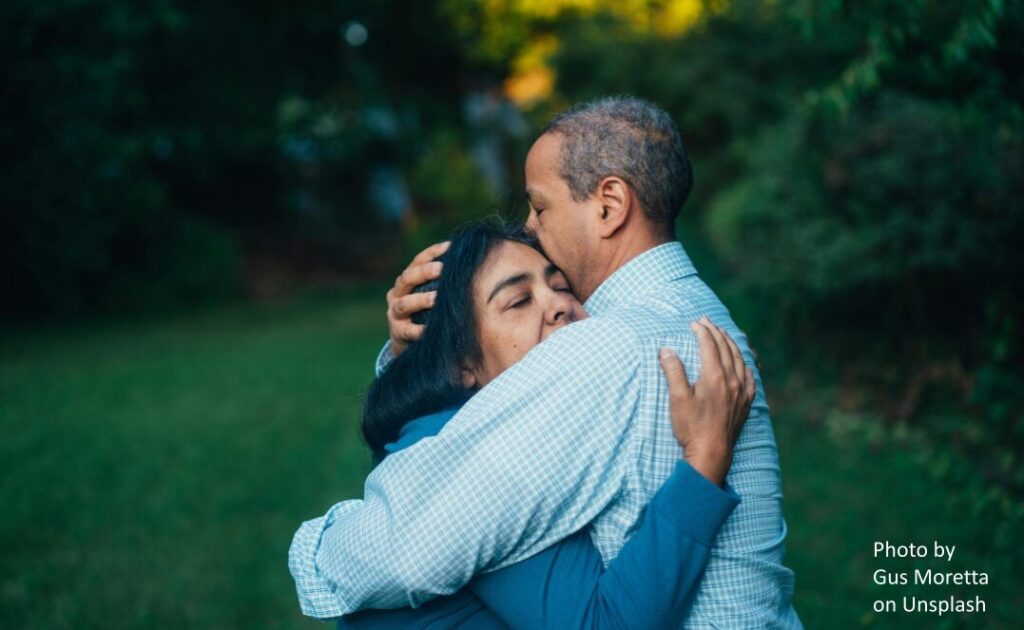
That’s where we start putting people as enemies or on our “less-liked” list. But I have to remember that it doesn’t matter; the reality is, we are 99% the same, every single person on this earth. It’s not just the people in this room. It’s not just people with white skin. It’s not just people of European ancestry, Western European ancestry. It is everybody, all of humanity. We are kin.
We are all children of God, and we are called to remember that first. We have to put that in our mind and let that be the lens.
Today, we’re talking about having kindness be the lens through which we look at the world. As I was going through this, I thought about Joanna Macy.
She passed away in July. I don’t know if you know who Joanna is or not, but she did a lot of teaching, and one of her pieces that she often shared was called the Shambhala Warrior Prophecy. I want to share that with you.
She says it says in a future time of great danger, when the earth will be ravaged and all humanity hangs by a thread, a new kind of warrior would emerge, not with weapons of destruction, but with tools of healing.
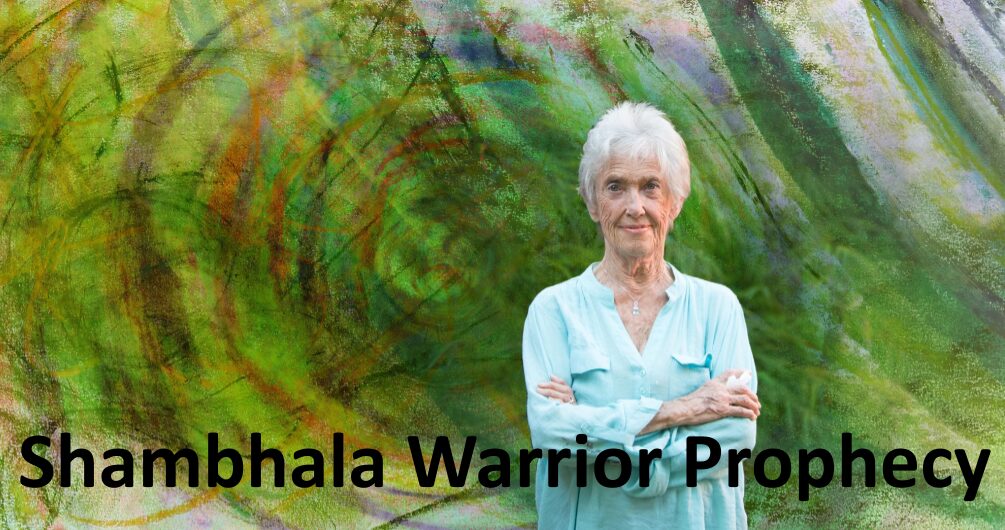
This is not a fantasy or a metaphor, but a call. Shambhala warriors will not destroy, but will dismantle poisoned systems with compassion and insight. They will be led by compassion. So that the suffering of the world breaks their hearts even when the world is unraveling or without shutting down or turning away, and the insight to see clearly the interconnectedness of life, even when, or especially when the world is unraveling.
The Warriors are not limited by race, gender, or belief, not chosen or ordained by institutions. They will be ordinary people, teachers, gardeners, artists, organizers, students, and elders trained in being present. Refusing to be numbed or distracted, willing to stand in love when fear would be easier.
This is who we are called to be. This is us. The question is, how will we train for them? How will we become these people? Because we don’t need any more heroes. We need people who can hold fire without burning others. Hear that again.
People who can hold fire without burning others doesn’t mean that we don’t get burnt.
People who have faced grief and choose to sing. The most radical thing any of us can do at this time is to be fully engaged and present in what is happening in the world. The choice is ours.
May it be so. Amen.
Like this Sermon? Click Here to View More in this Series
Prefer to Listen to this Sermon? Click Here to Listen to our Being Apostles Podcast