The Worthy
Today is the beginning of a new season. We are now in what is called ordinary time or the season after Pentecost.
This is the longest season of the year. Today is Trinity Sunday. Trinity is when we celebrate God, the traditional language is Father, Son, and Holy Ghost, or Holy Spirit. We also say Creator, Redeemer, & Sustainer to identify their roles.
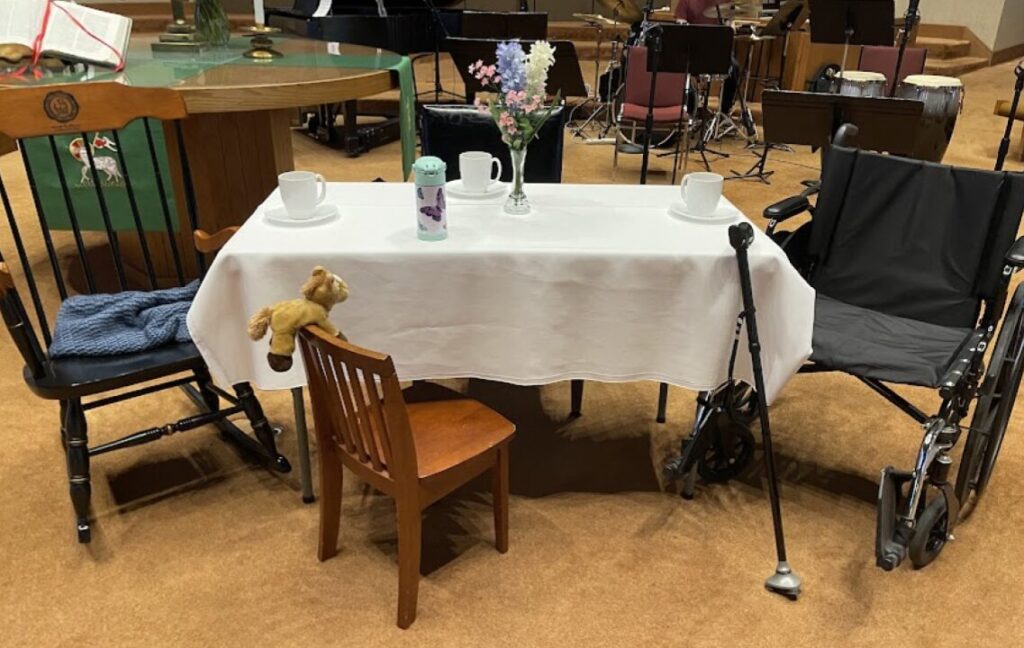
I change things a little bit every season. Like the call, the prayer of confession is now silent, and we added the prayer of illumination. That’s not a piece we usually do. I gave that to the reader, which is different. We also have this table, because we’re going to talk about who Christ welcomes to the table.
Specifically, at this point, we’re talking about the people who would have been considered by everyone else to be outsiders, like a Roman centurion.
The Roman centurion in our scripture for today was the enemy.
He represented the empire that was taking the people’s money, taxing them to the point of poverty, and was a huge military presence that intimidated the people to make sure that they didn’t rise against the empire. All of that, and yet Jesus welcomes and heals him. I want to try to unpack all of that.
I was also at Penn Central Conferences’ annual meeting on Friday and Saturday.
It was an emotional time because we believed this was the last annual conference meeting of the Penn Central Conference. We believe that and hope that at the General Senate in July, they will agree to let us become one Keystone Conference.
So, the four conferences in Pennsylvania will become one conference, and then the State of Pennsylvania will be divided into three regions. We will be in region one, going towards Philadelphia. Berks County is with us, Lebanon County is coming with us, and York County is coming with us. We’re joining essentially the Pennsylvania Southeast Conference. It will not be called that. We’re all gonna be the Keystone conference.
There were a lot of mixed emotions in that. The keynote speaker was Rev. Dr. Courtney Stange-Tregear from the Cornerstone Fund, which is the investment and loan branch of the United Church of Christ. Telling you that, you might be surprised to know that her specialty is in storytelling. She tells the stories of the loans that they have made and the work that has been done for Christ, and she reminded all of us of the importance of storytelling.
I’m still figuring out how we’re gonna do more storytelling together. But I will tell you as an exercise, she had us at our tables tell a true, personal story.
I think this story fits all of her criteria.
While I was sitting there, I was also thinking about my sermon. I think about it all week. This sermon was called Who Is Worthy. And I realized that when I go to the conference, I want to be viewed as worthy by the rest of the conference. I want them to acknowledge and respect who I am as your pastor. There are a whole lot of other pastors. Not that I would be special, but that we would all be valued.
I have learned in my life that a way in which I feel worthy is by pleasing others, but when I please others, I don’t take care of myself, and I also end up hurting relationships. That was my takeaway from that presentation. And I think that was what I was supposed to be focusing on, because on my phone, I have a little app that sends me positive messages. When I flipped over my phone after thinking about that, my phone said this, “I love myself too much to question my worth.”
If that’s something that you needed to hear today, that you should love yourself enough that you don’t need to question your worth. I want you to take that with you.
This whole idea of worthy and of who’s worthy or who’s not, that’s what I’ve been sitting with.
I did what I call a deep dive. I went through this scripture, and it’s a Jewish leader who goes and says, the centurion is worthy. But the centurion says, “I’m not.”
I looked at how many other scriptures talk about someone being worthy, and there are 78 scriptures in the Bible talking about being worthy or not being worthy. What I noticed is that every single one of them was in the Voice of Humanity. It was a human who was saying about declaring someone’s worth or unworthiness. It was never God or Jesus. And what that tells me is that this isn’t a God issue. This is an us issue. We are the ones who are concerned about who’s worthy and who’s not. God isn’t concerned about that, and I think that’s because to God, we all have worth. After all, we are God’s children. God is that parent who loves us unconditionally. We don’t have to prove that we’re worth loving. God just loves us.
Are we really worthy?
I think we’re pretty darn self-interested. I think we worry about ourselves more than we worry about what we’re supposed to be doing for God. We listen to ourselves and our egos more than what God is calling us to do.
Rather than commenting on this scripture and rather than commenting on the centurion’s worthiness, Jesus doesn’t. He comments on the amount of faith the Centurion has because the centurion asks for healing without knowing Jesus. He’s never met Jesus. They’ve never been in the same room together.
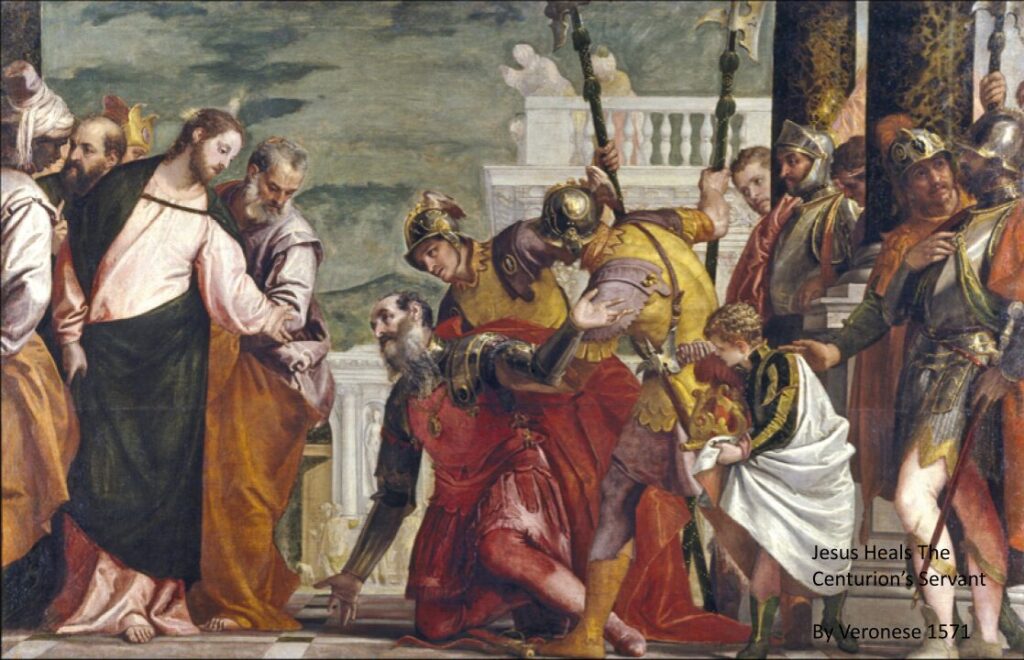
He’s heard the stories of what Jesus has done and he believed and he trusted that Jesus could make a difference in this servant’s life.
He believed without seeing. That’s us. Jesus isn’t here with us walking, talking, and we aren’t able to see his hands, his feet, and his side, but we trust that he is who he is and that he can still help us.
But we are the ones who create this label of worthiness. We’re the ones that create lines in the sand or boundaries that say these people are in and these people are out, and these people are good and these people are bad, and these people are worthy or not worthy. The church has been doing that for a long time. What I hear in this scripture is that that’s not ours to judge. God’s the judge, not us. And it’s not even a thing that God worries about.
We need to look at who we keep outside.
Who do we prevent from coming to the table that is not ours anyway? It belongs to Jesus. We need to invite and welcome all those who feel like they are not worthy to come into this house, because there are so many people who have been told that God does not love them. We need to be a different voice that says that we think God loves you. God wants a relationship with you, and you are welcome here. We want you to come in
Just to drive that point home a little more is the Galatians 3:23-29 scripture, which declares there are no labels. We are all Children of God, there are no longer the labels of Jew, Greek, slave or free, male or female, although we still have that one. It’s not about that. It’s about the fact that we are all children of God and that we are to care about the needs and well-being of others. That’s what God told us. That’s what Jesus said: “Love the Lord your God with all your heart and with all your soul and with all your mind and with all your strength. The second is this: ‘Love your neighbor as yourself” – Mark 12:30-31. That’s who we are supposed to be.
We are to care for the poor, the homeless, the imprisoned, and those who struggle every day to survive. That is why it is so hard right now, because there are people in power who are not interested in that.
They are interested in making us afraid and telling us who to blame for it. As I was thinking about that, I heard a line from my favorite movie, The American President, where he says, “That, ladies and gentlemen, is how you win elections.”
Let’s go and be present with people. Our God wants to be our ultimate parent, thinking of the Father in the parable of the Prodigal Son. Today is Father’s Day. God wants to be that father figure, that one who encourages us and bodes us through the struggles, and who tells us not to give up. But we have a God who allows us to make choices. Recognizing that we will learn through our mistakes and that there will be comfort and support in our difficult times. Rev. Call said in her sermon, “God is most present in the breaking of our hearts.”
I am heartbroken by the stories that I see on the news.
I’m heartbroken for the people who are guilty until they can prove that they have documentation and that they’re a citizen or that they’re allowed to be here in America. But I’m also worried about the ICE agents and the effect this has on them.
I worry about our LGBTQ+ family and friends who are in Pride Month, the month where they celebrate that they can finally be who God created them to be. Yet, they’re not safe. They don’t feel safe. Not right now.
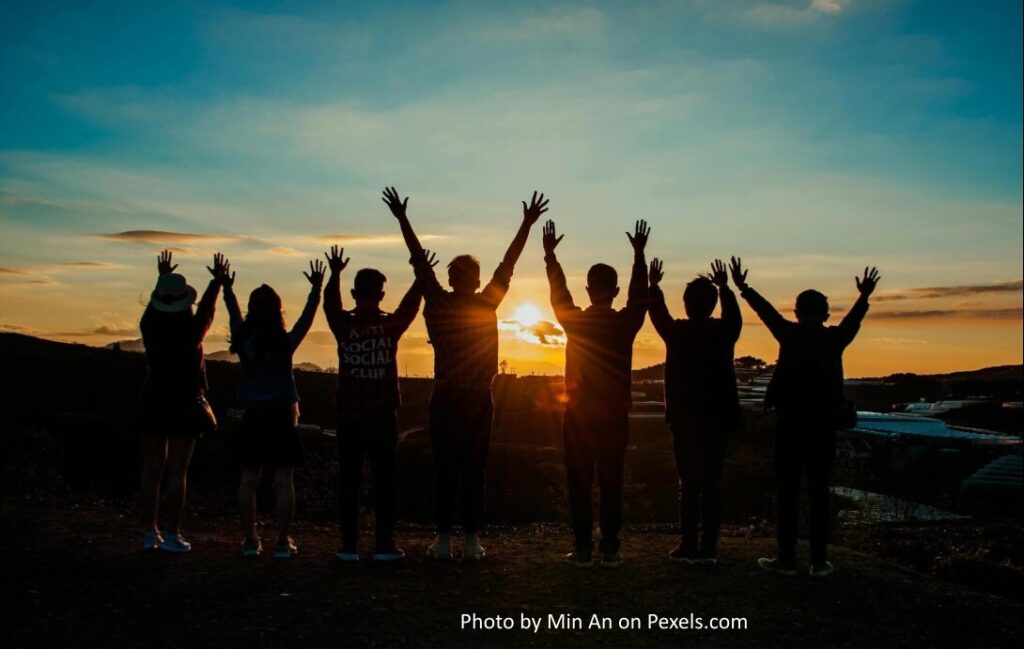
I grieve for Minnesota and for those senators, the families, the friends, and for the depth of anger and despair that person must have had to do that act.
We have people who are hurting, and they need to hear that God loves them. May this be the work that we do.
May it be so. Amen.
Like this Sermon? Click Here to View More in this Series
Prefer to Listen to this Sermon? Click Here to Listen to our Being Apostles Podcast