

As we look at these scriptures, Luke 7:11-18 & John 11:17-27, I’m focusing on those whom Jesus helped and the situations because I believe that we have an epidemic of brokenness.

We are doing our very best to ignore it, and I don’t mean we as in just the people gathered in this room. I mean a big we. In fact, it may be the whole world.
But I want to specifically talk today about the young men and boys in our culture who are feeling lost, confused, and are facing social isolation, economic anxiety, and societal expectations. Research shows that young men spend more time alone. They are isolating, and that is linked to depression and anxiety. Right now, the suicide rate for men is higher than women, and the economic change over the last couple of decades has not helped. Companies have defunded benefits and reduced workforces for a better profit on their stock, which has left the traditional idea of the company man to no longer exist.
You don’t go and work for a company and expect to retire from them. That doesn’t happen because the allegiance to the workforce isn’t there. The allegiance to the company isn’t there either. That’s leaving them feeling very unsure of who they are to be. We have also done a good job of lifting our girls and young women, which needed to be done, but we can’t do that at the expense of our boys and young men. We need to empower every person.
We’ve talked a lot in the last years about toxic masculinity, but I don’t think that we have defined what healthy masculinity looks like. And we need to. I think that’s where our scriptures help us.
That is where I’m heading and what can be gleaned out of these scriptures, because we need to help our young men and boys find their purpose, because the internet and social media are not anybody’s friend.
Their exposure to negativity, violence, and unrealistic masculine expectations is setting the stage for the violence we’ve been experiencing. I think we’re headed for, if we’re honest, a culture where brokenness is a sign of weakness, even being overwhelmed is a sign of weakness. We try to hide it or we try to fix it with a quick fix. But there are no quick fixes, because we don’t want to feel vulnerable. We don’t like that. That’s uncomfortable. I’m uncomfortable with my vulnerability, too, and there has to be some place where we can show it.
I think this is what the church can be. It can be a place where we’re honest about our brokenness, about being overwhelmed by the world and what’s going on in it. But, too often, the church has been the least safe space because we are so good at judging each other. So good at pointing to another person’s faults so we don’t have to look at our own, but that’s something that we can change.
We say God’s vision for us, God’s mission for us, is to create a safe space, and we can do that. In the scripture today, both times Jesus goes and meets a grieving female.
In Lazarus’s story, I only talked about Martha, but Mary’s there too. We’ve got Jesus going and meeting three females, and I want to lift up how Jesus models for us this healthy masculinity.
He does tell the widow of Nain not to cry. I wish he wouldn’t have. I’d like to say, Luke put that in. I don’t know if Jesus said that or not, because in the story of Lazarus, if you keep reading, Jesus cries. Crying is not the end of the world, and we all need to get better at that.
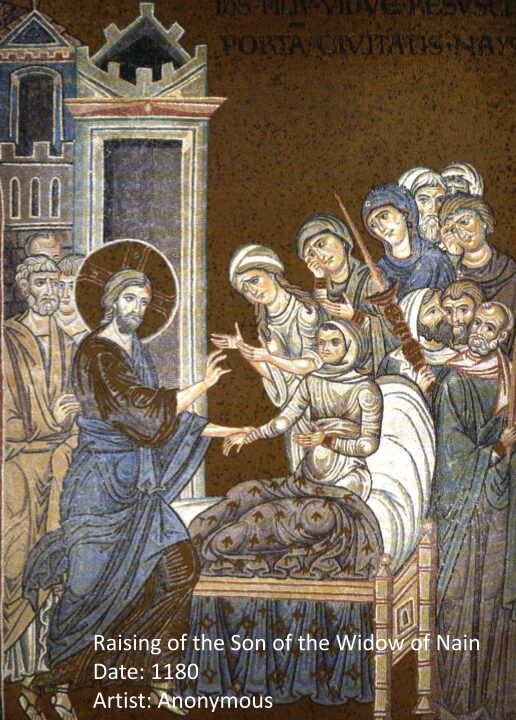
But what Jesus shows us is that Jesus was not afraid of their pain or their anguish. Jesus walked toward it, not away from it. He walked toward them with empathy and compassion to meet them.
In Luke, he touched that coffin. He all but touched the dead body, which you may or may not think anything of, but back then, that was a big no-no. You didn’t wanna touch a dead body that made you unclean. He was going to have to go through ritual purification. Again, that was women’s work because we went through that every month anyway.
But Jesus wasn’t afraid of it. He was willing to allow himself to be vulnerable with the widow. The griever’s there with Martha. He takes Martha’s harsh criticism. I think Martha wanted to tell him off.
That also tells us something about what God can handle from us, that we can say our harsh words to God, and God can handle them. God wants the relationship. God’s not gonna get mad at us because we said something that could offend God, at least the God that I know. Because the God that I know, which I think is the one and only God, loves us and walks with us, comes to us in our brokenness to bring us healing if we allow ourselves to be open to it.
If we shut down and don’t allow God in, that’s on us. That’s the choice that God still lets us make, God won’t force God’s self on us, but God will come to us in our darkest nights, maybe not in ways that we expect. But, God will be there.
Jesus wasn’t afraid of death, not even of his own, but this is also not the “Jesus wasn’t afraid of death, so we don’t have to be either” sermon.
I’ve heard those sermons. Jesus knows that we’re human and that we do break. These women, if you put them in their culture, you need to know that they were about to be destitute. They could not inherit any of the wealth or property of the son or the brother. They were going to be homeless and on the streets begging. Jesus understands that, too, and does what he can to change that.
The ones who are without resources, the ones living on the streets, the ones who are lonely and broken, those are the ones we are to care about too.
So, what is our role based on this? Well, we’re not going to produce miracles. We’re not gonna raise anybody from the dead, but we can walk with those who are struggling. We can comfort and listen.
That is why we have a Compassion Team. Our Compassion Team will listen to us, and they will hold your confidences. You could be that person among us who just needs somebody to care about their pain, confusion, or anger.
If we look at our collective lives. We have learned a lot. For those who’ve been with this congregation for a long time. We know how to survive conflict. It is our humanity that unites us. According to the research, our DNA is 99.9% identical. It’s only that 0.1% that makes each one of us unique. That is not a big difference. Even though it’s a difference we tend to focus on.
We can choose differently.
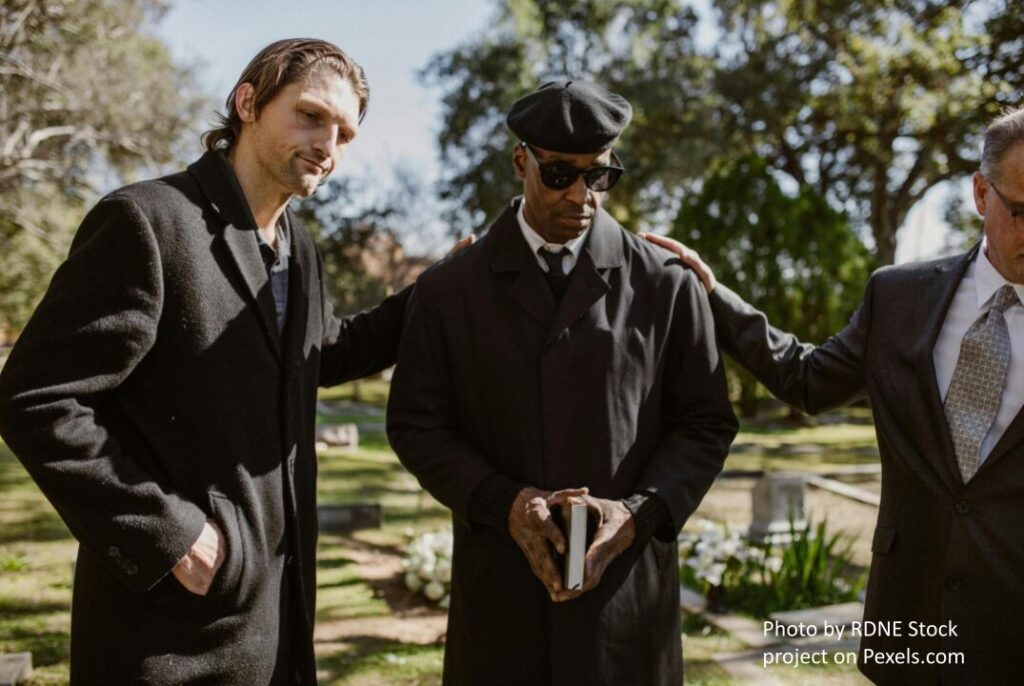
We can choose to walk with each other, to comfort one another, to come and be reminded that our God is here for us. Life is hard, and we are all going to suffer in some way. That is a reality.
Sorry if this is a downer, but I hope that you also hear that we are surrounded by the love and grace of God. That is beyond our imagination, and I hope that you feel that today.
If you need that in a physical way, reach out to the Compassion Team, and let one of them walk with you.
May it be so. Amen.
Like this Sermon? Click Here to View More in this Series
Prefer to Listen to this Sermon? Click Here to Listen to our Being Apostles Podcast

