Sermon by Rev. Dr. Dennis Lippart
My wife and I have six sons between us, and when our sons began getting married, we discovered that when holidays come, you don’t see your sons because daughters go home to their mothers for holidays.
Rather than fight that fight, we decided to create our own holiday. About the end of October, we picked a date that nobody had picked for anything, and we decided everybody would come to our house for turkey, stuffing, and sweet potato pie, and all the trimmings. We have done that every year for over 10 years. We call it hollowgiving.
Most holidays are arbitrary anyway. We can make one up on Christmas Eve. I’ve always wanted to come to the blue Christmas that Kathryn was doing here for years, but Christmas Eve was always when we see the grandchildren in New Jersey. On Christmas Eve my wife and I usually exchange presents because Christmas Day is filled with grandkids and all that kind of stuff.
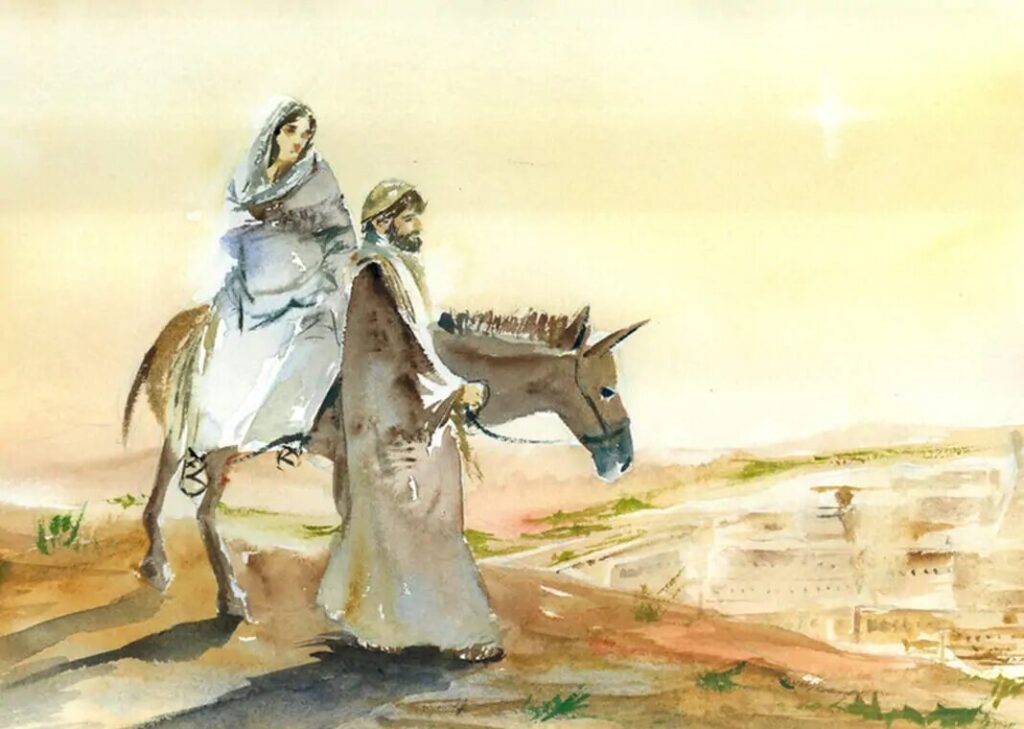
It occurred to me that maybe we need another time when we can exchange our presents with each other. I called it Donkey Day, the day Joseph loaded up the donkey to go wherever he was gonna go. It happened before everything else happened. There was Donkey Day, and we’ve been practicing Donkey Day, except when I reread the Christmas stories recently. There’s no donkey in the Christmas stories.
We tell ourselves there has to be a donkey, but there’s no donkey in the Christmas story. If there’s no donkey in the store, I really can’t call it donkey day. As far as we know, Joseph and Mary simply walked to wherever they had to go. Having a donkey was probably a very middle-class thing to own livestock, and there’s no indication that they were anything other than wandering migrants, so they didn’t have a donkey.
But Matthew tells us another story about Christmas. He tells us a story about astrologers.
How many people here have checked their horoscopes recently? Some people we were with recently were checking their Chinese Zodiac to see what year they were. 2026 is the year of the horse, and they were going on about things.
Did you ever ask yourself why Herod had no astrologers in his court? We talk about the stars as if everybody saw them. I’ve seen articles that it had to be a comet. There’s no indication in the story that anybody other than these guys from the foreign country actually saw this star, which meant they were professional stargazers or astrologers. Herod did not have any astrologers in his court. They didn’t see the star. You know why? It was forbidden knowledge.

That’s why the story goes back to the first Samuel. One of my favorite stories in the Old Testament was about King Saul going to consult the last witch available in Israel because he’d killed all the witches and he’d chased all the witches, astrologers, tarot readers, necromancers out, and all those who foretold the future and read palms out. He got rid of them all because it was all forbidden knowledge. That’s why, when it comes back to the Christmas story, there are no astrologers in the royal court because it’s forbidden knowledge.
But yet we all know about the stars. We all know about the Zodiac signs. My wife’s gotten to be an excellent stargazer at 1:30 in the morning. She’s got pictures to prove it. She was out looking for the Pleiades the other day, but it was too overcast to see them.
We haven’t let go of forbidden knowledge, and sometimes it takes people with different languages and different perspectives, who have knowledge that’s supposed to be forbidden to us, to tell us things that are true about our own stories.
Matthew tells his story in the gospel, which is addressed to the churches. They are modeled after the synagogue, so bear with me on this. The only religion that I know of, which was devoted to telling the sacred stories, or telling the stories about what God has done for the people, happened in the synagogues. The other religion celebrated rituals, events, and current things that were going on. But only in the synagogues do you get together to hear the old stories because people didn’t have Bibles. You didn’t have scrolls, you didn’t have a big book at home. You couldn’t go read the stories for yourself. The only place to be in touch with the history of the old stories was to get together and listen to the rabbi read from scrolls. The Rabbis knew the old stories and the scholars knew the old stories. We got together back in the day, once a week on Saturday, to listen to the old stories because the old stories were important.
Matthew tells an old story. The story he tells about the birth of Jesus and the visitors from the East who see the stars in the sky is the same story that some of the old documents that did not get into the Bible tell about Abraham and Abraham’s birth. Abraham’s birth is foretold by a star in the sky. Abraham’s birth was accompanied by the slaughter of innocence. Matthew tells a story that is not even original. The scholars would’ve known the references to Abraham. So Matthew’s trying to make Jesus into the new Abraham, the new father of a nation, a new people. He’s telling the old story that’s been told about Abraham over again in the context of Jesus.
Some of you may be aware of the crusades. Did you know there was a children’s crusade? The children all ended up being sold into slavery.
It seems historically, over and over again, powerful people, to maintain political and economic control, do it at the expense of the most vulnerable and the most innocent. It’s happened before. All I’m gonna say about it happening now is I’ve heard that 20,000 children have died in Gaza. I’ve read that it’s estimated that 20,000 children have disappeared from Ukraine. I’ve heard it said that this year, mostly in Africa, 600,000 people have died from lack of medicine and lack of food, and 400,000 of those have been children. So we ask ourselves, what are we to do?
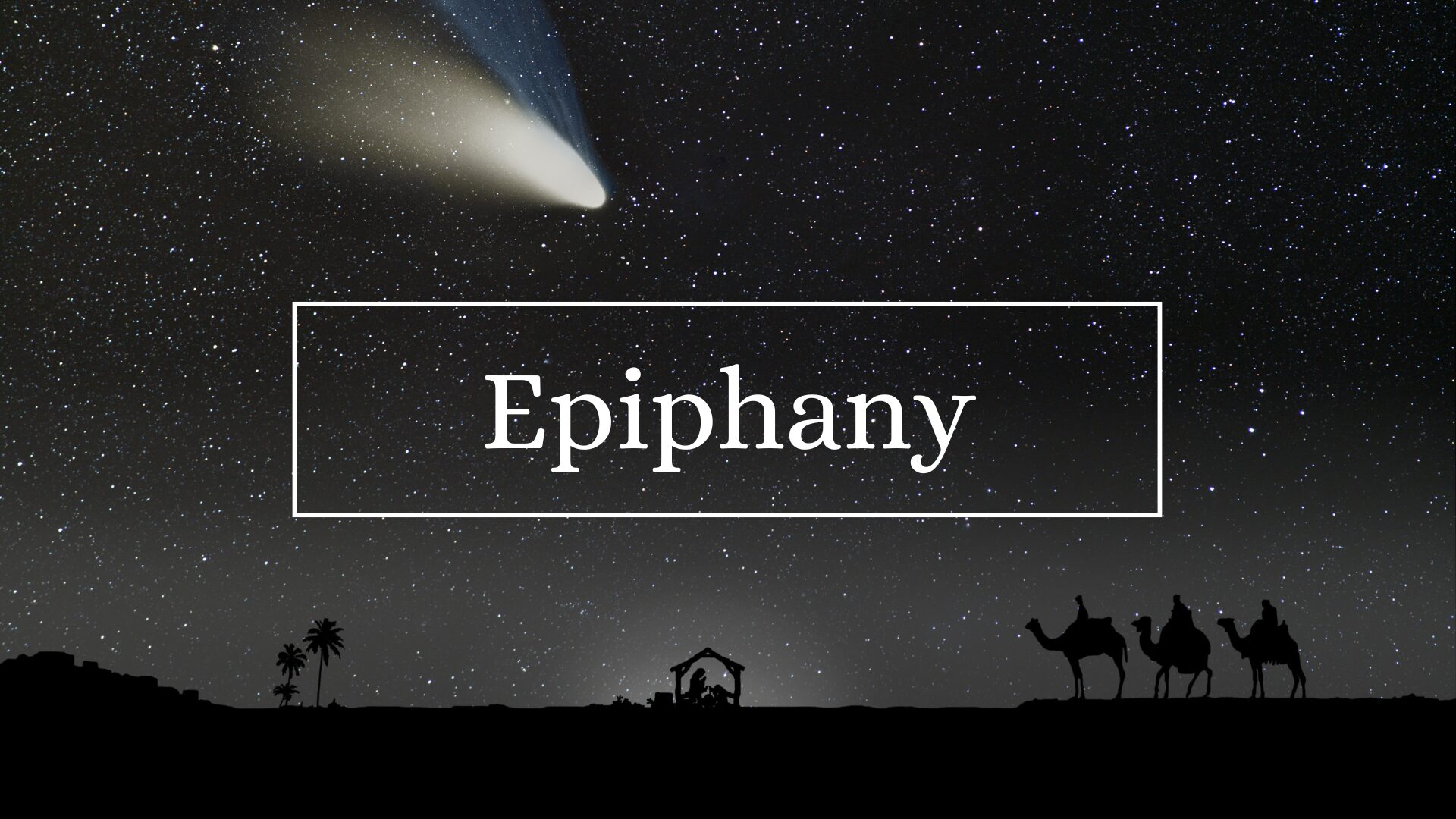
Well, we have a story. Maybe, from that story, we could create a holiday? The 12 days of Christmas didn’t really work. The Russians celebrate gift-giving on Epiphany. Today is the day of Epiphany, by the way, when the wise, the magi, the astrologers, the foreigners, brought their gifts to Mary. We could make it a holiday where we all give gifts to our mothers, but we don’t. We could make it a day when we celebrate making places safe for people who wander, are homeless, or people who feel threatened, but we don’t. So we ask ourselves, what are we to do?
I think I have a clue, with all that’s going on in the world, that maybe we’re simply asked to be witnesses to the light to say. This is light, and that is darkness. If we say it loudly and often enough to remind each other of what’s light and what’s darkness. Maybe just maybe we’ll find that the darkness is not overcome, and the light shines in the dark, and we have to confess sometimes that we are not the light, but we can bear witness to the light, we can testify to the light, we can point to the light. We can even sometimes light a light. One of the earliest songs I remember singing is “This Little Light of Mine.” We’ll let it shine.
We are called like John, not to necessarily be the light if we find it beyond our capacity, but for none of us is it beyond our capacity to bear witness to, testify, point to, and sometimes to hold the light.
May it be so. Amen.
Like this Sermon? Click Here to View More in this Series
Prefer to Listen to this Sermon? Click Here to Listen to our Being Apostles Podcast

