Have you ever been told to “sit still,” “pay attention,” “make eye contact,” or “just focus”?
For some people, these expectations are simple. For others, they can create barriers to participating, learning, communicating, or feeling comfortable in a space.
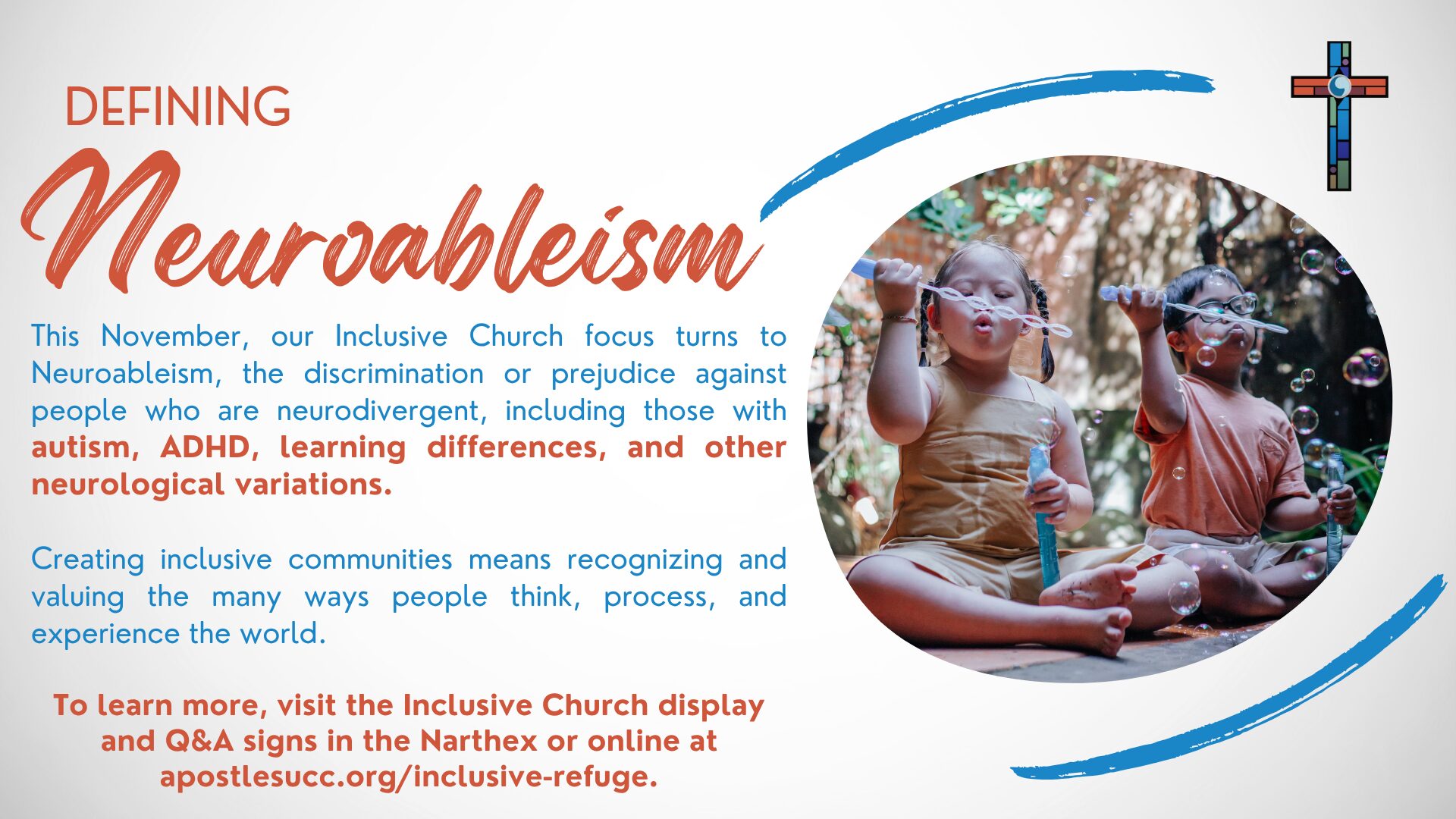
Neuroableism is discrimination or prejudice toward people whose brains work differently, including people who are autistic, have ADHD, learning differences, or other forms of neurodivergence. It can be obvious, but more often it shows up in assumptions about how people should behave, communicate, learn, or participate.
Creating an inclusive community means recognizing that there isn’t one “right” way to think, process information, communicate, worship, or experience the world.
So, what might we notice if we look at our own assumptions?
- Do we assume someone isn’t listening because they aren’t making eye contact?
- Do we mistake movement, fidgeting, or needing a break for being disruptive?
- Do we expect everyone to process information or communicate in the same way?
- Do we make room for different learning and communication styles?
- Are we creating spaces where someone can ask for what they need without having to explain or defend themselves?
- How might we respond differently if we focused less on whether someone is behaving “normally” and more on whether they are able to participate meaningfully?
At Church of the Apostles, we are continuing to look for practical ways to make our spaces more welcoming to different neurological needs. Fidget tools are available in the Compassion Corner, and we recognize that flexibility can make a meaningful difference in worship and other gatherings. Providing agendas in advance, allowing for breaks, and creating different ways to participate can help more people feel comfortable and included.
We also know that accessibility isn’t one-size-fits-all. What helps one person may not help another, and sometimes the most inclusive thing we can do is simply listen when someone tells us what they need.
Because making room for neurodiversity isn’t about asking people to fit into one way of being.
It’s about making our community spacious enough for people to show up as they are.

