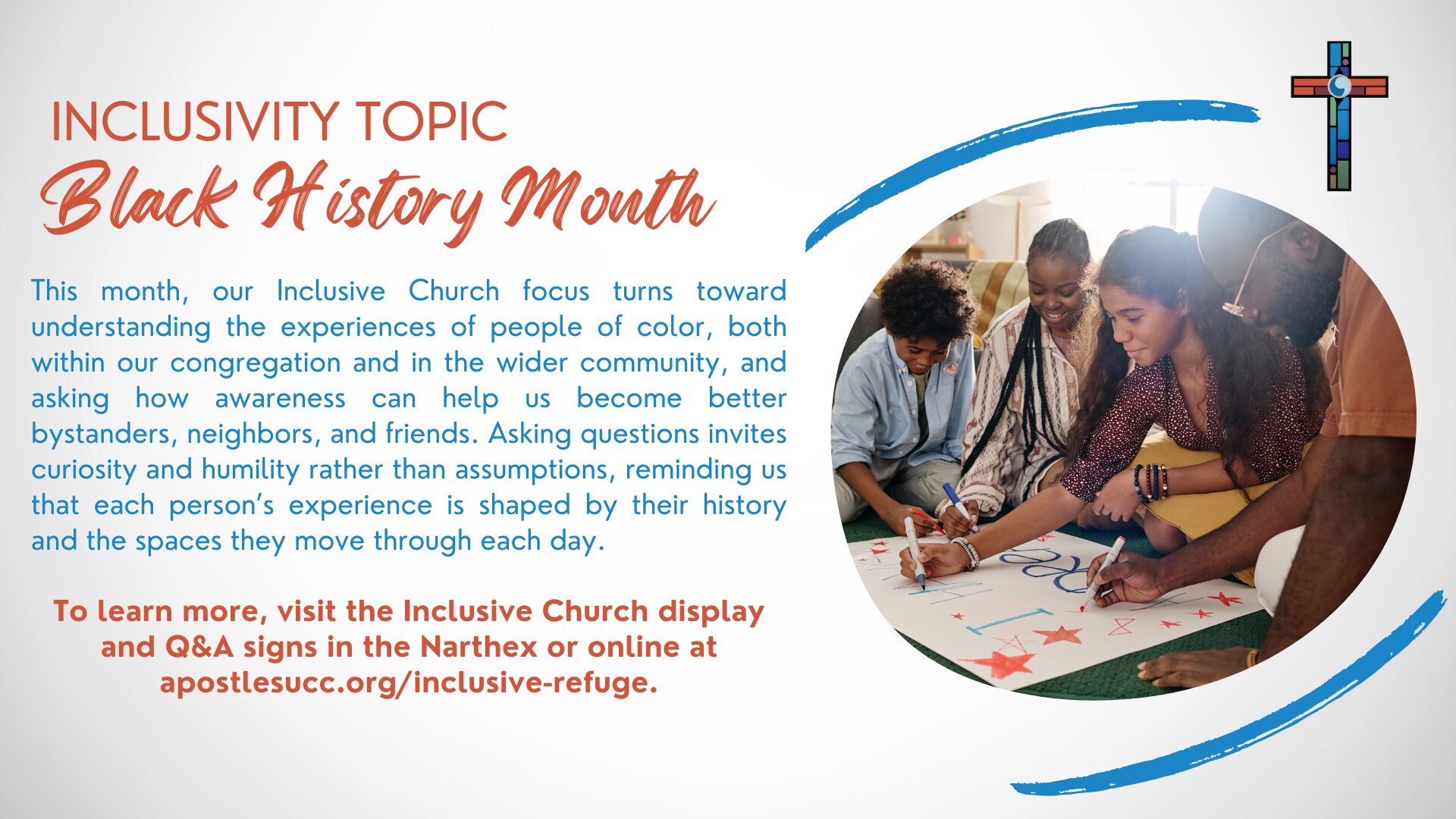
Black History Month offers an opportunity to learn, listen, and reflect on the experiences and contributions of Black people throughout history and in our communities today. But learning about Black history shouldn’t be limited to one month.
Understanding history helps us better understand the world we live in now. It can help us recognize experiences that may be different from our own, notice barriers that others encounter, and become more thoughtful neighbors, friends, and members of our community.
It also invites us to look beyond the stories we already know.
- Whose history did we learn in school, and whose stories were missing?
- Are we willing to listen to experiences that may challenge our assumptions?
- Do we recognize the contributions of Black leaders, artists, educators, neighbors, and community members around us?
- How might our own experiences shape what we notice, and what we don’t?
- What does it look like to move from learning about injustice to speaking up when we encounter it?
- How can we continue learning about Black history throughout the year?
At Church of the Apostles, we believe inclusion requires an ongoing willingness to learn and grow. Through opportunities for conversation, education, reflection, and shared learning, we continue exploring Black history and its connection to the community around us. Our Narthex displays and Q&A cards offer opportunities to pause, learn something new, and consider how history connects to our lives today.
Black History Month is not simply about looking backward. It is also an invitation to consider how the stories we learn shape the way we see one another today.
What can we learn from Black history that helps us become more aware, more compassionate, and more willing to speak up for inclusion?

