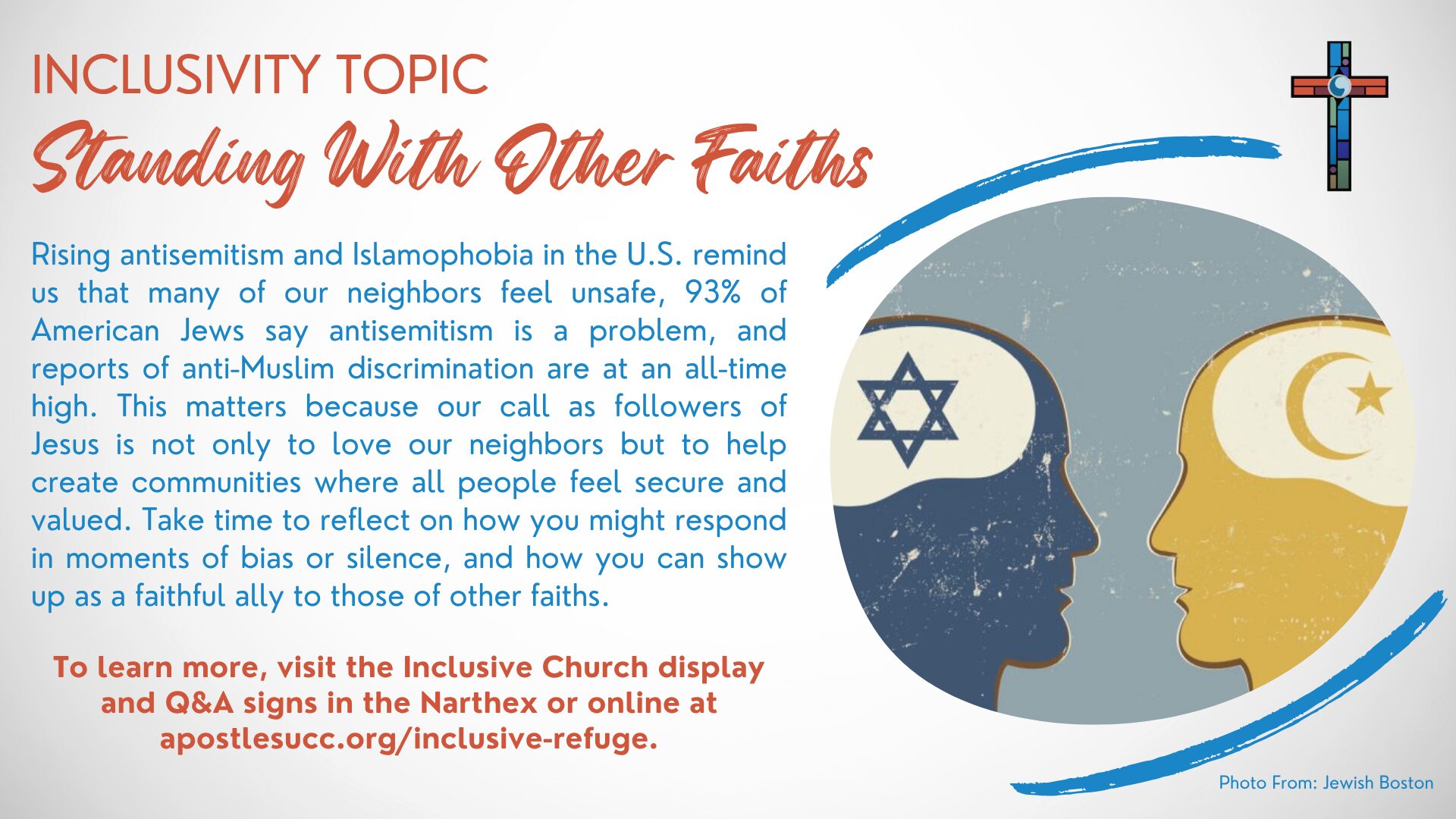
We don’t have to look far to find examples of antisemitism and Islamophobia in our communities and online.
Hurtful comments, stereotypes, harassment, discrimination, and acts of violence can leave people wondering whether they are safe simply because of their faith or identity. For those of us who may not experience these things ourselves, it can be easy to scroll past a comment, stay quiet when someone makes a joke, or assume that speaking up isn’t our responsibility.
But inclusion asks us to pay attention.
Antisemitism and Islamophobia aren’t simply someone else’s problem. They affect our neighbors, friends, coworkers, classmates, and members of our wider community.
As Christians, we can ask ourselves:
- Would I recognize an antisemitic or Islamophobic comment if I heard one?
- What assumptions might I carry about people whose faith is different from my own?
- What could I say if someone makes a harmful joke or comment?
- Do I stay silent because I don’t want to make a situation uncomfortable?
- How can I learn more about Judaism and Islam from people who practice those faiths rather than relying on stereotypes?
- What would it look like to make it clear that hatred and discrimination are not welcome in our community?
Being an ally doesn’t always require having the perfect words. Sometimes it starts with a simple “That’s not okay,” checking in with someone who has been targeted, reporting harmful behavior, or taking the time to learn rather than making assumptions.
At Church of the Apostles, our commitment to being an inclusive community means extending welcome beyond the people who worship alongside us. It means recognizing the dignity of our neighbors, including people whose faith traditions are different from our own, and continuing to learn how we can respond when that dignity is threatened.
We don’t have to experience discrimination ourselves to care about it.
When we hear something harmful, will we be willing to speak up? And when we don’t know what to say, will we be willing to learn?

