
I’m gonna start in a different way by letting this be the announcement where I tell you that I’m getting a new knee, that’s my Christmas present to myself.
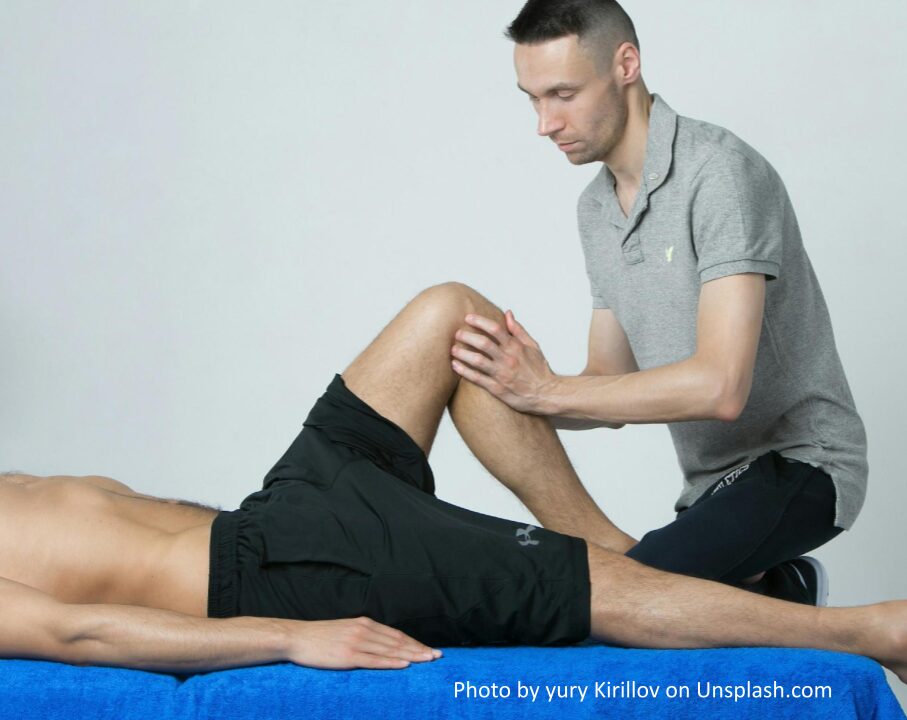
After Christmas, I’ll get a new knee, and I’ll be gone the month of January. You’ll have other people filling in for me, but I actually bring that up because I think it applies to these scriptures. There is nothing like physical therapy to burst your illusion that you are in good shape,
I actually think that’s what these scriptures are meant to do. They are to burst our illusion that we are spiritually mature. They’re a reminder that we all have growth and the ability to grow if we’re just pushed a little bit. That’s the position that I wanna take from these scriptures.
The first one was Romans 15:4-6, and I read this with the John the Baptist piece from Matthew 3:1-12. And I’m not sure how these pieces fit together.
I thought the Romans text was really affirming and uplifting until I looked at it again, and it is still affirming and uplifting, but I broke it down. It talks about what God wants. The combination of his steady constant calling and the warm personal counsel in scripture to come to characterize us. Do you notice something about what that says? I mean, it is uplifting and affirming. It’s also future tense. It’s not now. So it’s not describing the people as they are.
It’s describing how the people can become, just like I can become stronger and ready for my surgery, we can become more mature in our faith. We can stretch and grow ourselves into a closer relationship with Jesus, God, the Spirit, or whatever word you wanna use. Even this Roman scripture, although I think I hear it in a better light, it’s still pushing us. Maybe it’s a gentle push.
Then we have this scripture from John the Baptist. I’m going to do part of a deep dive with you, and hopefully I don’t go too far down this well, and we don’t lose anybody in the process. But, I have struggled, not with the whole scripture, I’m fine with the character of John the Baptist. It’s a story we read about on the second Sunday of Advent every year. I don’t have an issue with who he is or what he does, but when he starts calling people brood of vipers and talking about cutting down trees and unquenchable fire, well, you know, that just makes me uncomfortable.
I figured I had to make peace with this scripture. I had to wrestle with it because that’s the thing about scripture. The scripture that makes us uncomfortable is probably the scripture we need to spend more time with because there’s something there that we didn’t see the first time, and what I’ve learned is that this is so full of symbolism.
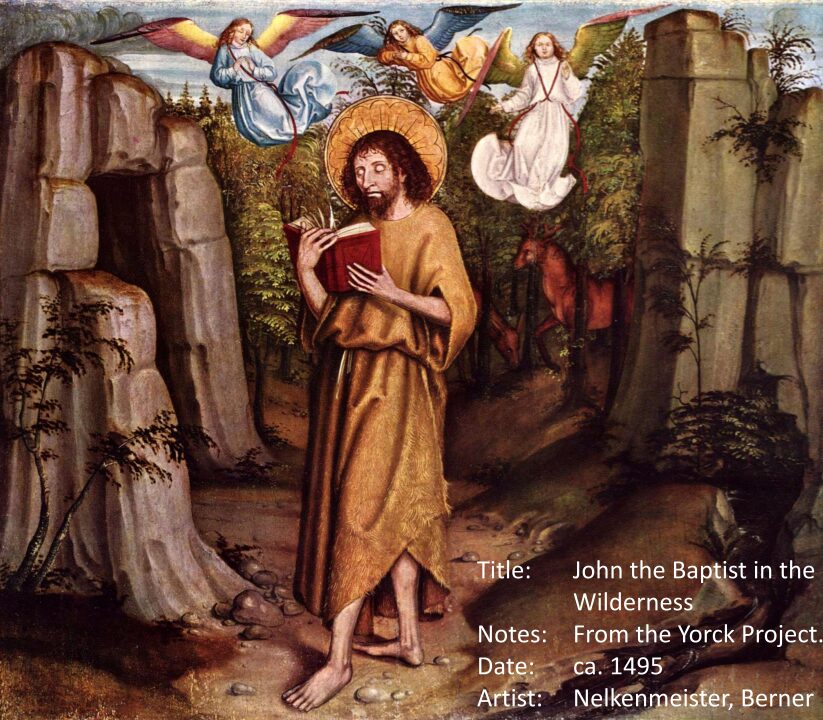
It starts with the words “in those days.” Why that is important is because that’s what the prophets, Jeremiah and Joel, used to use in those days. It’s a reminder of the prophets. Then, in the days of the prophets, the people were not following God the way they were meant to. The role of the prophet is to bring the people back to God. So right away, we hear that John is gonna be a type of prophet. He’s gonna try to bring the people back into a relationship with God. Then we hear that it happens in the wilderness.
Do you remember the wilderness? Do you remember what happened in the wilderness? People are uncomfortable. We don’t like the wilderness. We don’t wanna go there because the wilderness invites us to grow. Because in the wilderness, that’s where God meets us. Not always in the ways that we expect, but in ways that ultimately help us, and even as uncomfortable as the wilderness is, God provides in the wilderness. Remember God providing water and manna. God is there. God is close in the wilderness. When we are feeling most uncomfortable, God is closest to us.
Then we get John’s clothing. This is one of the only times that we get someone’s outfit described to us in this detail. We hear exactly what he’s wearing and exactly what he’s eating. That’s not normal, but it connects us. It connects John with another particular prophet, and that is Elijah. Elijah also wore the skin of a camel and had a belt around his waist. So that is a clue. All of this, these are things that we just read, and we go right past because we don’t have that Jewish perspective that the first listeners had. They hear this described about John, and they’re like, oh, that’s like Elijah. This is the new Elijah. Again, a prophet is coming to help the people, saying that the kingdom of heaven is coming near and that God is about to do something big.
Are we paying attention? Last week it was Stay awake, and are you watching? Are you looking at what’s happening around you? Are you watching for what God is doing?
I think that’s a good question for us today because some of us may feel like we’re in a bit of a wilderness, but that means God is closer, and what is God doing in this time?
Do you remember the Jordan River? Do you know what the significance of the Jordan River is? Well, that was the river that Joshua brought the people out of the desert and into the Promised Land. So when you cross the Jordan, you were to encounter the promised land.
There’s a new land coming. No, not literally. This is all symbolic. There’s a new time coming. There’s a new way of living that is coming, and we are being invited into it, and then we get to the brood of vipers because it’s there. As much as I would like to take it out, I can’t. But the brood of vipers is the Pharisees and Sadducees. Do you remember who they are? They’re the religious leaders. They’re the ones who are saying, “That’s not how we do church. We do church like this. We always do this, and you have to do it this way.” They took the laws of Moses, but they also created some rules for people to follow. There’s a temple tax, but they charged 10% more, because they wanted to be paid too. They knew better, but they took advantage of the people. That’s why they were a brood of vipers. Because they didn’t really encourage people into relationships with God. They were too busy minding the rules.
I’ve heard them in preaching class, called a park bench that if you need to get off the trail, you can sit down here for a minute. So, here’s your park bench. Last night after I put the Christmas tree up and put the lights on it. I sent my son a text and said, “How does it look?” He lives across the street, and he could see it. He said it looks great. I said, “But I broke the rule. I put white lights up, and then it didn’t have enough. So I put a string of colored lights with the white lights.” Crazy, right? That teenage thing in me, it’s still there. And you know what he said back to me, “Mom, there are no rules.” I almost said, are you an anarchist?
But does it matter? And that was the point with the Pharisees. The Pharisees were making up insignificant rules that actually caused harm to people. When they charge them more than what the temple tax was meant to be, then that caused suffering. They were not helping the people. They were hurting their own people, and that’s why they got called a brute of vipers because they knew better, but that’s not what they did.
Then we get into the acts, and at that very end, we hear about how Jesus is coming with his winnowing fork to separate the wheat from the chaff, and the wheat’s gonna go in the granary, and the chaff is gonna go in the unquenchable fire.
That is an illusion that Matthew likes a lot. He is dualistic. You’re either in, or you’re out, and there’s nothing in between. For him, it’s the same dualism that he uses in Matthew 25, where he says there’s gonna be sheep who will go into the kingdom, and there will be goats, and do you remember where the goats go? Uncle Fire. Do you see how things are coming together? When we look at scripture like that, it just puts it all in a different perspective, at least for me.
It helped me to get to the point with this scripture that I wasn’t angry at Matthew for writing it this way anymore. It’s this idea that God has come. We’re in this time where God has already done all these wonderful things, and God is also still working and something more, something different, something else. is still calling to us.
Are we paying attention? Are we paying attention to the edges of society? Are we paying attention to those who are struggling?
This month for our inclusive church, we are looking at the people for whom Christmas is not the same, because there are people who are struggling.
They may be grieving the loss of a loved one, but they may also be grieving the loss of an income, an identity, a relationship at home at Christmas in particular, more than any other time of the year.
You may love your Hallmark movies, and they have a place as long as we lift up the people who aren’t living in a Hallmark movie so they don’t feel pushed out or like they don’t belong. Coming home to the family at Christmas may not be a great reconciliation and forgiveness. That’s not true for everybody.
So how do we make room for everybody? How do we say it’s okay not to be all excited about the season and all of the parties and festivities that our culture really says you have to participate in, and if you’re not, what’s wrong with you? You didn’t put a tree up this year? Instead of making that sound like a judgment, can we say, “Oh, you didn’t. How are you? Do you wanna talk?”
Listening to what’s going on in people’s lives, that’s our Compassion Team, and we’re starting a new thing in January where we’re gonna have regular sessions that you can just come in, check in, and find out about what’s going on in other people’s lives, too. Not from the gossipy kind of place, but just to hold them in your prayers. That’s the idea.
So I think John’s point is that we can be on the wrong side of the issue. We can be thinking about whether you put all white or colored lights on the tree, or we can be thinking about how many parties are on your calendar and how busy you are this season. Or we can just step back and take some quiet time to watch and see what God’s up to this year, because God is moving.
We can be better than what we were yesterday. We can be a better version of ourselves. All of us can experience that Spiritual stretching that comes with a little spiritual therapy from John. Or maybe to use a symbol from our contemporary culture, a little Ebenezer Scrooge, right? We can all have a reminder of who we have been and who we can be, and all we have a chance to change.

So at this time, stay awake because being awake is the resistance against the empire. Because John was resisting the empire at that time. He was outside, not dealing with them up close, but reminding people that there is another way of living. Slowly, day by day, we can take our souls through the exhaustion, complicity, or disengagement, and allow ourselves to be stretched.
Watch what is happening, see more clearly, speak more truthfully, and tend to and welcome those who are being pushed aside, frightened, or taken away. This is who we are called to be.
May it be so. Amen.
Like this Sermon? Click Here to View More in this Series
Prefer to Listen to this Sermon? Click Here to Listen to our Being Apostles Podcas

