How do we make sure everyone can hear, understand, and fully participate in our community?
For some people, hearing happens differently. Hearing loss can be temporary or permanent, mild or profound, and everyone’s experience is different. Some people use hearing aids or cochlear implants. Others rely on assistive listening devices, lip reading, captions, sign language, or a combination of tools. And sometimes, the biggest barrier isn’t hearing loss itself, but whether the spaces around us are designed with different ways of communicating in mind.
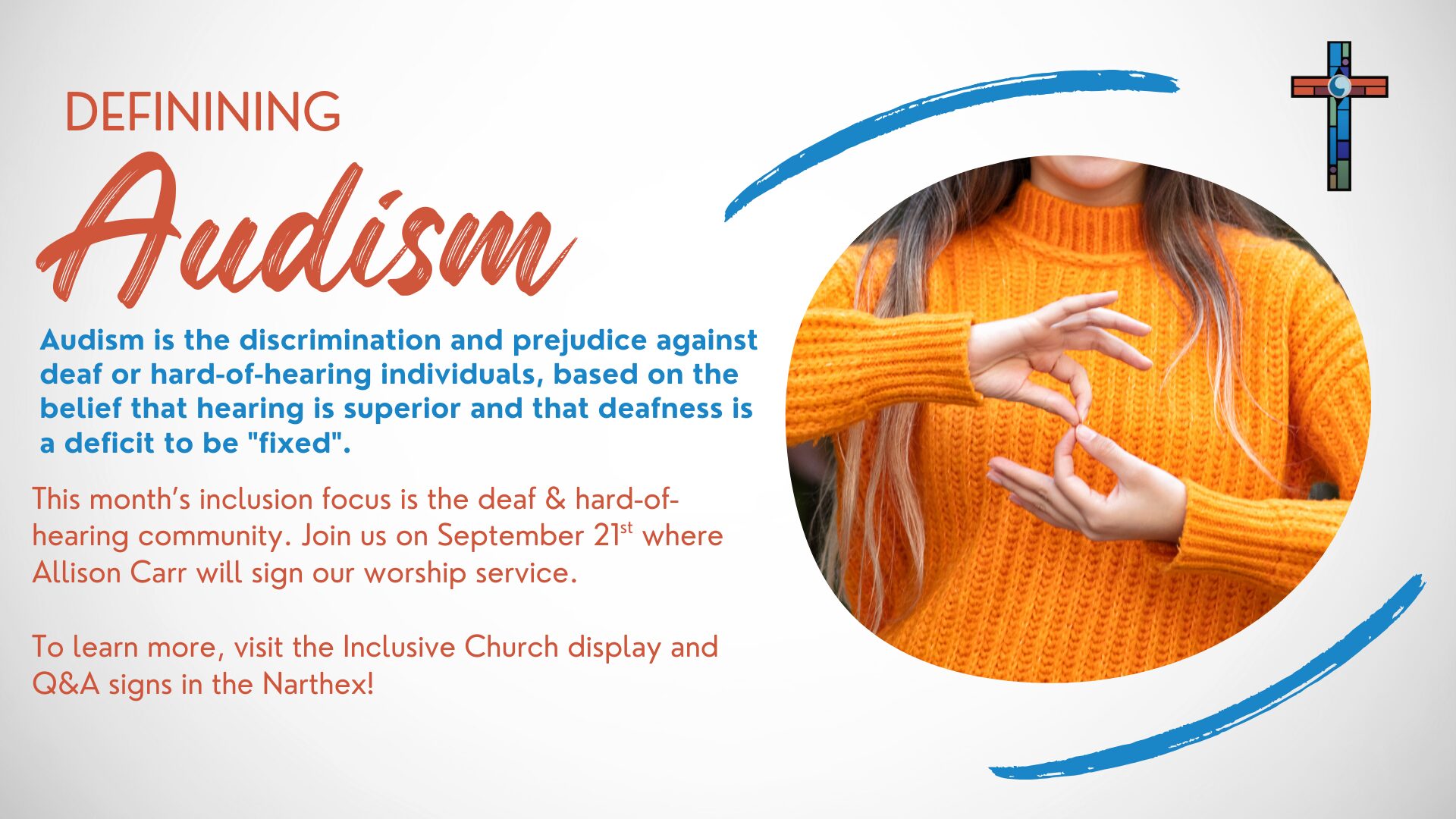
Audism is discrimination or exclusion based on a person’s ability to hear. It can be intentional, but it can also appear in everyday assumptions and habits. We might assume everyone can hear a conversation across a room, follow along when someone speaks without facing the audience, or understand everything being said from the pulpit.
So, what can we notice and do differently?
- Do we make sure people can access important information in more than one way?
- Do we face people when we speak and give them time to respond?
- Do we assume someone is ignoring us when they may simply not have heard us?
- Are we creating spaces where people can tell us what they need without feeling like a burden?
- How might worship, meetings, and fellowship feel different when we consider the many ways people communicate?
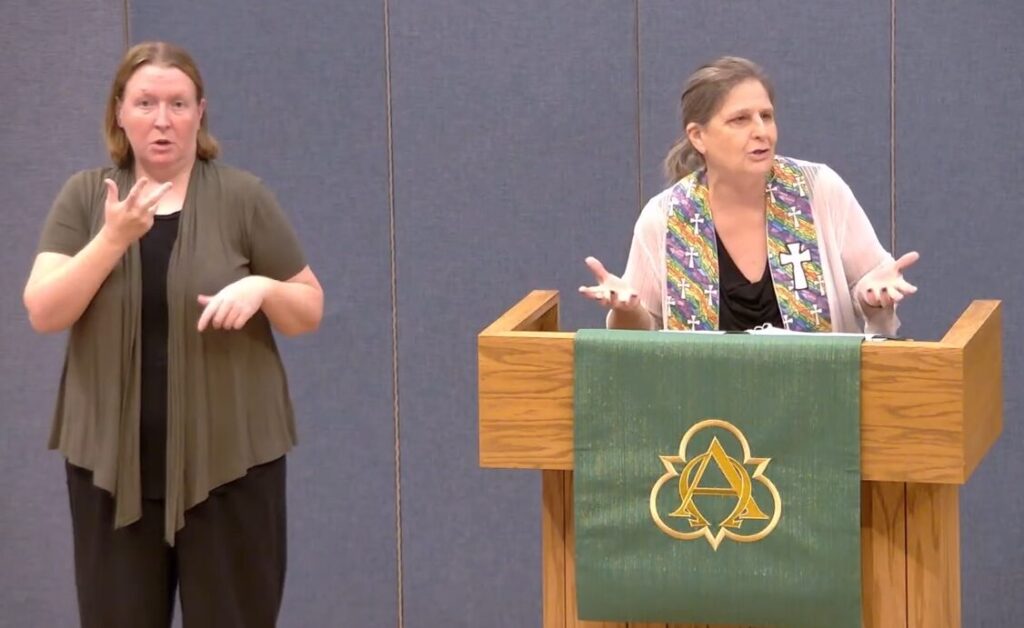
At Church of the Apostles, we are continuing to look for ways to make worship and our building more accessible. Hearing devices are available in the Sanctuary for those who need them, and the completion of our 2026 Sanctuary renovations brought improvements to the overall sound quality. We also have a member who is willing to provide American Sign Language interpretation during worship with advance notice.
These are meaningful steps, but inclusion is an ongoing practice. Accessibility isn’t simply about having a device available or making an accommodation when someone asks. It’s about creating a culture where people know they are welcome to ask, where their needs are taken seriously, and where we continue looking for ways to make participation easier.
As we think about hearing and Deaf inclusion, perhaps the question isn’t only “Can everyone hear us?”
It is also “Are we listening to what people need in order to fully belong?”

