
How did you learn what love is? Who helped you to learn this?
For the first century hearers of our scripture, the answer was probably through the stories of Jesus from family and friends who knew Jesus or knew of him. I would say that I learned about love through those stories, too, and more specifically, through my grandparents, who taught me about love and grace while I learned right from wrong.
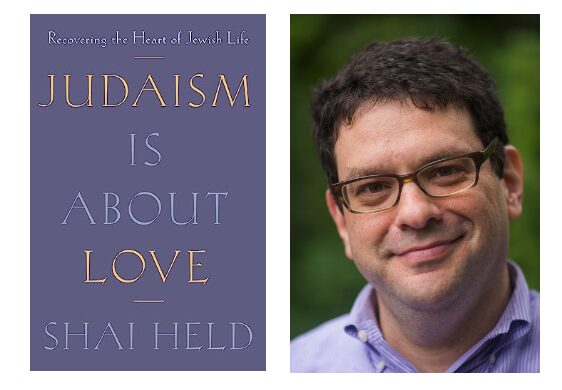
In a recent episode of On Being, Krista Tippett interviewed Rabbi & Jewish philosopher, Shai Held. In the course of that interview, they talked about the relationship between love and faith. In his book called Judaism Is About Love, he specifically addresses what it means to love our enemies, which I think is very pertinent to us today.
In short, he said that love can be “wishing the other person would repent.” Rabbi Held then told the story of an 80-year-old woman who came to him during a book promotion, and, taking him aside, told him that her husband had beaten her and their children for 15 years and asked, “Does the Torah think I’m supposed to love him?” The Rabbi responded by saying, “That is a terrible thing that no one should have to experience. How would it be to pray that before he dies, your husband would have one minute where he fully faces the enormity of what he did?” Yes, that is a way to love.
Our scripture for today from the 1st Letter of John doesn’t actually read like a letter.
Most of the letters identify both the writer and the intended recipient. This does neither. It is written more as a sermon to speak against Docetism, the belief that Jesus existed only spiritually and not with a physical body.
Today’s scripture reminds us that we know love because God loves us. Love is a defining characteristic of God. And our love for others is meant to be our grateful response to God’s unconditional love for us. In the past, I have had folks ask me about what type of love this is. It is not a romantic or even purely emotional love. To me, it is wanting others to feel valued and able to find joy in life. It is accepting people for who they are and, in the case of those who are hurtful or cruel, praying that they will understand how they have hurt others.
As this 1st Letter of John references John’s gospel, consider, if you will, the characters of John’s gospel and how Jesus “loved” each of them. With Nicodemus, he met him at night to protect his identity and listened as well as shared his wisdom. With the woman at the well, he asked her questions and accepted who she was as well as offering love and grace through the “living waters.” To those who were ill, he offered compassion and healed them. To those who were hungry, he asked them to sit down, and he fed them with food shared among them. To the woman caught in adultery, he offered grace and challenged those who wanted to stone her – Who among them was without sin? To Martha & Mary, whose brother Lazarus had died, he came with empathy. He listened, felt their grief and offered healing.
You may be thinking that we do not have the power to heal as Jesus did, but I say that we can be about helping others heal spiritually and know they are worthy and loved by God.
The power of respecting, listening and showing up for another is the beginning of the healing process. When we make ourselves smaller and allow space for others to be themselves, we give a great gift. We all want to matter to someone. We can be the people who help others know that they matter!
Love is about a relationship with others and is measured by what you give, not what you receive. You cannot have your heart broken if you don’t open it to anyone. There will always be enough love in the world if we have love to give. And if we withhold love, something dies. Every time we withhold love, it becomes easier to withhold it the next time.
We are SO easily fixated on our own wants and needs, but we are failing to show God our gratitude if we fail to love others as God loves us. May love always be our guide.
May it be so. Amen.
Like this Sermon? Click Here to View More in this Series
Prefer to Listen to this Sermon? Click Here to Listen to the Being Apostles Podcast

