
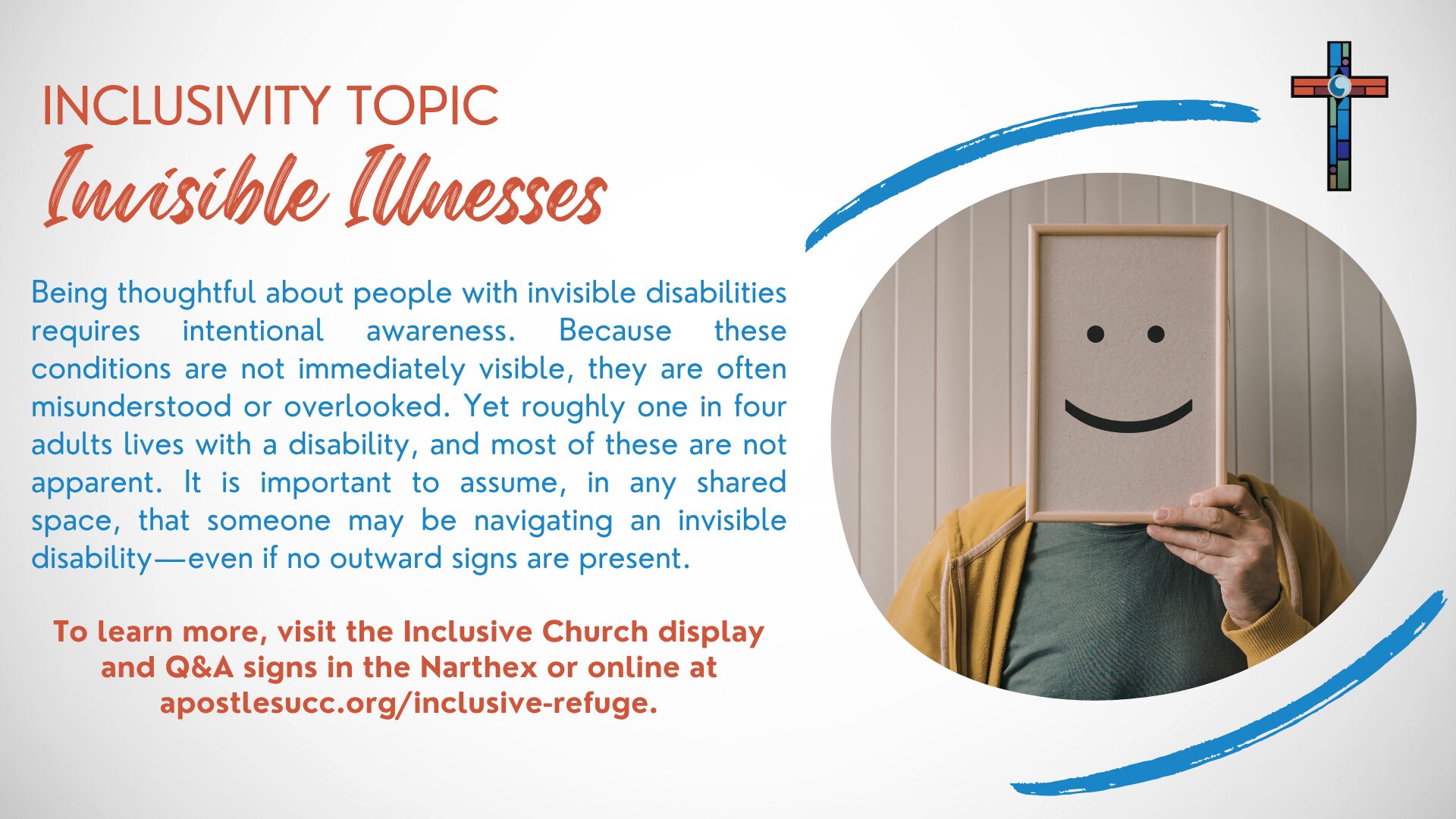
Not every disability is visible.
Someone may look perfectly healthy while managing chronic pain, an autoimmune condition, a neurological condition, mental health challenges, sensory sensitivities, or another disability that affects their daily life. Some conditions fluctuate, meaning a person may be able to participate fully one day and need more support the next.
Because we can’t always see what someone is experiencing, it’s easy to make assumptions.
We might wonder why someone needs to sit down, leave an event early, use a particular entrance, skip an activity, or change plans at the last minute. We might assume someone is being difficult when they are actually managing symptoms we cannot see.
What if, instead of asking whether someone “looks disabled,” we simply trusted people when they told us what they needed?
We can ask ourselves:
- Do we assume that someone who looks healthy has no accessibility needs?
- How do we respond when someone’s abilities or energy change from one day to the next?
- Do we make people explain or prove their needs before offering support?
- Could someone participate in our gathering without feeling embarrassed about needing a break or accommodation?
- Are we communicating important information in ways that work for people with different needs?
- When planning an event, have we considered things like seating, noise, lighting, food allergies, breaks, and easy access to exits?
At Church of the Apostles, we continue working to make our spaces more accessible and flexible for people with a wide range of needs. That includes accessible seating and parking, power-assisted bathroom doors, hearing devices in the Sanctuary, fidget tools, and options such as advance agendas, breaks, and flexible participation. Our 2026 renovations also gave us an opportunity to consider accessibility as part of improving our shared spaces.
But accessibility isn’t only about what we build or provide. It is also about the culture we create.
We can believe people when they tell us what they need. We can respect privacy instead of asking for explanations. We can offer flexibility without making someone feel like an inconvenience. And we can remember that an accommodation that helps one person may not be what another person needs.
We may never know what someone else is carrying. That shouldn’t stop us from creating spaces where people feel comfortable asking for what they need.
What could we change, even in a small way, to make our church more comfortable and accessible for someone whose needs we cannot see?

